Things to Do in Vienna: Quick Sightseeing Made Easy
Vienna’s historic center rewards a plan, but not the kind that turns a day in the city into a military operation. The main difficulty is not distance. Most of the landmarks on a classic central Vienna route are close enough to connect on foot.
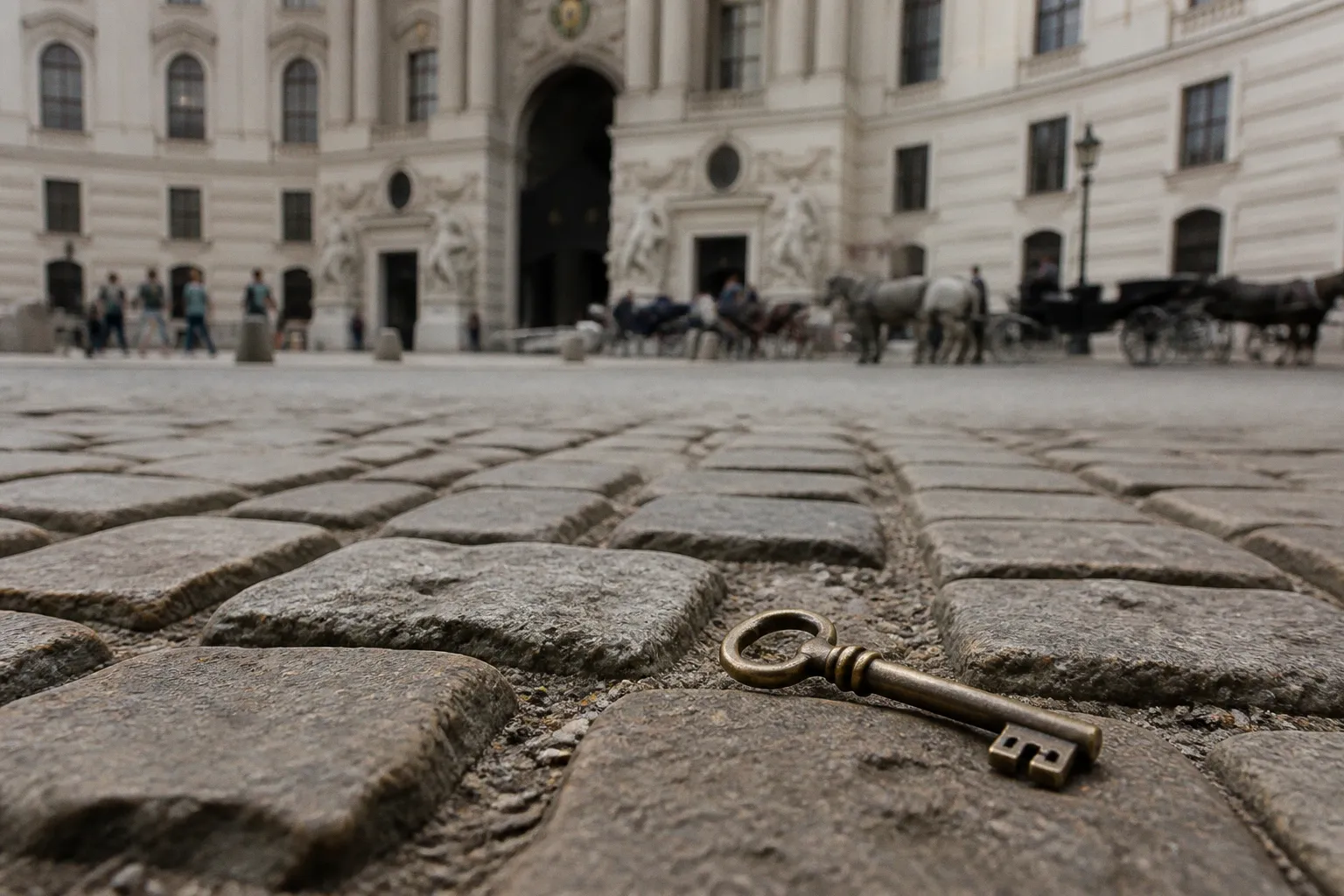
The difficulty is that the Hofburg is not one museum, Mozart’s apartment is not simply another imperial room, and the Weltmuseum asks for a different kind of attention altogether.
Top attractions and activities in Vienna
That makes quick Vienna sightseeing less about collecting addresses and more about sequencing experiences. Start with the imperial center while your attention is fresh, move into the more intimate world of Mozart, then return to the Hofburg for a broader look at Vienna’s connections with the world beyond the Habsburg court. With timed entry arranged in advance, the route can feel deliberate rather than rushed.
Navigating the Hofburg Palace Complex: Why One Ticket Isn’t Enough
The Hofburg is best understood as a palace district rather than a single attraction. Its buildings spread across the historic center, with courtyards, ceremonial rooms, museums, cultural institutions, and working government spaces occupying different sections of the complex. The Spanish Riding School, the Austrian National Library, the Sisi Museum, the Imperial Apartments, and the Weltmuseum Wien are all associated with the Hofburg, but they do not function as one all-access visitor experience.
That distinction matters when you are planning an effortless Vienna itinerary. A ticket for one institution does not automatically open every door in the complex. Different attractions may have separate admissions, separate entrances, and different approaches to timed entry. Even when two museums appear to sit within the same palace, moving from one to the other is not necessarily a matter of following an internal corridor.
The most useful way to plan the area is to choose a small group of experiences that complement one another:
- The Sisi Museum and Imperial Apartments provide the strongest introduction to the court and to the personal mythology surrounding Empress Elisabeth.
- The Weltmuseum Wien shifts the perspective from Habsburg ceremony to the global histories represented in the imperial collections.
- The Austrian National Library offers a separate experience centered on books, scholarship, and the architecture of the State Hall.
- The Spanish Riding School follows its own performance and training schedule, so it should be treated as an optional addition rather than something to squeeze in by default.
This is not a district for spontaneous door-to-door museum hopping. The most popular rooms can become crowded, and some admissions are tied to a selected time. Check the current official ticket conditions for each institution before you commit to a sequence. The practical question is not whether you can theoretically visit everything, but whether the transition between reservations leaves enough room for security checks, orientation, and the occasional slow-moving group in front of you.
Vienna’s imperial heart is not a single stop. It is a neighborhood of institutions, and the day improves as soon as you stop treating it like one oversized museum.
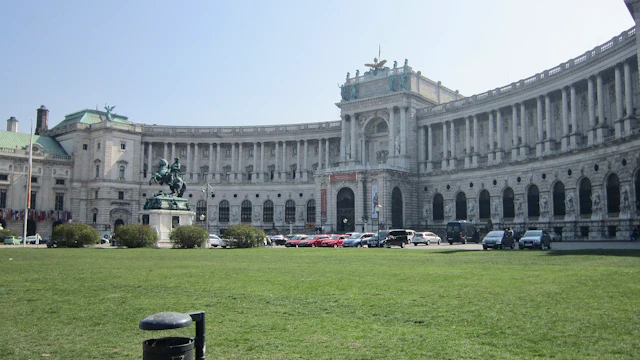
The Hofburg also has a useful rhythm for visitors. Michaelerplatz provides a clear urban entry point, while Heldenplatz and the Neue Burg give the complex a more open, monumental scale. The route between them is short, but the experience changes noticeably: from formal palace entrances and carriage traffic to broad lawns, monumental façades, and museums that ask questions extending beyond the imperial household.
A quick sightseeing plan should leave room for that change of scale. If every minute is allocated to indoor galleries, you lose one of the pleasures of Vienna’s center: the fact that the city’s history remains visible in the spaces between the ticketed attractions.
The Sisi Museum and Imperial Apartments: Essential Booking Strategy
The Sisi Museum and Imperial Apartments are located in the Michaelertrakt of the Hofburg, the wing facing Michaelerplatz. They are not nestled in the Hofburg’s Swiss Wing, and that distinction is useful when you are finding the entrance or matching your reservation to the correct part of the complex.
This is often the most logical first paid visit of the day. The location places you directly inside the imperial core, and the combined experience gives the rest of the Hofburg a human scale. The Sisi Museum focuses on the life and public image of Empress Elisabeth, while the Imperial Apartments reveal the formal and domestic environments of the imperial household. Together, they move between biography and architecture rather than presenting the palace as a collection of disconnected gilded rooms.
Book a timed entry when one is available and choose a slot that you can reach without cutting your arrival too close. The center of Vienna is walkable, but a short distance on a map does not account for photographs, street crossings, a coffee stop, or the time needed to identify the correct entrance. Arriving with only a few minutes to spare turns a manageable morning into a needless source of pressure.
The Sisi Museum is most rewarding when approached as an interpretation of a historical figure rather than as a shrine to a celebrity. Elisabeth’s image has been shaped by portraits, biographies, films, souvenirs, and later romanticization. The museum follows the distance between that image and the complicated person behind it, including her carefully cultivated appearance, her writing, her travels, and her discomfort with the constraints of court life.
The Imperial Apartments then change the register. Instead of following one person’s story, you move through spaces associated with the daily operation of the monarchy. The rooms are not simply decorative evidence of wealth. They show how ceremony and routine were arranged around rank, access, privacy, and representation. A visitor who races through them looking only for the most ornate interior may miss the more revealing contrast between public rooms and private quarters.
Allow enough time to move at the pace of the displays rather than assuming that the museum can be cleared in a few minutes. The visit is compact compared with a full palace day, but it contains two different narratives:
1. The Sisi Museum examines Elisabeth’s life, image, and enduring cultural afterlife.
2. The Imperial Apartments place that individual story within the machinery of the court.
3. The route through the Michaelertrakt makes the setting itself part of the experience, connecting the museum to the wider Hofburg complex.
4. The reservation system determines the practical shape of the morning, so the entry time should anchor the rest of the route.
The combined visit is a strong choice for anyone looking for Vienna’s top highlights in one day, but it should not be mistaken for a complete tour of the Hofburg. The palace complex contains more than any short itinerary can absorb. Choosing not to add every adjacent institution is not a failure of ambition; it is what keeps the day coherent.
Tracing Mozart’s Legacy at Domgasse 5: A Focused Visit
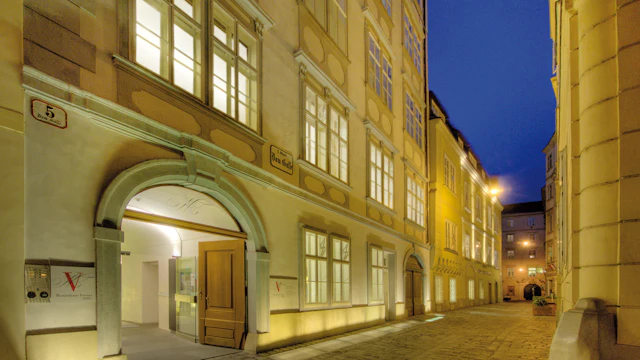
From the Hofburg, the walk to Domgasse 5 takes you away from the broad imperial spaces and into a tighter medieval street pattern around St. Stephen’s Cathedral. The change is one of the reasons Mozarthaus Vienna works so well in a one-day route. The museum is not another grand state interior. It narrows the focus to a composer, a household, and a period of intense creative activity.
Mozart lived at Domgasse 5 for several years in the 1780s, and the address is associated with the most prosperous period of his Viennese career. The apartment is presented through museum displays rather than as a perfectly preserved, untouched room. That distinction is worth keeping in mind. You are not entering a time capsule; you are moving through an interpretation of the building, Mozart’s life in Vienna, and the social world in which his music was produced and performed.
The museum’s appeal lies partly in its scale. After the ceremonial architecture of the Hofburg, the address makes Mozart’s life feel less abstract. His work was connected to patrons, performers, domestic arrangements, professional rivalries, and the practical demands of urban life. The museum uses multiple floors and interpretive material to build that context, with multimedia elements helping visitors who want more than a sequence of labels and portraits.
A focused visit usually works better than trying to extract every detail. Decide in advance whether you are most interested in Mozart’s biography, the apartment itself, the musical environment of eighteenth-century Vienna, or the connection to works composed during this period. The audio guide can help organize the material, particularly if you are visiting without a specialist background in music history.
Mozart’s connection with Le nozze di Figaro is one of the reasons Domgasse 5 has such narrative force. The point is not merely that a famous work is associated with the address. The museum presents a period when Mozart was working at a high level while navigating the opportunities and pressures of Vienna’s musical life. That combination of domestic setting and professional ambition makes the visit more vivid than a generic composer memorial.
Plan on roughly an hour or somewhat longer, depending on how closely you follow the interpretation. Do not schedule the next attraction immediately after the nominal end of your entry slot. You may want to linger in the surrounding streets, visit the cathedral area, or pause for lunch before returning toward the Hofburg.
For music lovers with more time, Haus der Musik can extend the theme in a different direction. It is more interactive and experimental, focusing on sound, listening, composition, and the physical experience of music. It is not a substitute for Mozarthaus Vienna, and adding both may be too much if the day already includes several museums. The pairing works best when you choose one as the historical anchor and the other as an optional change of pace.
The route also offers a useful correction to the idea that Vienna sightseeing must move from one monumental façade to another. Domgasse is a reminder that the city’s cultural history often becomes more legible when the scale gets smaller.
Global Perspectives at Weltmuseum Wien: Planning Your Gallery Route
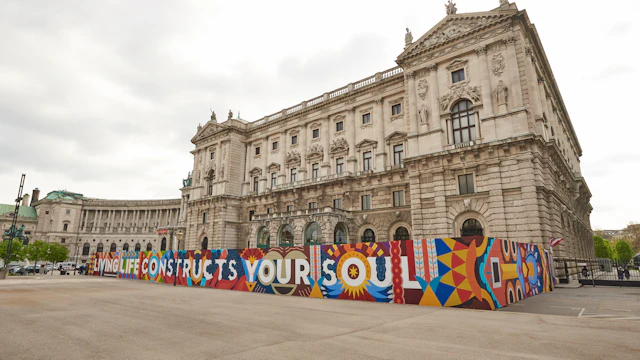
The Weltmuseum Wien occupies part of the Neue Burg at the Hofburg, facing Heldenplatz. Its position is symbolically convenient for an itinerary built around contrasts. Earlier in the day, the Sisi Museum and Imperial Apartments focus on the imperial household from within. At the Weltmuseum, the frame broadens to objects and histories connected with regions far beyond Vienna and Europe.
The collection is extensive, and the museum can easily become the point at which an overambitious itinerary loses its shape. Do not approach it with the expectation that every gallery deserves equal time. Choose a route before you enter, or at least decide on a theme that will guide your attention. Depending on the current presentation, that might mean concentrating on one geographical area, following the history of collecting, or looking at how objects were removed from their original cultural settings and reinterpreted in European institutions.
The museum’s permanent displays cover material from across the world, including works connected with Asia, Africa, the Americas, Oceania, and other regions. The point of the visit is not simply to admire unfamiliar objects. It is also to notice how museums construct categories such as art, ethnography, court collection, religious object, and everyday material culture. Labels, provenance information, and curatorial framing are part of what you are seeing.
Temporary exhibitions should be treated as time-sensitive. Their subjects, dates, and availability change, so check the museum’s current official listings before building your route around one. It is safer to describe a temporary show as a possible addition than to assume that a particular exhibition will be open during your visit. The permanent galleries provide the reliable foundation; a current special exhibition can then determine how long you stay.
The Weltmuseum is most useful as a change of lens: after seeing how Vienna represented imperial power, you can examine how the wider world was collected, classified, and displayed within that same imperial environment.
A visit here benefits from a slower pace than the Sisi Museum. Instead of moving room by room at the same speed, stop when an object raises a question about context, ownership, use, or interpretation. You do not need to resolve every historical issue in one afternoon. The value lies in allowing the museum to complicate the easier version of Vienna as a self-contained European capital.
Check the current opening days, evening hours, and ticket arrangements before you go. Museums periodically adjust schedules, and an evening opening that existed during one season may not apply to another. If a late visit is available, it can be a useful way to protect the morning for the Hofburg and Mozarthaus, but do not assume that the schedule will remain unchanged.
The museum’s location also makes it easy to combine with an outdoor break. Heldenplatz and the surrounding Hofburg façades provide space to reset after the galleries. That pause is not wasted time. The visual relationship between the Neue Burg, the open square, and the older palace buildings helps explain why the Hofburg feels like a district rather than a single architectural object.
Maximizing Your Time: Combining Cultural Landmarks for Efficiency
The most efficient route is not necessarily the one with the fewest steps. It is the one that gives each attraction the right amount of attention and avoids making you cross the same area repeatedly.
A practical sequence looks like this:
1. Begin at the Sisi Museum and Imperial Apartments in the Michaelertrakt.
Use a timed entry as the anchor for the morning. Arrive early enough to find the entrance without turning the first appointment into a sprint.
2. Walk toward Domgasse 5 and Mozarthaus Vienna.
The route is manageable on foot and shifts the day from palace scale to a more intimate urban setting. Leave a buffer between the two admissions rather than booking them back-to-back.
3. Take a real lunch break.
The area around St. Stephen’s Cathedral and the surrounding central streets gives you many options. A break also prevents the afternoon galleries from becoming a blur of labels and polished floors.
4. Return toward Heldenplatz and the Neue Burg.
Schedule the Weltmuseum Wien after lunch if its current opening hours and your energy level make that sensible. Before entering, decide whether you are making a focused visit or allowing time for several collection areas.
5. Finish outdoors around the Hofburg.
Walk through Heldenplatz or the Volksgarten, depending on your route and the season. Ending with open space gives the day a natural conclusion after several indoor institutions.
This order is not sacred. If the available ticket times point in another direction, reverse the sequence. The essential principle is to reserve the fixed-entry attractions first and fit the flexible parts of the day around them. Outdoor walking, lunch, and a pause in a square can move. A timed museum entry usually cannot.
What to book and what to leave flexible
A little selectivity makes the plan stronger:
- Book in advance: the Sisi Museum and Imperial Apartments when timed entry is offered, especially during busy travel periods.
- Check carefully: Mozarthaus Vienna’s current admission details and any audio-guide or language options that matter to you.
- Confirm before relying on it: the Weltmuseum’s opening days, evening hours, and temporary exhibitions.
- Keep flexible: lunch, the walk between landmarks, time in Heldenplatz, and any decision to add another Hofburg institution.
- Treat as optional: the Spanish Riding School, Austrian National Library, and Haus der Musik unless they are central to your interests.
A common mistake is adding the Spanish Riding School, the National Library, and the Weltmuseum to the same day simply because all three appear on a map of the Hofburg. Each is substantial enough to change the pace of the itinerary. If one of them is a personal priority, let it replace another stop rather than stacking it on top.
The same logic applies to photography. The Hofburg, Heldenplatz, Michaelerplatz, and Domgasse all invite pauses, but a day built around constant rushing leaves no room for the city’s architectural details. Vienna’s center is compact enough that you can see a great deal without treating every crossing as a transfer between attractions.
A One-Day Vienna Route That Still Feels Like a Day in Vienna
The strongest version of this itinerary moves through three perspectives rather than three unrelated museums. The Hofburg introduces imperial power and court life. Domgasse gives that history a smaller human and creative scale through Mozart’s Viennese career. The Weltmuseum then opens the frame, showing how Vienna’s institutions have engaged with cultures, objects, and histories beyond the city itself.
That sequence is why these landmarks work together. They are not merely close on a map. They create an argument about the city: Vienna was a court capital, a center of artistic production, and a place shaped by global connections and unequal systems of collecting. Even a quick visit can suggest all three, provided the schedule leaves enough room for the transitions.
The practical rule is simple: choose the timed visits first, verify the current museum information, and resist the urge to turn the Hofburg into a checklist. A few well-connected stops will give you a clearer sense of Vienna than a frantic attempt to enter every available building.
For an essential things-to-do-in-Vienna route, that is the real advantage of planning. You are not trying to own the historic center by the end of the afternoon. You are giving its different layers enough space to come into focus.