Seattle bungalow curb appeal: before and after analysis
You've got a 1940s bungalow in Ballard. The porch columns are rotting at the base, the paint is peeling down to bare cedar, and the front yard is a patchwork of dead grass and aggressive blackberry.
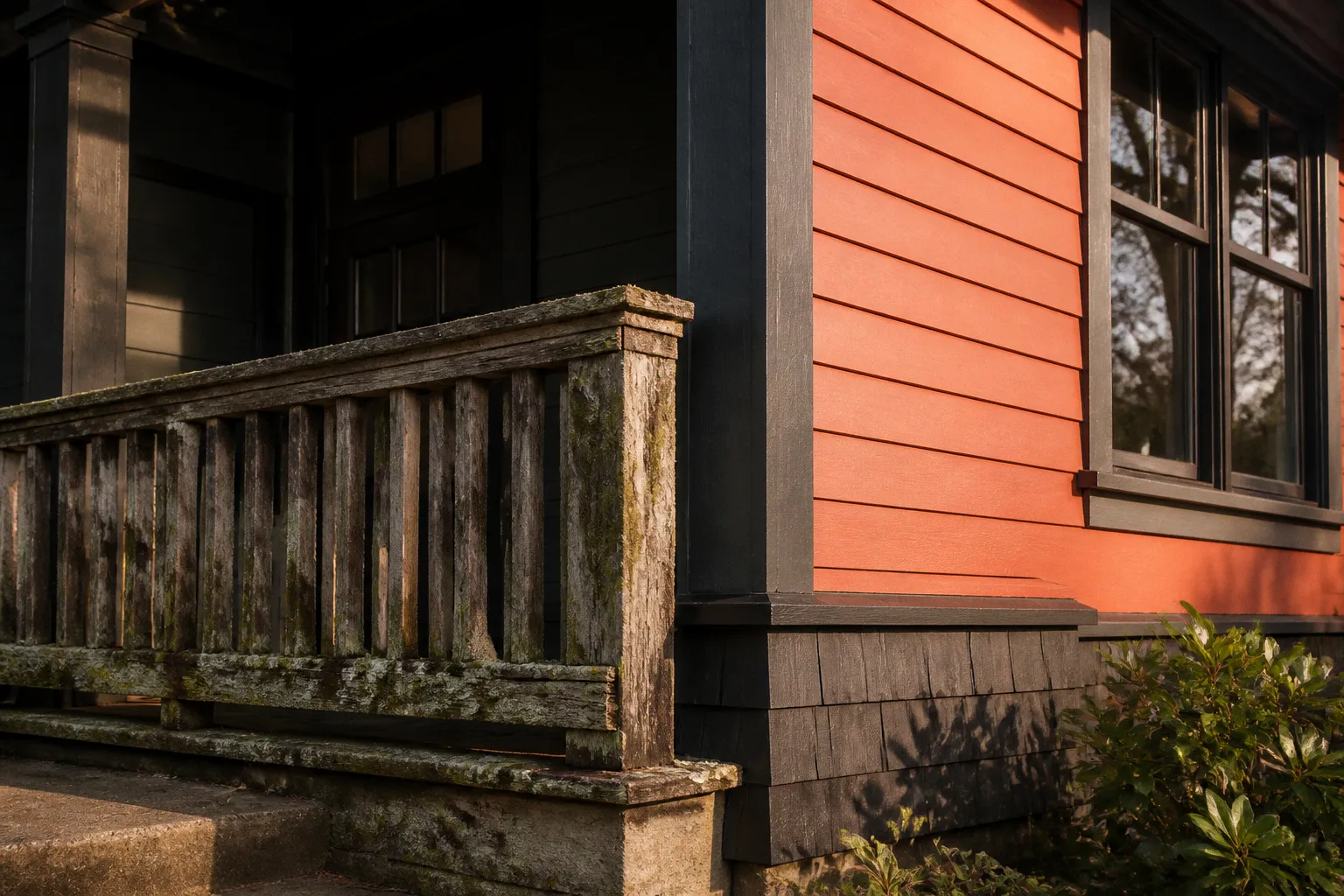
Your neighbor just listed a similar-sized home for $920,000 and had offers within the week. You're wondering whether a $40,000 exterior overhaul will actually move the needle on your sale price—or whether you'd be better off keeping the money and letting the next owner deal with it.
That is the right question, but the answer is not found in a universal Seattle curb-appeal formula. A polished exterior can support a stronger first impression, better listing photography, and a smoother inspection conversation. It can also become an expensive collection of details that buyers appreciate without paying extra for.
The useful comparison in a Seattle bungalow curb appeal before and after analysis is not simply “ugly versus attractive.” It is objection versus resolution. Does the new paint make deferred maintenance disappear? Does the landscape solve drainage and blackberry problems? Does the porch look like part of the original house rather than an afterthought? Those changes matter more than whether the renovation happens to resemble the latest listing trend.
The Economics of Curb Appeal: ROI in the Seattle Market
Let’s start with the number that matters most: cost-to-value ratio. Exterior improvements often have strong practical value because they influence the buyer’s first impression before the interior has a chance to make its case. In Seattle, where buyers may compare several compact, similarly priced homes in the same weekend, the exterior sets an early expectation about maintenance, design quality, and how much work the property requires.
That does not make every landscaping or painting dollar recoverable. A national study often cited in discussions of curb appeal found that sophisticated landscaping can be associated with a meaningful increase in perceived home value, sometimes described in the range of 5% to 12%. That is useful context, not a Seattle bungalow guarantee. The study does not tell you that a particular Ballard property will gain a fixed percentage after a particular planting plan.
For a home around the $880,000 price point, a 5% increase would be $44,000. That arithmetic is simple; the real estate conclusion is not. The percentage may describe a difference between a well-designed landscape and a neglected one, not the return from adding a few shrubs before listing. It may also reflect the total impression of the property, including the house, lot, neighborhood, and condition—not landscaping in isolation.
“Sophisticated” is doing a lot of work in that sentence. It does not mean a flat expanse of sod with two boxwoods flanking the walkway. It means intentional planting, a clear path, controlled views of the front door, healthy mature elements, and materials that belong with the architecture. In a Seattle bungalow, it also means making the wet-season realities of the site look managed rather than hidden.
A comprehensive front-yard transformation can range from a modest cleanup to a much larger project involving grading, drainage, hardscape, irrigation, retaining work, and mature plant material. The price varies sharply by lot access, slope, existing conditions, and whether the work is being completed for enjoyment or for a sale deadline. An Eastside property with a larger lot may justify a different investment from a compact, condo-tized bungalow in Columbia City with little usable yard.
The best pre-sale project is usually targeted rather than comprehensive. Paint the body and trim. Repair the siding that is actually failing. Replace a visibly deteriorated porch element. Remove invasive growth. Improve the path and the planting bed. Upgrade the light fixture and hardware. These changes can make the house read as cared for without pretending that a $30,000 exterior refresh has created a $100,000 market premium.
The highest-ROI curb appeal projects in Seattle are not necessarily the most expensive ones. They are the ones that eliminate the specific objections buyers whisper to their agent during the first drive-by.
Before spending, stand across the street and photograph the house in the same way a listing photographer will. Look at the roofline, porch, entry path, and foundation planting together. If the first things you notice are peeling paint, a crooked handrail, dead vegetation, or water-stained trim, those are the first dollars to allocate. A new designer mailbox will not compensate for them.
A useful order of operations is:
1. Address visible deterioration. Rot, failing paint, loose railings, damaged steps, and broken exterior lighting carry more negative weight than a dated but sound color scheme.
2. Make the entry legible. Buyers should understand where to walk, where to stand, and which door is the front door without having to decode the landscaping.
3. Restore proportion and rhythm. Craftsman details work as a group: columns, brackets, trim, siding courses, porch ceiling, and window casings should not compete with one another.
4. Add planting that looks established but not overgrown. The goal is a settled garden, not a recently installed nursery display.
5. Only then consider decorative upgrades. Hardware, house numbers, planters, and a new door color are finishing moves, not repairs.
Restoring the Craftsman Aesthetic: Siding and Millwork Details
Seattle is a Craftsman town. You can fight that fact, but you rarely improve a bungalow by stripping away the features that give it scale and identity. Buyers in neighborhoods such as Wallingford, Montlake, and Phinney Ridge are not necessarily demanding a historically purist restoration. They are responding to proportion, material quality, and the feeling that the exterior belongs to the house.
The before-and-after change that often creates the clearest visual improvement is siding repair or replacement. A classic Seattle Craftsman exterior may use a stronger lower siding course, a belly band, and shingles or another textured treatment in the upper gable. Those horizontal divisions give the house a grounded base and keep the upper story from looking visually heavy.
If the original siding can be repaired, that is often preferable to replacing everything by default. Damaged boards can sometimes be removed, milled, or patched so the existing exposure remains consistent. When replacement is necessary, fiber-cement siding can provide durability and clean lines, but the installation still has to respect the original proportions. A modern material installed with the wrong reveal or without the appropriate trim will not suddenly become Craftsman because the listing description says so.
James Hardie smooth plank siding with a carefully selected reveal can create the shadow lines associated with the style. Pre-primed cedar shingles in the upper gable add texture and help distinguish the house from a generic ranch or builder-grade remodel. The important point is not the brand. It is the relationship between the siding courses, corner boards, window trim, and roofline.
Upper-gable shingles are frequently treated as an optional flourish because they cost more than carrying plank siding all the way up. On a bungalow with a prominent front gable, that texture may be the detail that anchors the entire exterior. On a hidden side elevation, it may be difficult to justify. Spend where the change will be visible from the street and in the listing photographs.
Millwork is another place where small discrepancies become conspicuous. Porch column profiles, knee braces, window casing depth, and the thickness of the trim are not background details when the house is viewed from twenty feet away. A skinny square post substituted for a tapered column can make the porch look temporary. A shallow casing can make original windows look disconnected from the rest of the facade.
Stock profiles from local millwork suppliers can be an efficient solution, but they should be described as a practical approximation, not a guaranteed buyer preference. Standard components may be close enough in scale and shape for a modest restoration, especially when they are properly trimmed and painted. A house with rare proportions, surviving original details, or a prominent historic character may justify custom work.
If your bungalow lost its porch details during a vinyl-siding renovation, that loss is also an opportunity. Salvage yards in the Seattle area, including Second Use and Earthwise, may have period-appropriate columns, brackets, doors, and trim. Availability changes, and salvaged pieces often require repair, but an authentic component can give more character than a new decorative product designed to imitate it.
The before-and-after test is straightforward: step back until the whole facade fits in your view. If the new siding, columns, and trim make the house look calmer and more deliberate, the work is probably helping. If each element is shouting for attention, the restoration has become a costume.
Color Theory for PNW Bungalows: Beyond Modern Charcoal
Here is where I need to check you before you check Pinterest. Charcoal-and-black exteriors photograph beautifully against Seattle’s gray skies, which is one reason the palette has become so common. But a color that looks sophisticated on a contemporary box can flatten a bungalow with deep eaves, tapered columns, shingle textures, and multiple trim lines.
Painting a 1920s Craftsman entirely in a near-black shade is not automatically wrong. It can work when the architecture has been deliberately simplified and the surrounding landscape provides enough contrast. On a traditional facade, however, a monochrome scheme may erase the very details that justify the house’s character.
Craftsman palettes traditionally use several related values rather than one dominant block of color. The body may be earthy and mid-toned, the trim deeper or lighter depending on the scheme, and the door or porch ceiling may provide a restrained accent. The goal is not historical theater. It is to make the architecture readable.
A historically grounded combination might pair a warm buff body with a deep bronze-green trim and a red-toned front door. Chestertown Buff, Roycroft Bronze Green, and Rookwood Dark Red are examples of colors that can create that effect. They should still be tested on the actual house. Seattle’s overcast light, tree canopy, neighboring colors, and wet surfaces can make a sample look very different from the same color on a sunny showroom wall.
Does that mean you cannot go modern? Not at all. A muted olive body with cream trim and a black or dark-stained front door can respect Craftsman proportions while feeling current. A restrained gray-green can sit comfortably with cedar shingles and native planting. What tends to fail is not modernity but indifference to the existing structure.
Paint samples should be viewed at different times of day and on more than one side of the house. The north-facing wall may stay cool and subdued, while a south-facing wall can make the same color appear warmer and more intense. The trim also needs to be judged against the roof, masonry, windows, and neighboring homes. A palette that looks elegant in isolation can feel severe when the porch is already shaded.
One cost note that many renovation guides avoid: exterior paint pricing is driven as much by preparation as by the number of colors. Scraping, sanding, caulking, carpentry repairs, access, and surface condition can change the estimate substantially. A professional three-color paint job on a typical 1,400-square-foot bungalow may fall in the $8,000–$14,000 range, but that is not a promise for every property.
For homes built before 1978, do not describe lead abatement as automatically required simply because of the construction date. Lead-safe practices, testing, containment, and possible abatement depend on the presence of lead-based coatings and the scope of the work. Disturbing painted surfaces during scraping, sanding, window work, or siding replacement can trigger specific requirements, so the contractor should explain how the project will be handled before work begins.
The same distinction applies to the renovation budget more broadly. “Full prep plus lead abatement” belongs in a premium scenario only when testing and the renovation scope support it. It should not be inserted into every pre-1978 paint estimate as a default line item.
| Element | Budget Option | Mid-Range Investment | Premium Restoration |
|---|---|---|---|
| Paint | DIY preparation and quality materials | Professional crew with a three-color scheme | Extensive carpentry, surface preparation, and historically considered colors |
| Siding | Spot-repair sound existing boards | New plank siding with textured upper-gable shingles where appropriate | Larger tear-off and replacement with sheathing or insulation work as needed |
| Millwork | Patch and repaint existing details | Stock tapered columns, brackets, and trim selected to fit the house | Custom-milled period reproductions |
| Front door | Repaint existing door and replace hardware | Solid wood Craftsman-style door | Custom wood door with carefully matched glazing and trim |
| Landscape | Cleanup, mulch, and a limited number of healthy plants | Professional design, path improvements, and climate-adapted planting | Full hardscape, drainage, grading, and premium plant material |
Native Landscaping Strategies for Wet Winters and Dry Summers
This is the investment that many sellers underestimate, but the answer is not to install the largest possible garden. Seattle landscaping has to solve a specific environmental problem: wet winters, increasingly dry summers, shade patterns created by mature trees, and soils that may hold water where you least want it.
A front yard that looks healthy in May and exhausted by listing photos in September has not delivered a reliable transformation. The planting plan needs to account for the season in which the property will be photographed and shown. If you are listing in late summer, a garden built entirely around spring bloom is already past its best moment.
For an evergreen backbone, sword fern, salal, and evergreen huckleberry can provide structure in conditions where many ornamental plants struggle. Vine maple offers seasonal color and a form that can complement a bungalow without overwhelming the facade. Red-flowering currant brings early bloom and a connection to the regional landscape. None of these plants is a magic maintenance-free solution; they still need appropriate placement, watering during establishment, pruning, and soil preparation.
The most successful Pacific Northwest curb appeal ideas usually combine several layers:
- Evergreen structure near the foundation. Keep mature shrubs from blocking windows, vents, and siding, but use them to soften the transition between house and sidewalk.
- A clear middle layer. Flowering shrubs, grasses, and perennials create seasonal interest without turning the entry into a collection of disconnected specimens.
- A controlled ground plane. Mulch, gravel, or a restrained lawn area should make the garden look finished and keep weeds from becoming the dominant texture.
- One or two focal points. A small tree, distinctive front door, or carefully framed path is more effective than a crowded planting bed.
- A visible maintenance boundary. Clean edging and defined paths tell buyers that the landscape is manageable.
Native and climate-adapted plants may reduce irrigation and replacement needs once established, but “low maintenance” is not the same as “no maintenance.” Buyers understand that every landscape requires some care. What they do not want is a front yard that appears to demand constant watering, seasonal replanting, or an immediate overhaul.
Drainage deserves more attention than decorative planting. Before installing shrubs, confirm that water moves away from the foundation and that downspouts are not discharging into a planting bed against the house. A soggy foundation line, moss-covered steps, or a permanently muddy path can create a larger inspection concern than an outdated flower bed. If grading corrections are minor, they may be manageable within the landscape scope; larger drainage problems deserve separate evaluation.
A practical sequence for a pre-sale renovation looks like this:
1. Assess drainage and access first. Identify standing water, compacted soil, invasive blackberry, failing edges, and any areas where the landscape is concealing siding or foundation problems.
2. Complete hardscape before planting. Install or repair the walkway, porch steps, edging, and drainage components before the beds are filled. Natural stone, brick, or exposed aggregate may suit a Craftsman better than stamped concrete.
3. Place the structural plants. Trees and large shrubs establish the scale of the yard. Keep them far enough from the facade that they will not immediately hide windows or trap moisture.
4. Build the understory. Add ferns, ground covers, flowering shrubs, and grasses in groups rather than scattering one of everything across the property.
5. Finish with mulch and precise edges. This is often the modest detail that makes a larger landscape look intentional. Fresh mulch cannot rescue poor grading, but it can clarify the planting design.
6. Schedule a maintenance visit before photography. Pruning, weeding, pressure washing, and replacing damaged plants have more impact when done immediately before the listing period.
In Seattle’s climate, the best curb appeal investment is the one that still looks composed when the weather turns difficult—not just the one that peaks during the first spring showing.
The same principle applies to lawn. A small, healthy lawn can be useful as an open visual plane, especially for buyers with children or dogs. A struggling patch of grass surrounded by bare soil and miscellaneous shrubs is not automatically more authentic than a well-designed planting bed. Choose the surface that the lot can realistically support and that will remain presentable through the expected listing season.
Structural Trade-offs: Balancing Porch Footprints and Interior Space
This is the decision point where pre-sale renovation becomes genuinely complicated, because you are trading one value driver—curb appeal—against another: livable square footage. In Seattle, where buyers and appraisers pay close attention to bedroom count, layout, and usable area, changing the porch is not just a design decision.
The SHED Architecture & Design remodel of a 1920s Seattle bungalow is the case study I reference most often. The project reduced the front porch footprint to gain interior living space, a move that would unsettle a preservation-minded owner but made structural and financial sense for that particular property. The exterior used Benjamin Moore Wrought Iron, a sophisticated choice on a house whose proportions had been intentionally modernized.
Contrast that with the 1912 Montlake bungalow by LimeLite Development, where original porch details and millwork were retained while a second story was added. The project expanded the home upward rather than consuming the porch. The lesson is not that additions are always better or that porches should never be altered. It is that the new massing has to respect the proportions of the original house.
I am cautious about using a fixed square-foot threshold as a renovation rule. Gaining 80 square feet does not automatically justify shrinking a porch, particularly if the change damages the entry sequence or removes the only usable outdoor space. The relevant question is what the added space accomplishes. Does it create a legal bedroom, a genuinely functional office, a better kitchen connection, or simply a slightly larger room that remains awkward?
Likewise, a porch should not be preserved at any cost if it is structurally failing, poorly connected to the interior, or consuming space that could solve a serious layout problem. The decision should account for permitting, structure, drainage, accessibility, historic character, and the expectations of comparable homes—not just the visual before and after.
If you keep and restore the porch, these are the details that tend to matter most:
- Column replacement. Use properly tapered Craftsman profiles rather than the square utilitarian posts common in later renovations. Stock components can work when their scale matches the porch; they are not a substitute for measuring the original proportions.
- Railing restoration. A simple horizontal board design usually feels more appropriate than ornate metalwork or an overly dense baluster pattern. The railing should provide safety without turning the porch into a visual barrier.
- Porch floor repair. Replace soft boards and correct drainage before applying a dark complementary finish. Slate gray, deep green, or a natural wood tone can work, but the surface has to be sound first.
- Ceiling treatment. Beadboard or another carefully installed panel treatment can give a porch a finished character. Pale blue or haint blue may be appropriate, but it should be tested against the body and trim colors rather than selected as a universal historic rule.
- Lighting and hardware. A period-aware fixture, visible house numbers, and a substantial door handle help the entry read clearly after dark and in listing photographs.
The porch ceiling is worth calling out separately because it is one of those “invisible until noticed” details. Most buyers will not consciously inventory it. The buyers who do notice it are often the ones paying close attention to maintenance and architectural quality. A neglected ceiling can make an otherwise careful restoration feel incomplete.
The Spend vs. Save Verdict
This is where I stop being encouraging and become precise about where renovation dollars usually go furthest on a pre-sale Seattle bungalow.
Spend the money here:
- Exterior preparation and paint. A coherent body, trim, and accent palette can change the entire reading of the house. The return is not guaranteed, but the improvement is easy to see in person and in photographs when the preparation is done properly.
- Repairs that prevent inspection objections. Rot at the porch base, loose railings, damaged steps, failing siding, and water management problems should be dealt with before decorative upgrades.
- Native or climate-adapted landscaping with a clear path. Planting should support the architecture, survive the expected season, and look manageable to the next owner.
- The front door and entry lighting. You do not always need a new door. A sound existing door with careful refinishing, good hardware, and a properly scaled fixture may be the better investment.
- Visible millwork details. Restore the columns, brackets, casing, and porch trim that define the facade. Use stock profiles when they genuinely fit; do not force a generic component into a prominent historic detail.
Save the money here:
- Overbuilt hardscape. A small bungalow lot rarely needs a resort-style front yard. A good path, stable steps, clean edging, and appropriate drainage are usually more valuable than multiple decorative surfaces.
- Trend-driven monochrome paint. If the color scheme hides the architecture, it is working against the property even if it photographs well on social media.
- Mature specimen plants installed on a deadline. Large plants are expensive, can suffer from transplant shock, and may look awkward in a newly renovated bed. Design for structure and proportion rather than instant size.
- Decorative millwork that the house never had. Adding brackets, false beams, or oversized trim can make a modest bungalow look theatrical. Restoration is not the same as embellishment.
- A renovation budget justified by a promised sale-price multiplier. Seattle’s market changes by neighborhood, season, condition, competition, and buyer segment. A targeted project may improve marketability and reduce objections without producing a clean, measurable return.
The strongest Seattle home exterior remodel before and after stories have something in common: the “after” is not merely more expensive. It is more coherent. The siding lines up, the porch belongs to the house, the planting frames rather than swallows the entry, and the paint gives the architecture enough contrast to be understood.
If the property is being prepared for sale, document the work. Keep invoices, permits where applicable, product information, and any records related to testing or lead-safe practices. A buyer may not pay back every dollar of the renovation, but clear documentation can make the improvement easier to evaluate and can prevent a well-executed project from being treated as unexplained cosmetic work.
There is no reliable Seattle formula that turns a $25,000–$35,000 exterior investment into a consistently predictable $40,000–$80,000 increase in sale value. Those outcomes may occur in individual properties, but the research does not establish them as a dependable bungalow-wide return. The honest way to frame the project is as a combination of marketability, risk reduction, and architectural correction, with possible financial upside rather than a guaranteed payout.
That distinction does not make curb appeal less important. It makes the decision more useful. Repair what buyers will interpret as neglect. Restore the details that make the bungalow worth noticing. Choose colors and plants that belong to the Pacific Northwest rather than merely trending in it. Then stop before the renovation becomes an attempt to force a return the market never promised.