Seattle curb appeal updates you can finish in a weekend
Seattle's Pacific Northwest climate doesn't ask permission before colonizing your driveway.
By November, that welcoming path from sidewalk to front porch may be wearing a thick green coat of moss and mildew, while the siding picks up the grey-green film that only a wet winter can produce. For homeowners preparing a property for sale — or simply tired of looking at a tired entry — the moss problem is one of the most visible curb appeal issues in this market. The good news is that correcting it can fit comfortably inside a two-day project window.
This isn't a renovation. It's a recalibration: the kind of low-cost, sweat-equity weekend that can return more perceived value per dollar than almost anything else on a pre-sale punch list. The order matters, too. Cleaning comes before paint, paint comes before hardware, and landscaping polish comes after the larger surfaces are no longer competing for attention. Here's how I'd tackle the work on a real job site, and where I'd put the dollars.
Battling the PNW climate: deep cleaning walkways, siding, and hardscape
Before any paint goes near the house, get the surfaces clean. In Seattle, that often means pressure washing — and probably more thoroughly than most homeowners expect.
Moss doesn't just sit on concrete. Its rhizoids work into the pores of aggregate, brick, and concrete pavers, and once it is established, a broom or garden hose usually won't dislodge it. The same is true of the mildew that films north-facing siding and the algae that turns a cedar fence grey-green by late summer. A weekend-grade pressure washer rental can handle the visible buildup if you work methodically and use the right pressure for each material.
The goal is not to make every surface look brand-new. It is to remove the layer that makes a well-maintained property look neglected.
The order of operations
1. Clear loose debris first. Sweep walkways, steps, the porch, and the driveway. Fallen leaves and grit can clog equipment and make it harder to see which areas actually need treatment.
2. Pre-treat stubborn moss. A diluted cleaning solution or a dedicated oxygenated cleaner can help loosen established patches. Avoid chlorine bleach near lawns and planting beds; runoff can damage more than the moss you are trying to remove.
3. Work from top to bottom. Start with the porch ceiling and soffits, then move to siding, fencing, steps, and finally the hardscape. That keeps dirty water from running back over areas you've already cleaned.
4. Keep the nozzle moving. Holding a pressure-washer nozzle too close to wood can scar the surface or drive water behind siding laps. The correct distance depends on the machine, nozzle, and material, so start farther away and move closer only if necessary.
5. Give everything time to dry. Wait before painting or sealing. PNW humidity stretches drying times, so don't trust the calendar; trust the surface. Wood that feels cool or damp is not ready for a finish coat.
The same caution applies to vinyl siding. It can tolerate cleaning, but concentrated spray aimed upward can force water behind the panels. Keep the spray directed downward and avoid treating the siding like concrete.
A clean substrate is the cheapest curb appeal upgrade in Seattle — and the one buyers register before they ever reach the front porch.
The cost-to-value math is straightforward. A pressure-washer rental is usually a manageable weekend expense, while the visual recovery on a moss-stained walkway or mildew-filmed fence can read closer to a replacement than to a cleaning. In neighborhoods such as Phinney Ridge or Mount Baker, where buyers often compare listing photographs before booking a tour, a clean driveway and brighter siding show up immediately. They can do more for the first impression than a decorative change that only appears once a buyer is standing at the door.
The power of paint: refreshing the front door and supporting details
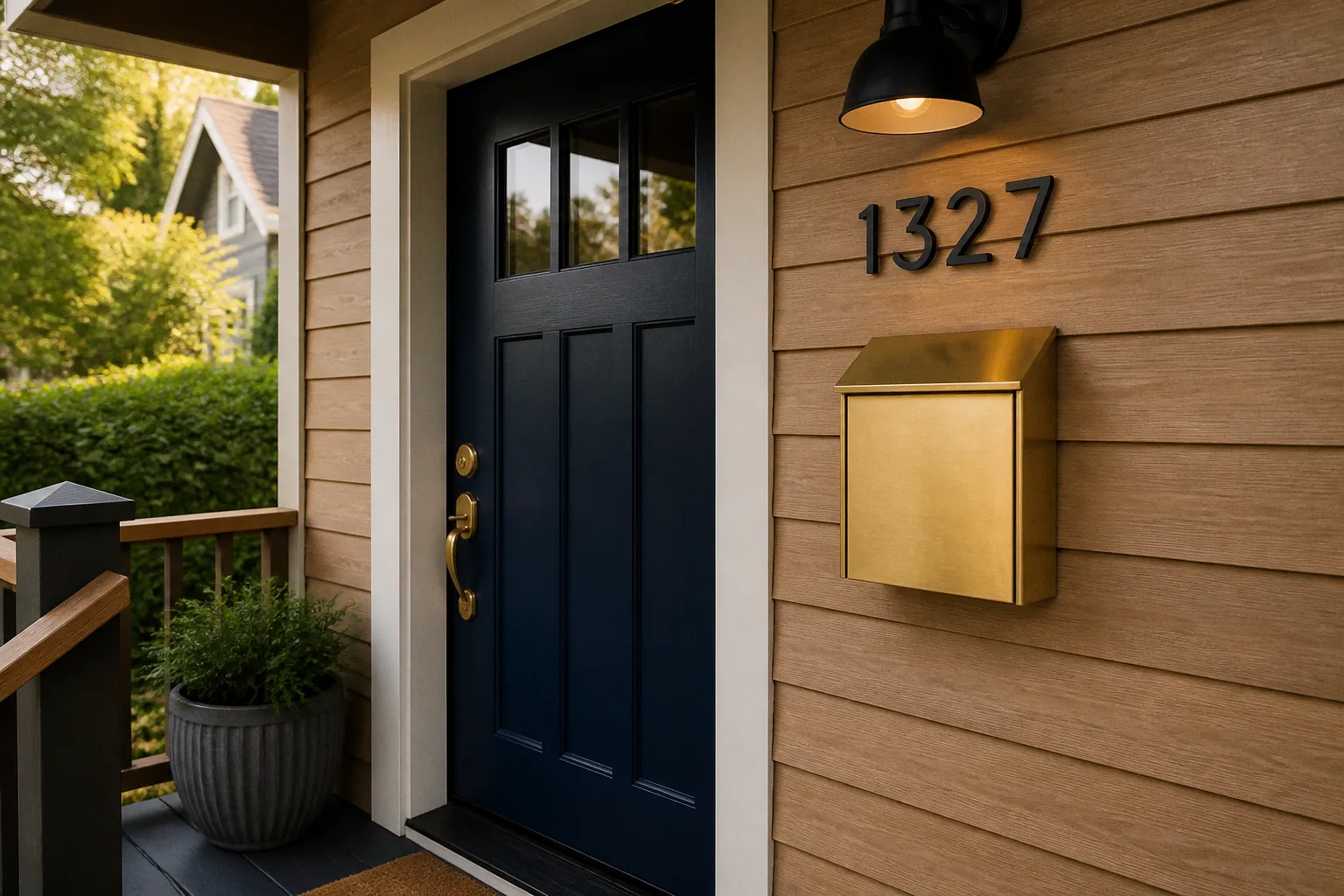
If buyers remember one exterior detail from a showing, it is often the front door. That single plane of color sets the emotional tone for listing photographs, and it is the architectural element a buyer sees each time they approach the house. Treat it accordingly.
The safest approach is not to chase whatever color is currently circulating in design media. Choose a color that gives the entry definition, works with the existing siding and trim, and looks intentional under Seattle's flat grey light.
Three directions tend to do that work well:
- Deep navy reads traditional, photographs cleanly in overcast conditions, and has enough weight to stand out without looking loud.
- Forest green echoes the Douglas fir and cedar tones common in Northwest landscaping. It feels settled and considered, particularly on older homes with natural materials nearby.
- Matte black creates a crisp, modern contrast and can suggest a recent update when paired with matching hardware and uncomplicated trim.
A quart of exterior-grade trim paint is generally enough for one door and its frame, with some left for touch-ups. Two thin coats are better than one heavy coat. Heavy paint can stay soft underneath while skinning over on top, a combination that is especially unforgiving through a wet Seattle winter.
Use a 2-inch angled sash brush on recessed panels and a foam mini-roller on broad, flat sections for a clean finish. The tools matter less than the preparation, but the right combination makes it easier to avoid visible brush marks and pooled paint.
Prepare the door before opening the paint
- Remove the hardware and tape the glass, or remove the door from its hinges if it is a steel or fiberglass unit and can be painted flat.
- Lightly scuff-sand the existing finish with 220-grit sandpaper.
- Wipe away dust with a clean, slightly damp cloth or tack cloth.
- Prime bare wood and any areas where the previous finish has chipped through.
- Check the bottom edge and the threshold area, where moisture damage is easy to miss from the street.
- Paint in conditions that allow the coating to dry properly. Seattle weather can change quickly, so check the forecast before committing to the job.
Let the door cure before reinstalling the hardware. A surface that feels dry to the touch may still be soft enough to mark around the latch, hinges, or handle.
While the door is drying, address the architectural details that frame the entry:
- Railings and balusters
- Stair risers
- Porch ceiling
- Window trim facing the street
- Visible shutters
- Trim around the garage or side entry if it appears in listing photographs
A soft haint blue or clean flat white can work on a porch ceiling, depending on the home's style and existing palette. The point is not to add another color simply because it is available. The point is to remove the visual noise of peeling, stained, or mismatched surfaces.
These supporting details signal ongoing care. They are also what buyers notice when deciding whether a property feels ready for a closer look. A chipped railing or stained porch ceiling is a quiet red flag. Buyers may not articulate it, but they file it under deferred maintenance, and that file tends to grow as they move through the house.
Paint works best at the front door when it looks like a decision, not an apology for everything around it.
Hardware swaps: modernizing the entry in under an hour
Hardware belongs in the fixture-allowance category: a small line item with an outsized impression. Unlike paint, it has no drying time, no second coat, and no weather window to manage.
In under an hour, a homeowner can often replace:
- House numbers
- A mailbox or mailbox post
- The front porch light fixture
- The door handle and deadbolt
- A door knocker, if the entry has one
The finish palette that generally reads as updated in Seattle listings is simple:
| Finish | How it reads | Best paired with |
|---|---|---|
| Matte black | Modern and high-contrast | Black door, white trim, or restrained contemporary details |
| Brushed nickel | Transitional and quiet | Navy or green door with lighter trim |
| Oil-rubbed bronze | Traditional and warm | Forest green door and wood-toned surroundings |
The important part is consistency. A brushed nickel handle beneath an oil-rubbed bronze lantern looks less like a deliberate design choice than a collection of fixtures accumulated over twenty years. If the goal is to make the entry look refreshed in one weekend, choose one finish and repeat it across the numbers, mailbox, handle, and light.
Before buying anything, measure the existing hardware. Check the door thickness, backset, screw spacing, mounting holes, and the size of the area covered by the old fixture. Bring the existing hardware to the store if possible. There is no curb appeal project more punishing than discovering on Saturday afternoon that the replacement handle does not fit the door.
Total spending can vary widely depending on the fixtures, but a coordinated set of mid-grade replacements is usually more useful than one expensive statement piece surrounded by tired details. Prioritize the items that appear in photographs and sit at eye level. House numbers should be legible from the street, the porch light should be clean and functional, and the door hardware should not look loose or corroded.
The porch light deserves particular attention. It is often one of the first details visible in an evening showing or a shaded exterior photograph. Clean the glass, remove dead insects, and check that the fixture is securely mounted before deciding it needs replacement. Sometimes the update is a new fixture; sometimes it is simply a thorough cleaning and a matching bulb.
For sellers, this work can deserve a higher priority than larger exterior projects that cannot be completed properly in a weekend. A new garage door, full landscape refresh, or roof cleaning may be worthwhile in the right situation, but each requires a different budget and timeline. The entryway sequence is processed first, and the hardware is one of the easiest ways to make that sequence feel coherent.
Landscaping polish: edges and trim beat new plantings
This is where many homeowners overspend. A full landscape refresh — new plantings, irrigation work, hardscape installation, soil correction — is a multi-week project with a potentially substantial budget. It is not a weekend play, and trying to compress it into one is how pre-sale budgets lose focus.
What is a weekend play is the maintenance polish that signals recent care.
- Re-edge planting beds along the front walkway and foundation. A clean, sharp edge can add more perceived order than a fresh layer of mulch spread over a ragged bed.
- Pull weeds and remove dead material. Deadhead existing perennials, clear volunteer growth from the path, and remove anything that has gone crispy or collapsed.
- Cut back shrubs touching the house. Vegetation against siding, trim, or the roofline can hold moisture and obscure the condition of the exterior. It also makes windows and paths feel smaller.
- Refresh mulch selectively. Add it where the visible strips along the front walk or entry have thinned. There is no need to blanket the entire property if only the approach is in the listing frame.
- Wash the exterior window glass. If accessible, clean the inside as well. Streaked glass and dirty sills can read as deferred maintenance faster than homeowners expect.
- Clear the front steps and porch. Keep furniture, pots, toys, hoses, and tools from crowding the entry. A welcoming porch needs room to be read as a porch.
Buyers don't audit a front yard the way they audit a kitchen. They scan it. From the curb, they register maintained versus neglected, orderly versus improvised, and cared-for versus awaiting a larger repair. A sharp edge along a foundation bed reads as maintained. A ragged edge colors how they interpret the rest of the property, including the interior they are about to walk through.
The same principle applies to decorative containers. A pair of clean, well-proportioned planters can frame a door, but several mismatched pots with struggling plants make the entry feel unfinished. Keep only what is healthy and intentional. If a planter is empty, clean it; if it is cracked or faded, move it out of the photograph.
If there is one landscaping budget item to prioritize this weekend, spend it on sharp edges and clean windows. Skip new plantings unless something is genuinely dead or blocking the approach. Skip decorative purchases unless they solve a visible problem and will work with the house after the sale.
Why small exterior fixes matter to Seattle buyers
Buyers with more choice tend to become more selective about the properties they pursue. That does not mean every small exterior flaw will eliminate a home, but it does mean an untidy approach can give a buyer an early reason to move on to the next listing.
When a buyer walks up to a property — or scrolls through its online photographs — they are running a mental maintenance audit. Pressure-washed walkways, fresh paint on visible trim, updated hardware in one finish family, edged planting beds, and clean window glass all read as evidence that the homeowner has been keeping up with the property. Each detail makes the exterior feel less like a list of pending tasks.
The effect is cumulative. A single dirty walkway may be dismissed as seasonal. A dirty walkway combined with peeling trim, a crooked light fixture, overgrown shrubs, and obscured house numbers creates a pattern. Buyers may not name every item, but they understand the pattern as work they might inherit.
Weekend curb appeal is risk reduction disguised as decoration.
That is the cost-to-value thesis at the heart of this work. You are not only improving the photograph. You are reducing perceived risk. Lower perceived risk can help a listing earn more serious attention, more comfortable showings, and a better starting position for the conversations that follow an inspection.
The reverse is also useful for buyers. A property with sharp curb appeal does not guarantee that the roof, drainage, siding, or foundation are sound. It should never replace an inspection. But visible maintenance can provide context. When the exterior is orderly, it is easier to distinguish a cosmetic flaw from a broader pattern of neglect. When the exterior is chaotic, the buyer has more reason to investigate every transition, joint, and damp-looking surface.
That distinction matters in Seattle, where moisture is part of the operating environment rather than an occasional surprise. Look beyond the decorative finish. Check whether downspouts discharge away from the foundation, whether gutters are visibly overflowing, whether shrubs hide the lower siding, and whether moss has spread beyond the walking surfaces. Curb appeal should make the property easier to evaluate, not cover up conditions that need professional attention.
The spend-vs-save verdict
If I were handed a weekend, a sensible materials budget, and a Seattle home preparing for sale, I would allocate the work in this order.
Spend on these:
- A weekend pressure-washer rental to reset the substrate before anything else.
- Exterior paint for the front door, frame, and the most visible supporting trim.
- A matched hardware set in a single finish. Matte black is a versatile choice across many Seattle homes, while brushed nickel and oil-rubbed bronze can work better with transitional or traditional architecture.
- A bag or two of fresh mulch for the visible strips along the entry walk.
- A basic edging tool if the homeowner does not already own one. A half-moon edger is inexpensive and useful well beyond this single project.
- Cleaning supplies for windows, porch surfaces, and light fixtures. The small items are easy to overlook, but they determine whether the finished work looks complete.
Save by skipping these for now:
- New plantings unless something is genuinely dead or obstructing access. Defer a larger planting plan to the next owner or stage with a pair of clean, healthy containers.
- Power washing the roof. Leave it to a professional if it is actually needed; DIY roof washing in the PNW combines fall risk with the risk of damaging shingles.
- A full landscape redesign. It is the wrong project, timeline, and budget for a two-day push.
- Anything requiring a permit or licensed contractor. New fencing, electrical work, structural changes, and substantial drainage work are outside the scope of a weekend curb appeal reset.
- Trend-driven finishes that dominate the entire entry. A small accent can be replaced easily; a mismatched collection of trendy fixtures is harder to correct.
The aggregate spend for this package can remain comfortably below the cost of a major exterior renovation, particularly when the homeowner supplies the labor and limits the work to the areas buyers see first. The return is not a guaranteed price increase, and no amount of paint can substitute for correcting a leaking gutter or damaged siding. The value is in the first impression: stronger listing photographs, a more inviting approach, and fewer visible signals that make a buyer wonder what else has been deferred.
A clean entry, a refreshed door, and a maintained front yard do not just look better. They tell the buyer that someone has been paying attention. In Seattle, where rain leaves a record of every neglected surface, that story is worth telling — and it is a story you can finish before the weekend is over.