Madame Tussauds London tickets: a quick guide to skip the lines
Every visitor to Madame Tussauds London runs into the same budget problem before they ever see a wax figure: the line. On peak days, the queue at the ticket window can stretch beyond an hour and, at its worst, approach 90 minutes.
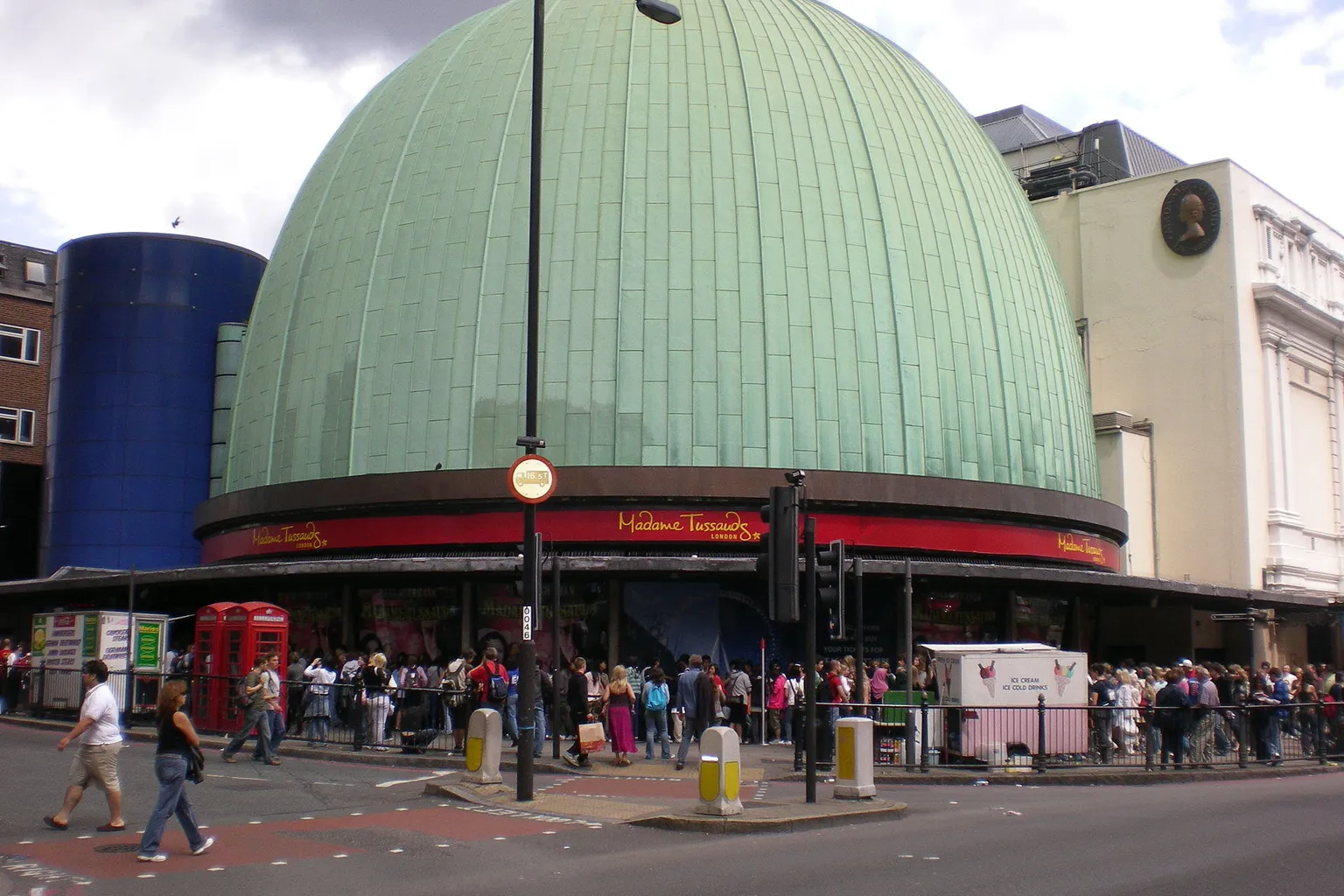
That wait comes before every guest clears the security screening required at the entrance, regardless of which ticket type they hold.
Tickets and prices
Madame Tussauds
I
Save
Box office and online booking
- Child GBP21
GBP21
Official websiteII
skip-the-line
Skip-the-line ticket · 2.5 hours
This ticket gives you fast-track entry to skip the line for a 2.5-hour visit.
GBP32.54
Book ticketsIII
other
Entry ticket · 2.5 hours
This 2.5-hour entry ticket lets you see more than 150 figures of celebrities and participate in experiences.
GBP23.97
Book ticketsThe cost of the day is therefore not only the entry fee. It is also the daylight spent on the pavement before the experience has started, plus whatever comes after it: a missed lunch reservation, a rushed theatre booking, or a connecting Tube journey that suddenly has no margin left.
This is the kind of expense most travelers notice only after they have already paid it. The fix is mechanical, low-drama, and best handled the night before rather than at the gate with a tired family in tow. Madame Tussaud’s exhibition was founded in London in 1835, while the current Marylebone Road site dates from 1884. The queue has become part of the practical history of visiting the attraction, but pre-booking is the simplest way to avoid making it part of your own day.
The financial advantage of booking online versus walk-up entry
To buy tickets Madame Tussauds in advance is usually less about chasing a luxury upgrade than avoiding an expensive mistake. Online prices vary by date, demand, and availability, so there is no single permanent gap between advance booking and buying at the counter. In general, though, booking ahead gives you access to the lower-priced timed-entry inventory and lets you secure a place before the day’s capacity becomes a problem.
Walk-up entry is the least predictable option. You arrive, check what is available, and pay whatever rate applies at that point. A walk-up starting price around £39 has been used for comparison, but it should not be treated as a universal ceiling or a guarantee that every online ticket will cost less. The actual price can change according to the date and the product available on the official booking system.
The more reliable advantage of booking online is that it solves two problems at once:
- You have an entry reservation before arriving at Marylebone Road.
- You can choose between a lower-cost timed ticket and a more flexible fast-track product.
- You can build the visit around other fixed plans instead of treating the attraction as an open-ended stop.
- You reduce the chance of spending a large part of the day in the ticket queue and then discovering that the preferred entry time has gone.
That last point matters more than a simple ticket comparison suggests. A cheaper walk-up decision can become an expensive one if the queue causes you to miss something else that has already been booked. The lost value may be a theatre ticket, a restaurant reservation, a train connection, or simply the only usable afternoon you had in central London.
There is also a basic group calculation. If one ticket is a few pounds cheaper than another, multiplying that difference by four or five people increases the total cash gap rather than narrowing it. What changes in a group is the value of the time being protected. A 60-minute delay affects four people at once, and a family may reasonably decide that the recovered time is worth more than the additional per-person cost. That is a value judgment, not a mathematical claim that the premium automatically pays for itself.
The real price of a Madame Tussauds ticket is not only the number on the confirmation. It is also the time you did not have to spend on the pavement outside.
Comparing standard timed entry and Flexi Fast-Track options
Madame Tussauds London offers entry products with different combinations of price, timing, and flexibility. The choice is not really between a “basic” and a “better” day. Both are ways into the same attraction. The question is how much control you want over arrival and how much uncertainty your itinerary can absorb.
Standard timed entry: the lower-cost, higher-discipline option
The standard ticket booked online in advance assigns you an entry window. You arrive during that period, show the confirmation, and use the designated timed-entry route. The practical benefit is straightforward: you are not starting the visit in the main walk-up queue.
On a well-managed day, the wait at the timed-entry gate may be relatively short, often in the range of a few minutes rather than the hour or more associated with peak walk-up demand. It is not a promise of instant access. You still need to join the correct line, have your booking ready, and pass through security. But the ticket removes the most avoidable part of the process: standing outside while other visitors are still deciding whether to buy.
This is the sweat-equity tier. You pay less, but you give the attraction a precise piece of your schedule in return. That arrangement works well when:
- Your morning is already organized around a known arrival time.
- You are comfortable allowing for Tube delays, walking time, and a short buffer before the slot.
- Everyone in the group can move together.
- You do not need the freedom to postpone the visit until later in the day.
The fixed window is also the main risk. A slow breakfast, a delayed train, or a child who refuses to leave the hotel can turn a useful discount into a logistical problem. The booking may no longer fit the day as planned, and the group could be pushed toward a standby or later-entry arrangement, depending on the terms applying to that ticket.
The right way to think about standard entry is not that it is restrictive in itself. It is restrictive only if the rest of the itinerary is already unstable. For a traveler who has left enough time to reach Marylebone, it is often the most efficient choice.
Flexi Fast-Track: paying for movement and flexibility
Flexi Fast-Track is the more expensive option, but the premium is not simply for a shorter line. It combines a separate Fast Track route with the ability to arrive at a more flexible point during the booked date, rather than being tied to one narrow entry window.
That difference is valuable when the day is likely to move. London transport does not need to fail spectacularly to disrupt a timed plan. A delayed connection, a crowded platform, a long lunch, or a group that takes longer to get ready can be enough. Flexibility gives you room to absorb those changes without watching the clock from across the street.
Pricing is not fixed. The Flexi Fast-Track rate depends on the date and availability, and a starting price can reach around £44. That means it is not accurate to say that walk-up entry is always more expensive than Flexi Fast-Track. A walk-up ticket beginning at about £39 may cost less than a Flexi product on a particular date. The comparison has to be made between the actual products and prices available for your chosen day.
The premium is easier to justify when one of these conditions applies:
- Your itinerary has another time-sensitive booking later in the day.
- You are traveling with children or a larger group whose pace is difficult to control.
- You are arriving from another part of London and do not want a fixed slot to dictate the entire route.
- The visit is a priority, but your morning schedule is not reliable enough for standard timed entry.
- You value the option to arrive later without treating a missed window as a complete failure.
Fast Track still has limits. It does not mean walking through every operational step without stopping, and it does not remove security screening. The route can be quicker and less congested, but the attraction still has to check guests and manage the same building capacity.
Standard timed entry versus Flexi Fast-Track
| Parameter | Standard Timed Entry | Flexi Fast-Track |
|---|---|---|
| Entry method | Designated timed-entry route | Separate Fast Track route |
| Arrival requirement | Specific time window on the booked date | More flexible arrival during the booked date |
| Price position | Usually the lower-priced advance option | Usually the higher-priced option, with date-based variation |
| Example price context | Online prices vary by date and availability | Rates can reach around £44 on some dates |
| Security screening | Required for all guests | Required for all guests |
| Flexibility | Limited if the group misses the slot | Better suited to changing itineraries |
| Best fit | Travelers who can coordinate a firm arrival | Families, groups, and visitors with uncertain schedules |
The table tells the same story as the queue itself: the products do not eliminate every pause, but they change where the uncertainty sits. With standard entry, you accept a fixed arrival time in exchange for a lower price. With Flexi Fast-Track, you pay more for a looser schedule and a separate route through the entrance process.
Navigating the cashless venue and security screening process
Madame Tussauds London operates as a cashless venue. On-site payments, including food and drinks, merchandise, photographs, and other purchases, are handled by card rather than cash. A traveler carrying only notes and coins should not assume that the venue will be able to process a cash transaction at the counter.
That does not mean you need to turn the visit into a financial operation. It simply means that a working credit or debit card should be available before you leave for the attraction. It is also sensible to check that your phone has enough battery if you use a mobile wallet or keep the ticket confirmation there.
Security screening applies to all guests. Fast Track does not bypass the bag check, and no entry tier changes the venue’s restrictions on what can be brought inside. Large luggage is especially awkward. If you are coming directly from a hotel changeover, a station, or luggage storage near Marylebone or Baker Street, deal with the bags before arriving at the entrance rather than hoping the security team will make an exception.
A light bag makes the whole process easier:
- Keep the booking confirmation open or easily accessible.
- Carry only what the group needs for the visit.
- Avoid arriving with bulky luggage that may be refused or slow the screening process.
- Have card payment ready for any planned purchase inside.
- Leave extra time for security even if you have selected Fast Track.
The distinction between the ticket queue and the security queue is worth making clear. Pre-booking can reduce the time spent waiting to purchase or validate admission, but it cannot turn the venue into a no-screening attraction. Every guest must still pass through the checkpoint. That is why the best preparation is not only buying the right ticket; it is arriving with the right bag.
The cashless policy also changes how spontaneous the visit feels. In the past, a traveler could walk in with a few pounds and decide later whether to buy a souvenir or a photograph. Now the practical question is whether the payment method is ready. It is a minor detail, but minor details are exactly what create avoidable pauses when a group is already moving through a busy attraction.
Optimizing your visit duration across the eight themed zones
Once you are through the doors, Madame Tussauds London becomes a different kind of time-management problem. The attraction is spread across eight themed zones and three floors, with more than 150 celebrity wax figures and several experiences competing for attention. The visit can take roughly 90 minutes if you keep moving, or closer to three hours if you stop for photographs, read the displays, and wait for the additional experiences.
Neither duration is automatically the correct one. A brisk visit may be enough for a traveler fitting the attraction between other bookings. A family may need much longer because every figure becomes a photo stop. The mistake is assuming that the building can be absorbed at one uniform pace.
A useful route strategy is to divide the zones into priorities rather than trying to give every room equal attention. Choose two or three areas where your group genuinely wants to linger, then treat the others as a quicker sweep. The music and sports sections often invite photographs and comparisons, while the Chamber of Horrors serves a different purpose for visitors who want the darker side of the attraction.
This is where the renovation analogy earns its place. You do not give every room in a property the same budget or the same finish. You decide where the detail matters, where a clean pass is enough, and where the schedule cannot afford an open-ended delay. Madame Tussauds rewards the same kind of allocation.
A practical pacing model
For a visit of around 90 minutes to two hours:
1. Move through the first zones without stopping at every figure. Use the opening section to understand the layout and identify the displays that deserve a return.
2. Spend the most time in the zones that match your group’s interests. A music fan and a sports fan do not need the same route.
3. Keep photo stops deliberate. One organized group photograph is less disruptive than several separate attempts with different phones and poses.
4. Account for the additional attractions before you start. If the Spirit of London ride or the Chamber of Horrors is important, leave room for it rather than treating it as an afterthought.
5. Use the final part of the visit for missed figures and purchases, not for discovering that the whole group has run out of time.
For a longer visit of two to three hours, the same principle applies, but the pauses can be more generous. Families may need breaks, younger children may slow down at interactive areas, and some displays naturally create congestion. A longer ticket window or a flexible arrival product does not guarantee a quiet building, so the schedule should still have room for movement at the venue itself.
The Spirit of London ride and the Chamber of Horrors
The Spirit of London ride is the experience most likely to affect your internal route. It operates on its own cadence inside the attraction, so it makes sense to check its availability during the visit and plan around it rather than assuming it will be available at exactly the moment you reach the entrance.
If the ride is a priority, avoid leaving it until the final minutes of a tightly planned visit. A short delay in another zone can move the entire group past the useful point in the day. Conversely, do not build the whole itinerary around an exact ride time unless you have confirmed how the attraction is operating on your date.
The Chamber of Horrors works differently as a walk-through experience. It does not require the same kind of separate ride timing, although the route can still become busy. It is a more efficient addition for visitors who want to see another side of the attraction without committing a large block of time to a scheduled activity.
The best order depends on the group. Visitors with a strong preference should go to their priority experience before energy and patience run low. Everyone else can let the route develop more naturally, as long as they do not confuse a flexible visit with an unlimited one.
Family logistics and the real entry math
Children aged 15 and under need to be accompanied by an adult aged 18 or older. Infants under two can enter free with a ticket-holding adult. These rules are simple, but they matter when a booking includes several adults, teenagers, and younger children who may not be moving as one unit.
For a family of four, an hour in the queue is not merely one traveler losing an hour. Four people are giving up that time simultaneously. That does not prove that Fast Track is the financially correct choice, because the upgrade price also applies across the group. It does explain why the calculation feels different for a family than for a solo visitor.
The group decision should compare two totals:
- The additional cash required for the more flexible ticket across every member of the party.
- The practical value of avoiding a long queue and protecting the rest of the day.
If the price difference is £5 per person, the total difference is £20 for four people, not a narrower gap. If the difference is larger, the group total rises accordingly. The benefit is that the group may recover a substantial shared block of time and reduce the risk that one delayed person disrupts everyone else’s booking.
This is also why a single coordinated reservation is usually easier than several disconnected bookings. Book the group for the same timed-entry window when using standard tickets. Separate confirmations can create confusion at the entrance, especially if members of the party have chosen different products or arrival times. Keeping the booking structure simple is not glamorous, but it prevents the most avoidable version of a group-entry problem.
The same discipline applies to children’s equipment and personal belongings. A stroller, changing bag, or large daypack may be necessary, but every extra item has to move through security and through crowded interior spaces. If part of the group is carrying luggage because the visit falls between hotel check-out and an evening train, the convenience of a flexible ticket will not compensate for poor preparation at the entrance.
Which ticket makes sense for which day?
Standard timed entry is usually the sensible choice for a traveler who can reach Marylebone during a defined window. It offers the lower-priced route into the attraction, protects against the main walk-up queue, and works well when the rest of the day has already been mapped around transport and meal plans.
It becomes less attractive when the itinerary is full of variables. A connection from another attraction, an uncertain lunch, or a group that rarely leaves on time can make the fixed window feel less like a saving and more like a constraint. The ticket has done its job only if you actually arrive in time to use it.
Flexi Fast-Track earns its premium when flexibility has a clear purpose. It can be useful for families with small children, visitors with limited time, and groups whose schedules depend on transport connections or several people coordinating at once. It may also be the better fit when the attraction is important enough that missing a narrow entry window would be especially costly.
But the premium needs to be checked rather than assumed. Walk-up entry is not always the most expensive product in pounds. A walk-up price starting around £39 may be below a Flexi Fast-Track price that reaches around £44, while a standard online ticket may be lower than both. Prices depend on the booking date, demand, and availability. The honest comparison is therefore not “online is always cheap and the gate is always expensive.” It is:
- advance standard entry usually buys the lowest price in exchange for a fixed time;
- Flexi Fast-Track usually costs more because it provides more arrival freedom and a separate route;
- walk-up entry may cost more than standard advance booking, but its exact relationship to Flexi Fast-Track varies.
The queue cost is equally conditional. A busy Saturday can make waiting a major part of the day; a quieter period may make the difference much less dramatic. No ticket can guarantee an empty entrance or instant security clearance. What pre-booking does is reduce one category of uncertainty before you arrive.
The cleanest decision is to choose the ticket that matches the weakness in your itinerary. If money is the pressure point and the schedule is stable, choose standard timed entry. If timing is the pressure point and the group needs room to move, consider Flexi Fast-Track. If neither has been planned, walk-up entry leaves the most to chance.
Madame Tussauds is not a property renovation, but the budget logic is similar: spend where the line item protects something important, save where the compromise is manageable, and do not pay for a feature you will not use. The point of booking ahead is not to make the visit feel more elaborate. It is to keep the queue, the security process, and the eight-zone route from taking control of the day.
Practical info
Currency: GBP
Driving: on the left
Emergency number: 112
FAQ
Is it cheaper to buy Madame Tussauds London tickets online?
What is the difference between standard timed entry and Flexi Fast-Track?
Does Fast Track at Madame Tussauds skip security?
How long does it take to visit Madame Tussauds London?
Can I pay with cash inside Madame Tussauds London?
Photo: Citizen59 / CC BY-SA 3.0 — Wikimedia Commons