Property Transformations: a practical guide
Some sellers show up at the closing table having made the same expensive mistake—and the data has been warning them about it for years.
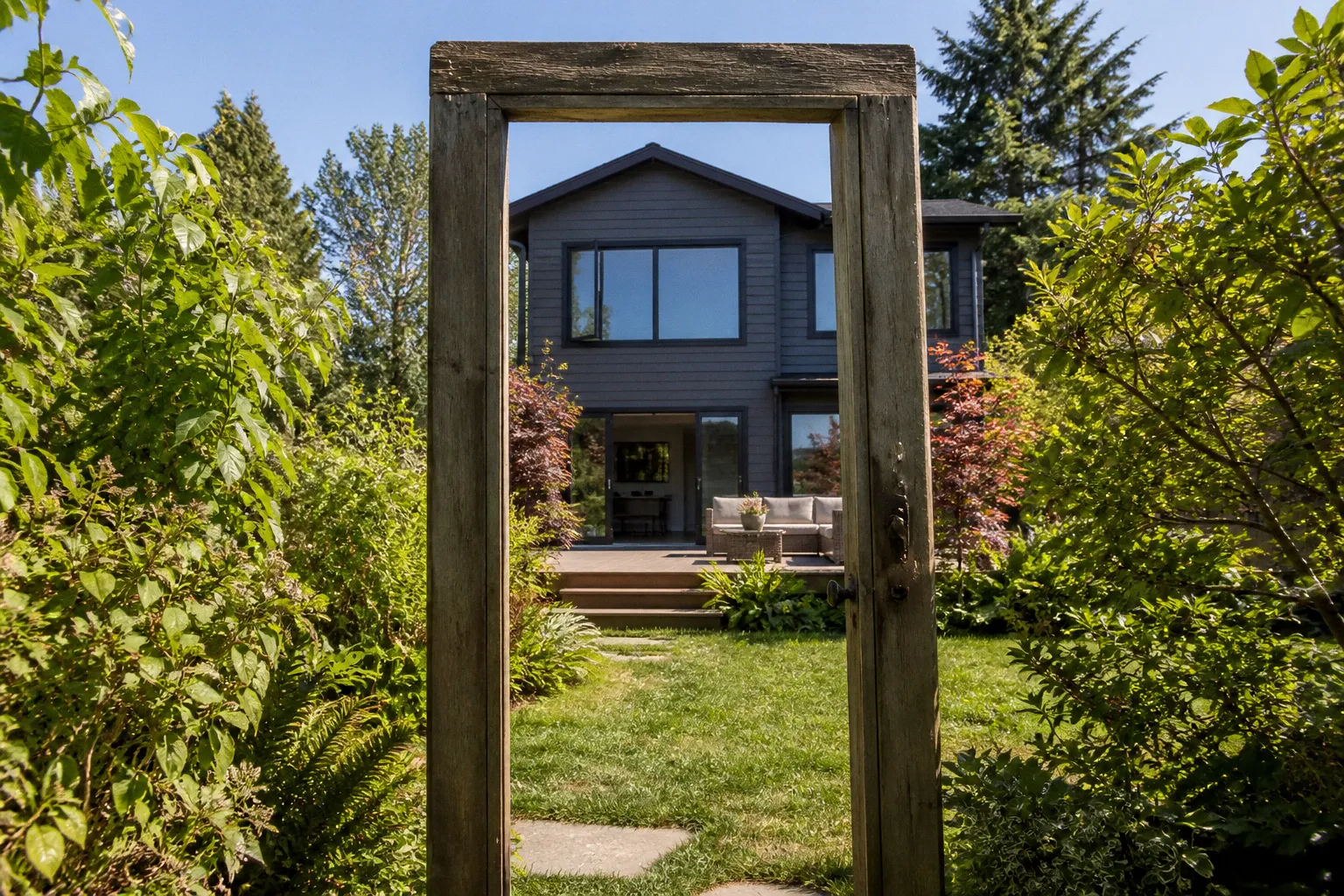
They spent $110,000 on a high-end kitchen gut with the waterfall island, the imported tile, the open shelving they saw on a design show. The buyer's inspector flagged aging wiring behind the freshly tiled backsplash, and now they're negotiating $18,000 off the price. Two blocks away, a seller who spent $14,000 on a garage door, a steel entry door, and a fresh coat of paint walked away with a higher net.
This guide is for anyone in the Puget Sound region about to put money into a property—flippers prepping to list, sellers trying to maximize resale value, and buyers planning to transform after closing. I'm laying out the ROI math, the staging logic, and the before-and-after sequencing that actually works in Seattle. Skip the sections that don't apply. Don't skip the math. The numbers are the part everyone wants to argue with—and the part that decides whether you walk into closing net-positive or net-sorry.
The ROI Reality: Cheap Exterior Wins, Expensive Interior Losses
The first thing anyone transforming a property needs to internalize is where the returns actually come from. The 2025 Cost vs. Value report from Zonda ranked the top ten projects for resale ROI nationwide, and eight of the top ten were exterior replacements. Garage door replacement led the list. Steel entry door replacement was second. If you walk away with nothing else from this guide, walk away with that.
Interior renovations can still pay—but only at the right budget tier. Pacific regional data from 2026 shows that minor cosmetic bathroom refreshes in the $10,000 to $25,000 range deliver an estimated 71% to 85% ROI at resale. Upscale full bathroom remodels running $65,000 to $120,000 or more? Between 37% and 44%. The pattern is consistent: spend more, recover a smaller percentage of what you put in. Every single time.
The market pays you back for solving problems. It does not pay you back for showing off.
This is where sellers get emotional. They want the dream kitchen. They want the primary suite with the freestanding tub and the curb-side rainhead. The market doesn't care about your dream—it cares about whether the buyer's inspector finds a deferred issue, or whether the buyer's lender balks at a property condition requiring work the buyer didn't budget for. The market pays you back for clean, updated, and functional. It charges you for aspirational.
If you're spending on a Seattle transformation, run the numbers before you sign the contract. Then run them again. If your projected resale ROI is below 60%, you're doing the project for yourself, not the market. That's allowed—but adjust your expectations accordingly. Beautiful is not an ROI category.
Bathroom Refresh Logic: Stay in the 71–85% Window
A mid-range bathroom remodel in Seattle runs about $32,758 on average, according to recent Cost vs. Value data. That's the danger zone—close to a minor refresh but heavy enough to drift toward the upscale tier where returns collapse. The smart move is to stay at or below the cosmetic threshold and avoid structural work entirely.
Here's what a $10,000 to $25,000 cosmetic bathroom refresh actually looks like in practice:
- Replace the vanity, countertop, and faucet
- Swap out the toilet (a $400 fix that buyers notice every time)
- Refinish or retile the tub surround
- Replace the flooring—LVP is fine, nobody is asking for $20/sqft porcelain in a starter home
- Repaint, replace the mirror, update lighting and hardware
- Deep-clean the grout and recaulk every wet area
What you skip: moving plumbing, expanding the footprint, converting the tub to a custom walk-in shower, high-end fixtures. The minute you move a drain line, you've moved into the upscale tier—and the ROI math immediately worsens.
If the existing bathroom layout works, work with it. If the layout is wrong—1980s galley bath, tub under a window that doesn't vent, awkward half-bath wedged next to the kitchen—then you're in a different conversation. That's a structural-budget conversation, not a cosmetic one. Run the comps before you commit, and don't let the contractor wave it off as "while we're in there" scope creep.
Kitchen Budget Math: Where the Money Disappears
In 2026, Seattle kitchen remodels range from about $18,000 for a cosmetic update to $150,000 or more for a full gut renovation involving structural changes. Cabinets eat 30% to 35% of that budget. That's not an accident—cabinetry is the most visible element of the kitchen and the most expensive to fabricate. If you're going to cut anywhere, this is not the place.
Here's a workable budget allocation for a mid-range kitchen refresh in Seattle:
| Category | Share of Budget | What You're Actually Paying For |
|---|---|---|
| Cabinetry | 30–35% | Box construction, doors, drawer fronts, soft-close hardware |
| Countertops | 10–15% | Quartz (most common), granite, butcher block |
| Appliances | 15–20% | Mid-range brands; skip the Sub-Zero flex unless comps support it |
| Labor (install) | 20–25% | Demo, plumbing, electrical, install, finish work |
| Fixtures & Misc. | 10–15% | Faucet, sink, lighting, hardware, paint, permits |
If those numbers push your total over $50,000, you've crossed into the danger zone where ROI starts to slip toward the upscale tier. At that point you've got two paths: scale back to a cosmetic refresh, or commit to the upscale build knowing you're planning for ten years of ownership, not the next resale.
The kitchen is where sellers bleed budget and buyers judge hardest. Don't confuse those two things.
Three warning signs you're about to over-spend on a kitchen:
1. You start talking about moving the gas line. That's a structural change, not a refresh.
2. The contractor suggests opening the wall to the dining room to "make it feel bigger." Now you've got a structural project.
3. You find yourself specifying anything "custom"—custom cabinets, custom range hood, custom water filtration system. That's where budgets go to die.
If any of those three triggers fire, stop. Run the comps. Talk to your agent before you sign the change order. The change order is where sellers lose control of their numbers and start negotiating against themselves at the closing table.
Staging: The 23 vs 47-Day Problem
Here's a number that should rattle every seller in Seattle: properties that get professionally staged spend an average of 23 days on market. Properties that don't spend 47 days. That's a 51% reduction in market time, based on transaction data analyzed between 2024 and 2025. On a financed Seattle property carrying roughly $4,000 to $7,000 per month in holding costs, the difference between 23 days and 47 days is real money—usually more than the cost of staging itself.
Staging isn't about making the house beautiful. It's about making the buyer's brain work less. According to the National Association of Realtors' 2025 Profile of Home Staging, 81% of buyers' agents report that home staging helped buyers visualize the property as their future home. Notice the verb: visualize. Buyers aren't evaluating your property—they're projecting themselves into a layout that makes intuitive sense.
A few staging actions that consistently move the needle in Seattle:
- De-clutter ruthlessly. Anything that isn't furniture or art goes into storage. Buyers want to see square footage, not your life.
- De-personalize but don't sterilize. Family photos come down. Texture and warmth stay. A staged house isn't a model home—it's a curated blank canvas.
- Right-size the furniture. A 600-square-foot living room with a 96-inch sectional makes the room feel smaller. Less is more, especially in Seattle's older housing stock.
- Light every room. Even closets and pantries. Buyers open them.
- Address the entry first. The first eight seconds drive the buyer's emotional decision. Staging the entry wrong poisons the rest of the tour.
If you're listing in Seattle and skipping staging to save $3,000 to $5,000, you're gambling 24 days of holding costs against a price reduction you don't want to take. Do the math before you decide. "Save money now, lose it later" is not a strategy; it's a delayed invoice.
Curb Appeal Sequencing: Exterior First, Always
Buyers decide in eight seconds whether they're walking into an open house or driving past it. The exterior transformation is the cheapest, fastest, and highest-ROI work you can do—and it's the work most sellers skip because they assume the kitchen matters more. The market data says otherwise.
The Zonda 2025 data has garage door replacement at the top of the ROI list nationwide. Steel entry door replacement is second. Paint is third. Landscaping is fourth. These projects share two things: they're exterior, and they're relatively cheap.
Here's the exterior sequencing I'd run on a Seattle property before listing:
1. Pressure wash everything. Driveway, walkways, siding where appropriate, fences. Budget: $300 to $800.
2. Paint the trim and front door. A high-contrast door color—black, deep navy, forest green—is the highest-ROI paint move you can make.
3. Replace or update the garage door. If the existing door is functional and matches the home's style, a fresh coat may be enough. If not, replacement pays back.
4. Replace the entry door if it's builder-grade or aged. Steel entry doors consistently outperform wood at the same price point.
5. Landscape the front yard. Mulch, fresh plantings, defined edges. Even a $1,500 refresh transforms curb presence.
6. Update exterior lighting. Modern fixtures at the entry and along walkways. Most buyers notice.
7. Clean the gutters. Unsexy and often forgotten. It signals maintenance discipline—buyers read it as "this owner kept up."
If you only have $5,000 to spend and you're about to list, spend it on the exterior. Always. The interior gets them through the door; the exterior gets them out of the car and walking toward the front steps.
The Transformation Sequence That Works
Here's the operational playbook. Whether you're flipping, preparing to list, or buying a property with plans to transform, the sequence below is what actually works in Seattle's market. Running projects out of order is the most common—and the most expensive—mistake I see.
Order of operations:
1. Property assessment first. Get an inspector or a contractor to walk the property before you commit to any transformation plan. Identify the deferred maintenance—roof, foundation, electrical panel, plumbing. Fix those before anything cosmetic.
2. Structural and systems work next. Roof, HVAC, electrical, plumbing, foundation. These don't show up in ROI reports because buyers and lenders treat them as table stakes. A property with a 15-year-old roof is a property that gets a credit or a price reduction at the closing table.
3. Exterior cosmetic work after systems. Garage door, entry door, paint, landscaping. This is where the cheap-but-powerful ROI lives.
4. Staging and final presentation last. After all the work is done, stage the property. This is where the 23-day vs 47-day advantage gets locked in.
Three things to avoid in the sequence:
- Don't start cosmetic work and then discover a roof issue. Now you're tearing out your own work and eating the demo cost.
- Don't stage before the transformation is complete. Buyers spot half-finished projects and discount for them.
- Don't skip the inspection before you start. The number of sellers who skip pre-listing inspections because they "already know" the house is staggering—and the data on what they don't know is worse.
Cheap returns come from exterior and cosmetic work. Expensive mistakes come from building systems you forgot to check.
If you're buying a property with plans to transform, this sequence still applies—with one addition. Keep your inspection contingency. Don't waive it to win a bidding war on a property that needs $40,000 of work you didn't budget for. That's how sellers become buyers on the wrong side of a bad transaction. The escrow that's "too competitive to condition" is often the escrow that costs you the most at resale.
The Rule of Thumb
Here's the rule of thumb I give every client walking into a transformation in Seattle: for every dollar you plan to spend on a property in this market, assume you'll recover 60 to 80 cents of it on resale—unless it's an exterior replacement or a minor cosmetic refresh, where you'll recover 80 cents to a dollar and change. Anything beyond that is optional. Build your plan around the math, not the Pinterest board, and you'll walk into the closing table with a number you're not trying to renegotiate out of. Skip the math, lead with the dream, and you'll be the one at the table wishing you'd read the data three months earlier.