Trevi Fountain tickets: the shift to managed access
The Trevi Fountain is still free to see from Piazza di Trevi. You can stand above the steps, take in the white stone façade of Palazzo Poli, watch Oceanus rise from the chariot, and understand why…
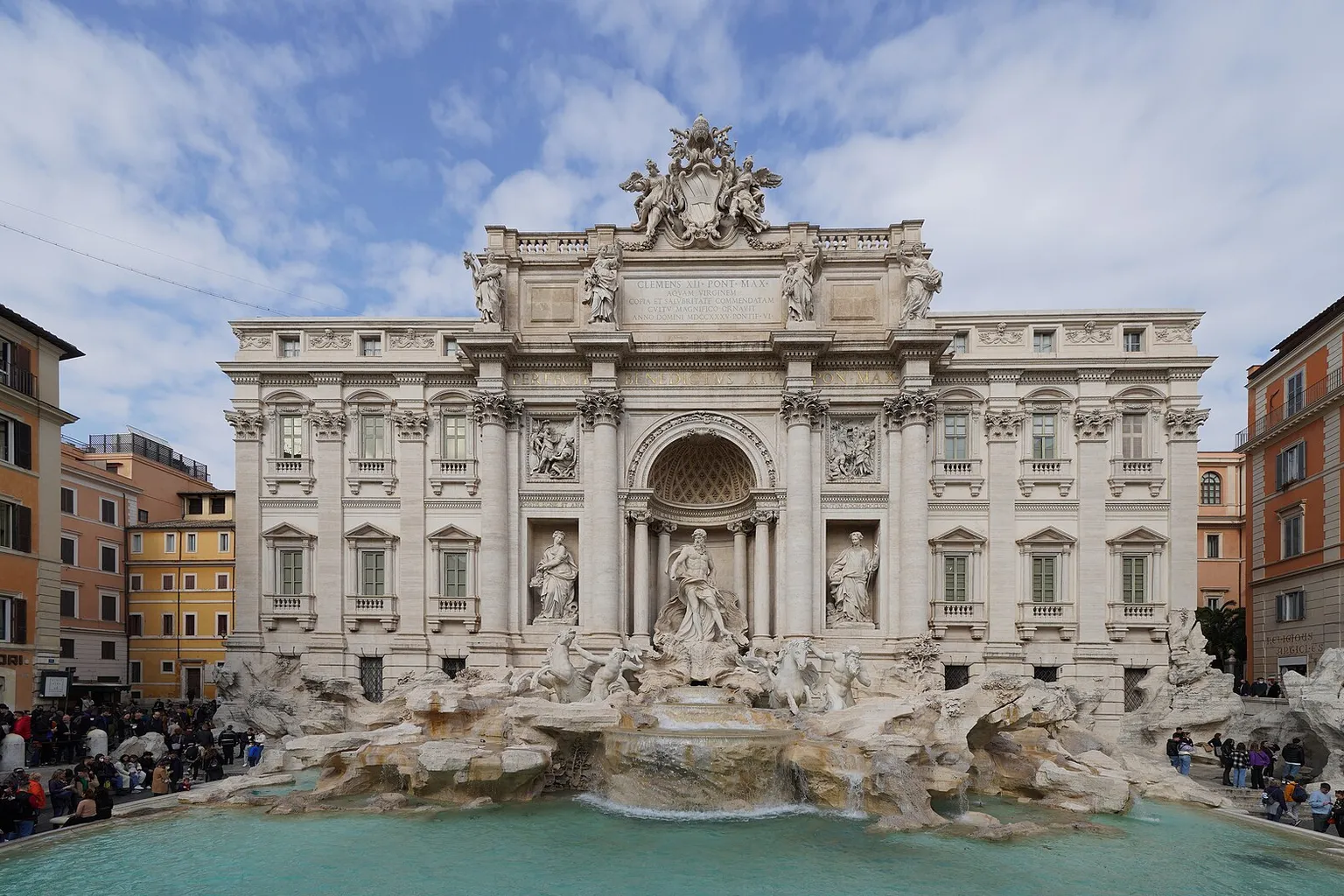
The Trevi Fountain is still free to see from Piazza di Trevi. You can stand above the steps, take in the white stone façade of Palazzo Poli, watch Oceanus rise from the chariot, and understand why this corner of Rome has become one of the city’s most persistent daily bottlenecks without buying anything at all.
Tickets and prices
Trevi Fountain
I
Save
Box office and online booking
- Adult €2
€2
Official websiteII
guided tour
Guided tour · Basin level access
This 35 to 55-minute small group tour includes a professional guide and entry to the restricted basin level.
The change concerns a much smaller space: the inner perimeter and lower basin area directly in front of the water. Since February 2, 2026, tourists and other non-residents of Rome need a ticket to descend to that level during the controlled access window. The new system does not turn the piazza into a paid attraction. It separates the broad public view from the closest, most crowded edge of the fountain.
That distinction is the key to understanding the new Trevi Fountain tickets. If you are planning a short stop between the Pantheon and the Spanish Steps, the free upper viewing area may be all you need. If you want to stand at the water’s edge, photograph the fountain from below, or join a guided visit that includes the basin, you now need to plan that part of the day more deliberately.
The transition to managed access at the Trevi Fountain
Rome did not introduce controlled entry because the fountain suddenly became difficult to admire. The problem is the density of people gathering in a confined architectural bowl, day after day, while the surrounding streets continue to function as ordinary city routes.
Piazza di Trevi is not an isolated museum courtyard. It is woven into the walkability of central Rome, with visitors arriving from several directions and moving through the narrow streets around the fountain before dispersing toward Via del Corso, the Pantheon, Barberini and the Spanish Steps. The result is a remarkable contrast: the fountain feels monumental, but the space immediately around it is physically tight.
More than ten million visitors were recorded at the fountain in 2025. That figure helps explain why the lower steps became the focus of the new Trevi Fountain reservation system. The city is not charging people for a distant view of a landmark; it is managing access to the most concentrated point of pressure.
The first month offers an early indication of the scale involved. Roma Capitale recorded nearly 230,000 entries into the restricted basin area in February 2026. Even with a modest admission charge, the lower perimeter remains an intensely used space, not a quiet architectural overlook.
When you arrive, think of the fountain as having two overlapping experiences:
- The upper piazza: open to everyone without a ticket, with a broad view of the entire composition and the lively movement of Rome around it.
- The lower basin perimeter: a closer, more tightly managed area in front of the water, accessible to non-residents only with a ticket during controlled hours.
This is not a minor wording difference. It changes what you need to reserve, where you need to queue and how much of your visit depends on a timed operating schedule.
The Trevi Fountain has not become a paid view; only the closest layer of the experience is now managed.
From above, you can still appreciate the relationship between the fountain and Palazzo Poli, the rhythm of Nicola Salvi’s design and the theatrical movement from rockwork to water. The free area is not a consolation prize. It is the original public setting from which many visitors have always encountered the monument.
The ticketed access is useful when proximity matters to you. It may also be the practical choice for travelers who want a more structured visit, particularly if a Trevi Fountain guided tour includes historical interpretation, a coordinated entry time or additional stops in the neighborhood.
What the new Trevi Fountain entry fee covers
The new rules apply to tourists and non-residents of Rome who want to enter the inner perimeter and lower basin area directly in front of the fountain. They do not apply to simply walking around the upper area of Piazza di Trevi.
Residents of Rome and the Metropolitan City of Rome can enter the lower basin free of charge. Children aged five and under are also exempt, as are visitors with disabilities and their companions. For everyone else, the question is not whether the fountain can be seen without payment; it is whether descending into the restricted area adds enough to your visit to justify arranging entry.
That decision depends on how you travel.
If you are moving through central Rome with a loose itinerary, the free upper level is often the simplest option. You can pause, look, take photographs and continue without building your day around a timed access point. If the fountain is one of the main reasons for your visit, the lower basin provides a more immediate relationship with the water and the sculptural ensemble, and a ticket or tour becomes part of the plan rather than an afterthought.
The coin-tossing tradition continues separately from the new access charge. Coins thrown into the fountain are still collected for donation to Caritas; they are not treated as ticket revenue. That matters because the tradition has long been part of the fountain’s public identity, while the admission system is a new mechanism for managing physical access.
You may also want to separate the fountain itself from the archaeology beneath the surrounding streets. The underground site of Vicus Caprarius offers a different kind of visit, with a focus on Rome’s buried urban layers and water infrastructure. It is not a substitute for the fountain, and entry arrangements for Vicus Caprarius are separate. Pairing the two can make sense if you are interested in how the Aqua Virgo aqueduct shaped this part of the city, but they should not be treated as one combined ticket by default.
Free admission and paid access at a glance
| Part of the visit | Access for visitors | What it includes |
|---|---|---|
| Upper area of Piazza di Trevi | Free | General view of the fountain and open piazza |
| Lower basin and inner perimeter | Ticketed for non-residents during controlled hours | Close access to the water’s edge and lower steps |
| Lower basin outside controlled hours | Free for all visitors | Access from 10:00 PM to 9:00 AM |
| Lower basin for Rome and metropolitan-area residents | Free | Resident access, subject to the operating arrangement |
| Children aged five and under | Free | Exemption from the basin admission |
| Visitors with disabilities and companions | Free | Exemption for the visitor and accompanying companions |
| Vicus Caprarius | Separate admission | Underground archaeological experience, not the fountain basin |
The most common planning mistake is to read “free access” and assume that every part of the fountain is always open in the same way. The second is the opposite: to hear about the new fee and assume that a spontaneous visit to Piazza di Trevi is no longer possible. Both interpretations miss the geography of the change.
Hours, maintenance and the shape of a visiting day
The ticketed basin access operates daily from 9:00 AM to 10:00 PM, with last entry at 9:00 PM. On Mondays and Fridays, the controlled entry begins later, at 11:30 AM, because of scheduled maintenance.
That adjustment is easy to overlook and can quietly disrupt an itinerary. A Monday morning arrival that looks sensible on a map may lead to an upper-piazza visit only, followed by an unnecessary wait if your plan depends on the lower basin. The same applies to Friday mornings, when a traveler trying to fit the fountain between an early breakfast and a museum reservation may find that the closest access has not yet opened.
The daily schedule creates three distinct planning windows:
1. Before 9:00 AM: the lower basin is outside the ticketed operating period and access is free for all visitors.
2. During the controlled window: non-residents need a ticket to enter the lower perimeter, while the upper piazza remains free.
3. After 10:00 PM: the lower basin returns to free access until the next morning.
On Mondays and Fridays, the morning exception shifts the start of the controlled period to 11:30 AM. The fountain remains visible from above throughout the day, but the experience at the water’s edge follows the maintenance schedule.
For travelers who prefer an early walk, this can be useful. A pre-breakfast visit allows you to see the fountain from the lower level without arranging paid access, provided you arrive during the free early-morning period. That option is not suitable for everyone: Rome’s central streets have a different rhythm before the day gathers momentum, and some visitors would rather see the fountain when the surrounding piazza is fully awake. Still, the schedule gives you a choice that did not exist in the same formal way before managed access began.
Late evening offers another free window, although the practical character of the visit changes. You are no longer planning around a daytime museum circuit, and the streets may feel more atmospheric than efficient. If you are staying nearby, an after-dinner walk can make the fountain part of a broader neighborhood route rather than a single crowded stop.
For a daytime visit, build in enough margin between basin entry and your next reservation. The fountain sits in the middle of a dense walking network, and central Rome rarely behaves like a clean line on a map. A route that looks short can be slowed by pedestrian congestion, street crossings, photographs and the simple pleasure of stopping when an unexpected façade or church opens into view.
How to secure entry
Tickets for the lower basin can be purchased through several channels:
- online through the official Trevi Fountain access portal;
- at civic museums;
- at tourist information points;
- from authorized retailers;
- directly at the entrance.
On-site purchases at the entrance accept credit or debit cards only. That detail is small but useful. If you decide spontaneously to descend into the basin, do not assume that carrying cash will solve the problem at the barrier.
Buying online is the more orderly choice when the fountain is a fixed point in your day. It gives you a reservation to work around rather than leaving the most popular part of the visit to the conditions you meet on arrival. The system is still young, and the exact mechanics of queues and capacity may evolve, but the principle is already clear: the lower basin is no longer something every visitor can approach in the same unrestricted way during the daytime.
There are also guided options, including small-group tours with entry included. These can be appealing when you want context rather than a quick photograph, especially because the fountain’s visual drama can overwhelm its history. A guide can connect the monument to the Aqua Virgo aqueduct, the development of this part of Rome and the relationship between the fountain, Palazzo Poli and the streets that feed the piazza.
A tour is not automatically better than an individual ticket. It is better suited to a particular kind of day:
- Choose individual entry if you want flexibility and already know how long you want to stay.
- Choose a guided visit if you want the architecture and water history explained as part of a larger narrative.
- Choose a small-group format if you prefer some structure but do not want the scale of a large organized group.
- Choose the free upper view if the fountain is one stop among many and you are more interested in the atmosphere of the piazza than in standing at the basin.
The most reliable approach is to decide first which experience you want, then choose the access method. Booking a ticket simply because the monument is famous can add complexity without adding much pleasure.
Reading the fountain from the upper piazza
The managed-access system may change the way we move through the fountain, but it does not reduce the importance of the free public view. In some ways, the upper level makes the composition easier to understand.
From above, you see how the fountain occupies the full architectural face of Palazzo Poli rather than functioning as a freestanding sculpture. The stone, water and building form one theatrical backdrop. Oceanus sits at the center, with figures and horses creating movement across a scene that could easily become visually crowded at close range.
The distance also helps you notice the community fabric of the piazza. Visitors arrive from narrow lanes, stop at the edges, make room for one another and then move onward toward shopping streets, churches, cafés and transit corridors. The fountain is a destination, but it is also part of the daily pedestrian topography of central Rome.
If you are scouting the area on foot, the Barberini Metro station is a useful reference point for understanding the neighborhood’s connections. From there, the route toward Trevi moves through a changing sequence of streets rather than a single grand avenue. Coming from the Pantheon or Via del Corso gives you a different approach again, with the fountain appearing after a series of compressed urban views.
That is one reason not every visit needs to happen at the lower edge. The upper piazza gives you room to observe the relationship between the landmark and the city around it. You can see how people approach, where the walking pressure builds and how quickly the space changes when a tour group arrives or disperses.
For photographs, the broader view may also be more informative. The fountain’s architecture is not only in the figures at the front; it is in the way the entire façade is staged against the palace. Standing lower can make the water feel immediate, but standing higher can make the design legible.
Proximity gives you texture; distance gives you the architecture.
This is also the point at which a practical visit becomes more comfortable. The upper area remains free, so you can return to the piazza without needing another ticket if you want to see the fountain in a different light or from another angle. The controlled basin entry governs the restricted zone, not every moment you spend in the neighborhood.
Heritage preservation versus record-breaking tourism
The new Trevi Fountain tickets sit inside a larger argument about how Rome should manage places that have become both monuments and mass-visit environments.
The fountain’s annual visitor figure is extraordinary, but the challenge is not only the number of people. It is the way those people concentrate around a limited edge, touching the same steps, leaning toward the same water and stopping in the same narrow sightlines. A monument can be publicly accessible and still be physically overwhelmed.
Managed access addresses one part of that pressure. It creates a defined boundary, introduces a controlled period and gives the city a mechanism for counting entries into the most sensitive zone. It also makes the visitor experience more legible: the free area is free, the lower basin is managed, and the two should not be confused.
The policy does not resolve every question. The city may still need to refine how entry flows, how queues are accommodated and whether capacity controls are adjusted as experience accumulates. The exact upper limit on entries per hour has not been established in the available information, so it would be premature to assume that a particular crowd level or queue length is guaranteed.
There is also a question of what visitors feel they are being asked to pay for. A ticket can be understood as a contribution to maintenance and crowd management, but the value is experienced through the quality of access: a clear route, a sensible arrival process and a lower basin that remains protected enough to be enjoyed in the future.
That is why the distinction between admission and donation matters. Coin tossing remains connected to Caritas, while basin entry belongs to the city’s access-management system. They are separate practices with separate purposes, even though they happen at the same fountain.
For residents, the policy may also change the relationship with a place that is often treated as a postcard rather than a neighborhood setting. Free resident access preserves the possibility of returning casually, bringing visiting friends or passing through the piazza as part of an ordinary Roman day. For travelers, the new structure asks for a little more intention but still leaves several ways to experience the monument without a formal booking.
A practical plan for your Trevi Fountain visit
The best plan is not necessarily the most elaborate one. Start by deciding whether you want the fountain as a landmark on a walking route or as the central subject of the visit.
If it is a landmark stop, use the free upper area. Arrive from the direction that fits your day, take time to understand the piazza and continue toward your next destination. You do not need a basin ticket simply to say that you have seen the Trevi Fountain.
If the lower edge matters, choose a controlled-entry time or use the free early-morning and late-evening windows. On Mondays and Fridays, remember that paid daytime access begins at 11:30 AM rather than 9:00 AM. If you are purchasing at the entrance, bring a card.
If you are joining a tour, read the itinerary carefully. Confirm that entry to the lower basin is included and distinguish that from a general walking tour that may only pause in the upper piazza. If underground archaeology interests you, treat Vicus Caprarius as a separate experience with its own ticketing arrangement.
Before leaving your hotel, it helps to settle four details:
- whether you need the lower basin or only the free upper view;
- whether your visit falls inside the controlled hours;
- whether Monday or Friday maintenance changes the start time;
- whether your route allows enough space for central Rome’s real walking pace.
Then leave room for the part no reservation can organize: the streets around the fountain. Trevi works best when you understand its setting, not when you rush from entry gate to photograph and immediately away again. Follow the canopy of side streets, notice how the pedestrian flow shifts around Palazzo Poli and let the fountain sit within a longer route toward the Pantheon, Barberini or the Spanish Steps.
The new system makes the closest access more deliberate, but it does not make the monument less public. You can still arrive without a reservation, stand in the piazza and see one of Rome’s most recognizable compositions for free. You can also choose to go lower, with a ticket, at a time that suits the way you travel.
That is the practical shape of Trevi Fountain access in 2026: not a locked gate around the landmark, but a managed threshold at the water’s edge. Know which side of that threshold you want, and the rest of the visit becomes much easier to plan.
Practical info
Currency: EUR
Driving: on the right
Emergency number: 112
FAQ
Do I need a ticket to see the Trevi Fountain?
What are the Trevi Fountain ticketed access hours?
When can I visit the Trevi Fountain basin for free?
Who is exempt from the Trevi Fountain basin admission?
Where can I buy Trevi Fountain basin tickets?
Photo: NikonZ7II / CC BY-SA 4.0 — Wikimedia Commons