Palace of the Parliament: 3 reliable options for tour tickets
The most expensive mistake at Bucharest’s Palace of the Parliament happens at the security line, not at the ticket desk. You arrive at 11 a.m. on a Saturday in July, wallet in hand, ready to buy a ticket and join the next tour.
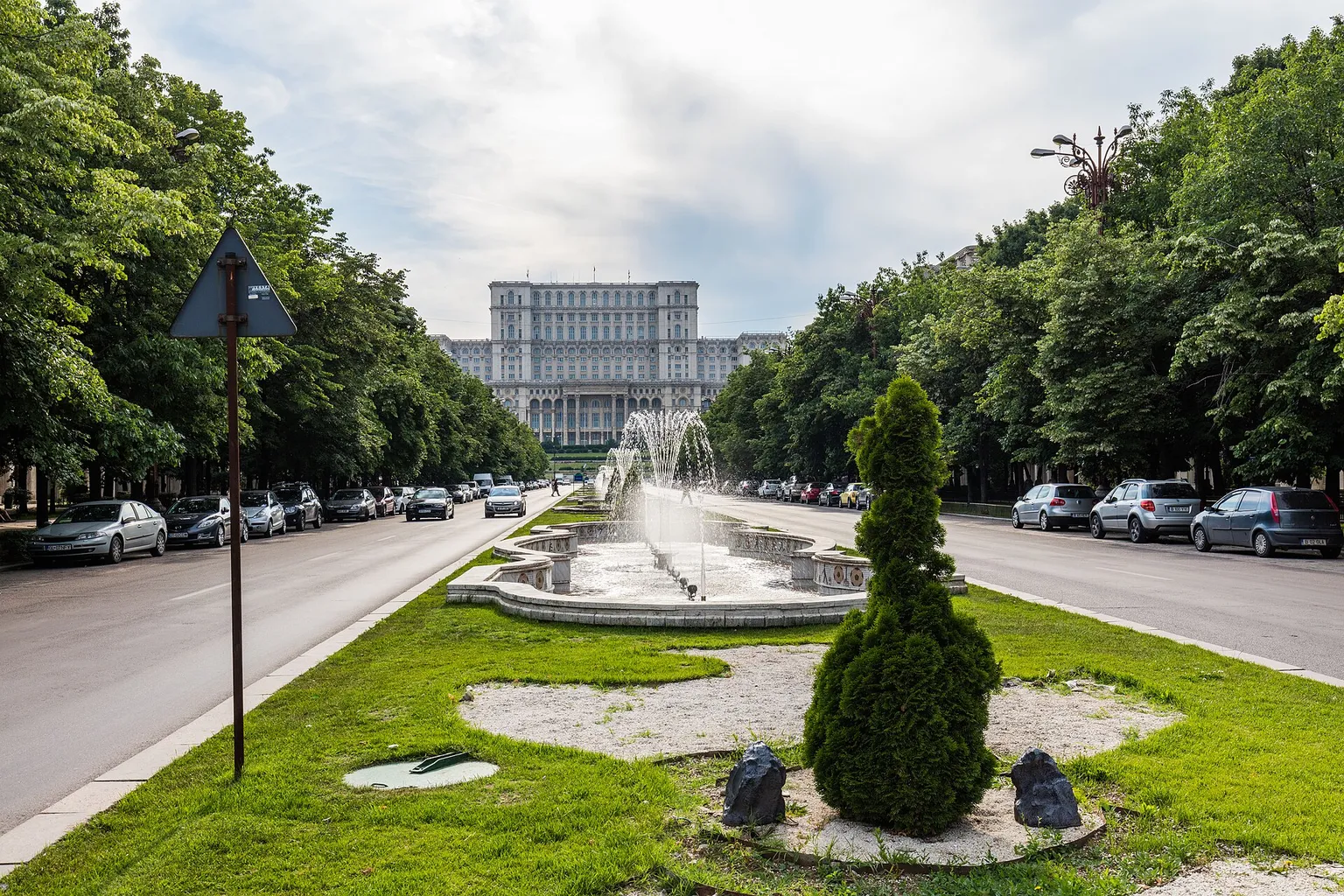
The guard checks your documents. You offer a driving licence. It is refused. A paper copy of your passport will not help either, and neither will a photo of your ID on your phone. The accepted documents are an original, valid passport or an original, valid national identity card.
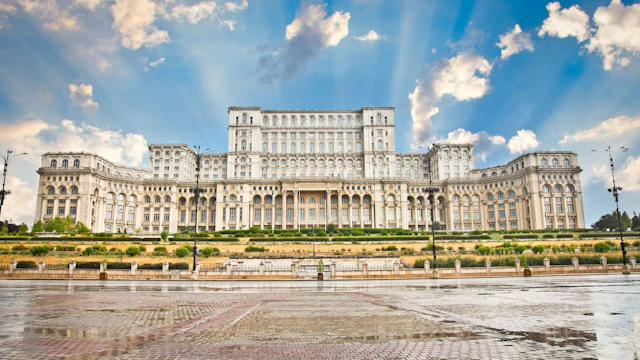
Palace of the Parliament
- Guided tourfromRON173.30
- Guided tourfromRON157.55
Prices checked on August 05, 2026 · current price on the partner page.
Official website — palaceofparliament.com
- Time to spend: 2–3 h
- Best time to visit: morning
Prices are indicative and may change — confirm the price and availability on the partner page.
Partner link — GetYourGuide ticketsNow you are standing near Unirii Square watching the queue grow while you work out a Plan B. That can mean returning to a hotel for the right document, finding a printer that cannot solve the underlying problem, or losing time and money on an unnecessary trip to an embassy.
The document check is one of the most common ways to lose a tour at Romania’s largest landmark, but it is not the only one. Visitors also assume they can book online the night before through an official public reservation portal. The Parliament’s own reservation channels work by phone and email rather than through a standard public booking widget. Others arrive in the afternoon during the colder months and expect the building to remain open until the same time as in summer. It does not: the operating schedule changes, and the last tour leaves earlier.
All of these problems are avoidable. If you want to buy tickets for the Palace of the Parliament, the sensible approach is to match the booking method to your schedule, your group size, and your tolerance for waiting.
Same-day tickets are not a backup plan if you arrive at noon in August. They are a gamble with the sun, the queue, and the second queue behind you at the security checkpoint.
Walk-up access at the Constantin Brâncuși Hall
If you are already in Bucharest and want to keep your plans flexible, the on-site ticket office is the most direct option. It is located inside the Constantin Brâncuși Exhibition Hall at 2–4 Izvor Street. The entrance is part of the Palace complex itself, rather than the main governmental entrance that visitors sometimes mistake for the public access point.
Payment can be made in cash or by bank card. That matters more than it sounds: arriving at a major government building and then having to search for an ATM is an avoidable interruption, particularly when the queue is already moving slowly.
Walk-up tickets are sold for the day of the visit. The office is not a substitute for advance booking, and there is no practical way to reserve a future date online through the desk and collect the ticket the following morning. If your dates are flexible and you are visiting outside the busiest periods, that may be perfectly acceptable. If you are in Bucharest for only a day or have an onward train, flight, or transfer to catch, the same-day method leaves less room for delays.
The queue at the office is also affected by circumstances beyond the ticket desk. July and August bring heavier visitor traffic, while state visits, official events, or temporary closures can affect access to parts of the complex. On those days, arriving late does not merely mean standing farther back in line. It can mean missing the available tour window altogether.
The practical version is simple:
1. Arrive early enough to absorb the security and ticket-office queues, rather than timing your arrival for the advertised tour duration alone.
2. Have your original passport or national identity card ready before you reach the checkpoint.
3. Ask about the available language before paying if the language of the tour matters to your group.
4. Keep the rest of the day flexible, because a walk-up ticket gives you access to the available schedule rather than control over every detail of it.
Tours are guided and cover the main interior areas, including the grand halls and staircases, with access to underground sections depending on the route and the day’s operating arrangements. Individual visitors do not simply enter and explore the building independently. The guided format is part of the visit, so an on-site ticket is not an invitation to wander through the Palace at your own pace.
English is generally the easiest language to find. Other languages may be available, but availability is more dependent on the daily schedule. If you need French, German, or another less frequently offered language, asking at the desk early in the day gives you more options than arriving shortly before the final tour.
Direct reservation for individuals and groups
Advance planning makes more sense when the date is fixed, the group is large, or the Palace visit is one non-negotiable part of a tightly arranged itinerary. In that case, the Parliament’s visitor center is the official route for arranging a visit directly.
For individuals and small groups of one to nine people, reservations are handled by phone. The reservation lines listed for this purpose are +40 733 558 102 and +40 733 558 103. They are staffed from 09:00 to 16:00 local time. The conversation is straightforward but functional: you provide your name, requested date, party size, and contact information, then receive confirmation and instructions for the visit.
The important point is that this is not the same process as buying a ticket from a public e-commerce site. There may be no familiar checkout page, no instant selection from a calendar, and no automatic confirmation generated within seconds. The reservation is arranged through the visitor center, which is why it is worth calling during the stated hours and keeping the details of your travel plans in front of you.
For groups of ten or more, the process moves to email at [email protected]. The request should include the full number of visitors, preferred date, preferred time window, and any accessibility requirements. A larger group needs more than a simple headcount: the staff may need to coordinate the guide, the route, access restrictions, and security arrangements for the whole party.
A lead time of two to four weeks is a reasonable working assumption for group planning, with more notice useful during peak periods. That is not a guarantee that every requested slot will be available. It is a reminder that a group should not treat the Palace as a venue where ten or twenty people can reliably turn up and expect to be placed on the next tour together.
The direct route is strongest when you need clarity from the institution itself:
- The date is important and cannot easily be moved.
- Your party has ten or more visitors.
- You need to discuss accessibility or other arrangements before arrival.
- You prefer to deal with the visitor center rather than a commercial intermediary.
- You want the reservation instructions to come from the official booking channel.
It is less convenient when your plans are still changing or when you are trying to arrange a visit outside Romanian office hours. A phone reservation also requires a little patience: the process is designed around staff confirmation, not instant online purchase.
For a group of ten or more, start with email rather than the individual reservation lines. The larger-party process needs coordination, not just a longer phone call.
When the reservation is confirmed, keep the relevant details accessible on the day. A confirmation does not replace the identity-document requirement. Every member of the party still has to bring an original, valid passport or national identity card.
Third-party booking platforms and skip-the-line benefits
Commercial booking platforms are the third option for visitors who value an online transaction, a mobile voucher, or a more structured sightseeing package. Platforms such as GetYourGuide, Headout, Tiqets, and Viator may list Palace of the Parliament tours with a selected date and time.
The attraction is obvious. You can compare available options online, book before leaving home, and carry the confirmation on your phone. For a traveller with a short stop in Bucharest, a cruise schedule, an airport transfer, or a weekend itinerary arranged down to the hour, that convenience can be worth the additional cost or the less flexible cancellation terms.
Some listings are presented as skip-the-line experiences. That usually means the operator has arranged a meeting process intended to reduce the time spent in the ordinary ticket queue. It does not mean that visitors bypass security, identity checks, or the rules governing access to the building. The security checkpoint remains part of the visit, and every traveller must still carry an original, valid passport or national identity card.
The listing itself requires careful reading. Before paying, check:
- the exact meeting point and whether it is at the Palace complex or nearby;
- the time at which you must arrive, rather than only the nominal tour start time;
- the language of the guide;
- whether the advertised experience includes the standard route or an additional format;
- whether the voucher is mobile or must be presented in another form;
- the cancellation and rescheduling terms;
- what happens if the Palace changes access arrangements or closes part of the complex.
Third-party tours can be useful, but the platform’s presentation may combine several elements: the admission ticket, a guided tour, transport, a host at the meeting point, or an optional sightseeing package. These are not interchangeable. A low headline price may describe only one component, while a more expensive listing may include services that are irrelevant if you are already staying in central Bucharest.
The allocation of third-party tour slots should be treated carefully. The available research does not confirm how those slots are allocated between commercial operators and the Parliament’s official reservation desk. It would therefore be inaccurate to present the mechanism as settled fact or to assume that every platform listing is drawn from an officially controlled public inventory.
That uncertainty does not make third-party booking unusable. It changes what you should expect from it. The platform confirms the booking according to its own system and terms, but the precise relationship between that inventory and the Parliament’s official desk is not confirmed. If the Palace closes for a state event, security decision, or other operational reason, a direct reservation and a platform reservation may be handled through different procedures.
Read the operator’s disruption policy before you pay. Keep the confirmation email and the platform’s support details available on the day. If the visit is especially important, do not rely only on a vague listing title: verify the meeting point, arrival time, and document rules in the booking details.
| Parameter | Walk-up at Brâncuși Hall | Direct reservation | Third-party platform |
|---|---|---|---|
| Booking channel | On-site desk, day of visit | Phone for 1–9 visitors; email for groups of 10 or more | Online listing and mobile voucher |
| Lead time | None, but availability depends on the day | From advance planning to several weeks, depending on the request | Usually selected in advance through the platform |
| Payment | Cash or bank card at the desk | According to the reservation instructions | Online at the time of booking |
| Tour format | Standard guided visit | Standard guided visit | Format and inclusions vary by listing |
| Main advantage | Flexibility for visitors already in Bucharest | Direct contact and a secured date | Convenient online booking and possible queue reduction |
| Main limitation | Queue and same-day availability | Office-hour communication | Operator terms and slot-allocation arrangements are not fully confirmed |
| Best suited to | Flexible schedules | Fixed dates and larger groups | Tight itineraries and visitors who prefer online booking |
Security requirements and document verification
The booking channel changes the administrative side of the visit, but it does not remove the security procedure. Everyone entering the Palace passes through screening. Bags are scanned, visitors pass through a metal detector, and an identity document is checked at the entrance.
The document rule applies to every visitor. It is not limited to foreign tourists, people who booked through a third-party platform, or visitors buying tickets on site. Every person should arrive with an original, valid passport or an original, valid national identity card.
For EU citizens, a valid national identity card is accepted. For visitors from outside the EU, a passport is the relevant document. That does not mean that non-EU visitors have a special rule while EU visitors can use any form of identification. The safe interpretation is broader and clearer: each visitor must bring one of the accepted original documents.
A driving licence is not a substitute. Neither is:
- a photocopy of a passport;
- a printed scan;
- a photograph of the document on a phone;
- a screenshot from a digital wallet;
- a document image sent by another member of the group;
- an expired identity document.
The original-document requirement is easy to overlook because many other attractions accept a booking confirmation on a phone or a copy of an ID for routine checks. The Palace is a functioning government complex with controlled access. The ticket proves that a reservation or purchase exists; it does not replace identity verification.
For a group, the responsibility is collective in practical terms. One person arriving without the correct original document can delay the party or prevent that visitor from proceeding, even if everyone else has a valid booking. Group organizers should state the document rule plainly before the meeting time instead of assuming that each traveller will infer it from the voucher.
Arrive with enough time for the check. A skip-the-line arrangement may reduce one queue, but it does not turn a scheduled visit into an instant walk-through. You still need to locate the correct entrance, meet the guide or host if applicable, present the booking details, and pass security.
Hours, seasonal planning, and tour timing
Opening hours change with the season. From March through October, the Palace operates from 09:00 to 17:00, with the last standard tour leaving at approximately 16:30. From November through February, the schedule shortens to 10:00–16:00, with the final tour around 15:30.
Those times should be used for planning, not as permission to arrive at the last possible minute. The building’s operating hours describe the access window; they do not account for the time needed to find the entrance, join a meeting point, complete document verification, and pass security.
Winter visitors are particularly vulnerable to the late-arrival mistake. A traveller may spend the morning visiting another attraction, have lunch, and then assume there is still plenty of time before five. During the shorter schedule, the final tour may already be leaving. The issue is not simply whether the doors remain technically open. It is whether there is still a tour with capacity and enough time for the required checks.
The calendar can also be interrupted by national holidays, state events, and other official arrangements. Exact closure dates should be confirmed when booking, especially if your trip is short. A third-party platform may display a date as available according to its own booking system, but that does not remove the need to read its rescheduling or cancellation policy.
For same-day access, the most conservative plan is to arrive near the beginning of the operating day. That is not because every morning will be quiet. It is because an early arrival gives you more than one opportunity if the first available tour is full, the queue is longer than expected, or the security process takes time.
Pricing tiers and free admission
The Palace uses different admission categories rather than one universal visitor price. Children under seven enter free when accompanied by an adult. Visitors with disabilities and their designated companion may also enter free when the required supporting documentation is available.
Youth rates apply to visitors from seven through eighteen. Standard adult admission applies from nineteen onward. These categories make the composition of your group relevant when you compare booking methods. A platform listing may bundle admission with guiding or other services, so its total price may not map neatly onto the on-site ticket category.
The current price is also not something to infer from an old travel guide. The on-site desk, the official visitor center, and third-party platforms may present different current rates or packages. Commercial operators may include their own service component, and a themed or expanded experience may cost more than the standard guided route.
If the exact amount matters, check the current price at the point of booking rather than relying on a cached article, an old forum post, or a screenshot shared by another traveller. For the same reason, compare like with like:
- standard admission against standard admission;
- official reservation against an operator’s bundled experience;
- adult, youth, and free categories separately;
- ticket price against the total payable amount, including any platform service charges;
- refundable or changeable terms against non-refundable terms.
Free admission does not mean that the visitor can ignore the reservation procedure. A child or eligible companion may still need to be included in the booking and may still have to pass the same security and identity checks as other visitors. Bring the relevant supporting documentation in its original form where required, along with the visitor’s original passport or national identity card.
Which booking method makes sense?
There are three workable routes, but they serve different kinds of day.
The walk-up desk at the Constantin Brâncuși Hall is the natural choice if you are already in Bucharest, your schedule is flexible, and you are willing to arrive early. It keeps the process simple and avoids advance coordination, but it gives you the least control during busy periods.
Direct reservation through the visitor center is better when the date matters, the group is large, or you need to discuss arrangements before arrival. Individuals and small groups use the phone lines; groups of ten or more should use the designated email address. This is the most direct administrative route, but it depends on communication during office hours.
A third-party platform is useful when you want to buy Palace of the Parliament tickets online, receive a mobile voucher, and reduce the uncertainty of a same-day queue. It can be particularly practical for short visits and visitors who do not want to manage a phone booking. The trade-off is that the operator’s package, cancellation policy, and handling of disruptions need to be checked carefully. The way third-party slots are allocated in relation to the Parliament’s official reservation desk is not confirmed, so do not treat that relationship as a guaranteed feature of the booking.
The choice is less about finding the cheapest visible number than about protecting the part of the day that cannot be replaced. A flexible visitor can accept a queue. A family with a fixed airport transfer may prefer an online reservation. A group of twelve needs a different process from two friends who decide over breakfast. And no booking method solves the problem of arriving without the correct original document.
Bring an original, valid passport or national identity card for every visitor. Check the seasonal hours. Confirm the meeting point or reservation instructions. Then choose the channel that fits the rigidity of your itinerary.
The ticket may get you onto the tour. The document at the door is what gets you into the building.
Practical info
Currency: RON
Driving: on the right
Emergency number: 112
Key facts
Built: 1985
Architect: Anca Petrescu
Height: 84 m
FAQ
What documents do I need to enter the Palace of the Parliament?
Can I buy tickets online through an official website?
How do I book a tour if I am part of a large group?
Are there different opening hours depending on the time of year?
Do third-party booking platforms allow me to skip security?
Photo: Diego Delso / CC BY-SA 4.0 — Wikimedia Commons