Country Music Hall of Fame tickets: a four-stage purchase plan
The most common mistake when people buy tickets to the Country Music Hall of Fame and Museum is treating every ticket as the same product. It is not.
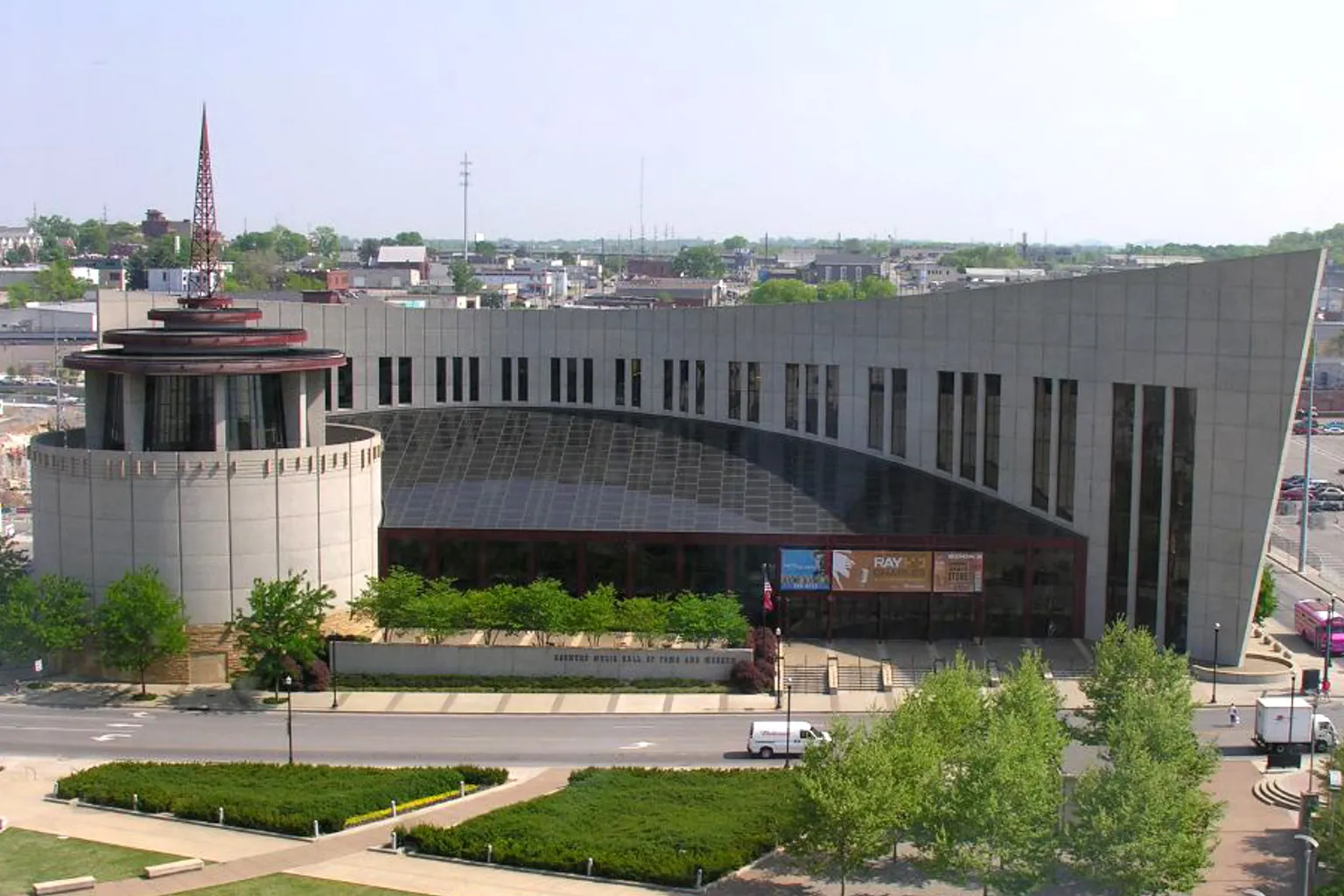
Basic gallery admission gives you access to the museum’s exhibitions, while RCA Studio B, Hatch Show Print, audio tours, and early-access guided visits change the schedule, the logistics, and the total value of the day.
Tickets and prices
Country Music Hall of Fame and Museum
I
Save
Box office and online booking
- Adult USD23
- Child USD21.95
USD23
Official websiteII
other
Entry ticket · Available today and tomorrow
This entry ticket gives you access to exhibits, recordings, films, and instruments that tell the story of country music.
USD31.35
Book ticketsIII
combo ticket
Combo ticket · Guided studio tour and museum entry
This combo ticket includes a guided behind-the-scenes studio tour with stories of Elvis Presley and Dolly Parton, followed by museum admission.
USD54.57
Book ticketsThat distinction matters in Nashville, where a museum visit is often fitted between a honky-tonk lunch, a recording-studio tour, and an evening show. The right purchase is not necessarily the most expensive package. It is the one that matches the time you have, the parts of music history you actually want to see, and your tolerance for extra transportation and fixed tour times.
This four-stage plan keeps the decision practical: choose the museum experience first, add tours only when they earn their place, reserve limited-capacity options early, and schedule the visit around Nashville’s busiest hours.
Stage one: choose the right museum experience
The Country Music Hall of Fame and Museum is open daily from 9:00 a.m. to 5:00 p.m. Central Time, except for annual closures on Thanksgiving Day, Christmas Eve, and Christmas Day. A self-guided visit through the galleries generally takes about 1.5 to 2 hours, although serious country-music fans can spend much longer with the exhibits.
That duration is the starting point for your ticket decision. If your itinerary has a narrow opening before a restaurant reservation or a downtown show, general admission may be the cleanest fit. If the museum is one of the main purposes of your Nashville trip, the more comprehensive options become easier to justify.
The core experience includes the museum’s rotating exhibitions and permanent displays, including the Hall of Fame Rotunda and installations that trace country music through its performers, recordings, instruments, clothing, cars, and production history. Depending on the current exhibition schedule, visitors may encounter material connected to artists such as Johnny Cash, as well as landmark objects such as Elvis Presley’s gold-plated Cadillac.
That detail is worth getting right because the object’s significance does not depend on a claim that it was made from solid gold. The Cadillac is a lavish, highly recognizable piece of music history, and its value in the exhibition comes from its connection to Elvis Presley, its visual impact, and the story it tells about celebrity culture.
The museum is not simply a collection of celebrity memorabilia. Its strongest sections show how the genre developed commercially and technically: how performers were marketed, how studios shaped a sound, and how regional traditions became part of a national recording industry. That is why the self-guided format works well for visitors who prefer to control their pace. You can move quickly through familiar material and slow down where the archive gets more specific.
The Rotunda itself rewards a slower visit. Inductee plaques line the space, and the visual record of country music’s expansion from regional roots to a mainstream American genre is laid out chronologically. Visitors who only have time for a quick walkthrough often miss the connective tissue between earlier performers and later movements.
A short visit can still be worthwhile, but it helps to decide in advance what “worthwhile” means for your group. Someone interested in costumes and instruments may be satisfied with a focused gallery visit. A visitor following the evolution of Nashville’s recording industry will probably need more time for labels, archival material, and the less immediately dramatic parts of the collection.
A practical comparison of the available formats
| Visit format | Best for | What to plan around | Value question |
|---|---|---|---|
| Self-guided museum admission | First-time visitors, families, and travelers with a tight schedule | Museum opening hours and your preferred arrival time | Does the gallery visit already fill the time you have? |
| Museum admission with audio tour | Visitors who want additional context without a fixed guide schedule | Device or audio access during the gallery visit | Will guided commentary add depth, or would you rather read and explore independently? |
| Museum plus RCA Studio B tour | Recording-history fans and visitors interested in Nashville studio culture | A separate tour time and transportation logistics | Is the studio experience important enough to shape the rest of the day? |
| Museum plus Hatch Show Print tour | Visitors interested in poster design, printing, and music-business history | A scheduled guided visit with limited capacity | Do you want the visual and commercial side of Nashville’s music story? |
| Full combination experience | Travelers making the museum a major itinerary anchor | Multiple scheduled components and a longer visit | Will you use all included elements rather than rushing through them? |
| Pre-opening docent-led tour | Visitors who want a quieter, highly structured introduction | Early arrival before general opening | Is exclusive access worth giving up a slower morning? |
The financial discipline here is simple: do not pay for access you will not use. A combination ticket looks efficient only when the schedule allows you to complete the museum, RCA Studio B, and Hatch Show Print without cutting one component short.
The best ticket is not the one with the longest inclusions list. It is the one that fits your actual Nashville schedule without turning the visit into a timed transfer exercise.
Stage two: decide whether the add-ons earn their place
The two most significant upgrades are the Historic RCA Studio B Guided Tour and the Hatch Show Print Guided Tour. Both are separate experiences, and neither should be assumed to be included with ordinary museum admission. Select the relevant add-on or choose a package that explicitly includes it.
These tours serve different interests, so the choice is less about prestige than about subject matter.
Historic RCA Studio B
RCA Studio B is associated with the Nashville recording tradition and with the studio work that helped define the city’s musical identity. The tour is the better fit for visitors who want to understand recording spaces, session work, production conditions, and the relationship between Nashville musicians and the records that emerged from those rooms.
The studio’s reputation rests on specific production history. Visitors who take the tour typically see the room where generations of country and pop records were cut, learn about the technical limitations that shaped the Nashville Sound, and develop a more grounded sense of why this particular studio has the cultural weight it does.
It is also the option that demands more logistical attention. The studio is not simply another gallery inside the museum building. Tour timing and transportation arrangements can affect the shape of your day, and exact future time-slot availability may vary. If your booking screen offers several departure times, choose one with enough margin before and after it. A schedule that looks manageable on paper can become uncomfortable once you add downtown traffic, boarding time, and the walk back into your itinerary.
The studio tour tends to provide more value when:
- You are already interested in how records were made, not only in who recorded them.
- The museum is one of your primary Nashville activities rather than a quick stop.
- You can protect a specific block of time for the tour.
- Your group is comfortable following a fixed schedule.
- You want the museum visit to connect objects and displays with the physical conditions of recording.
It is less compelling when your group mainly wants costumes, instruments, and artist memorabilia, or when the rest of your day is built around non-negotiable reservations. It is also a poor fit for a group that treats every attraction as a quick photo stop. Studio history requires attention to process, not just a brief look at a famous room.
Hatch Show Print
Hatch Show Print offers a different angle on music history. Its importance is tied to the visual promotion of performances: bold typography, hand-printed posters, and the physical design language that helped sell live music before digital advertising took over the job.
This tour is particularly useful for visitors who work in design, publishing, branding, or visual arts, but it also rewards anyone curious about the business infrastructure around music. Artists do not become cultural icons through recordings alone. They need venues, promoters, posters, ticketing, and a recognizable public image. Hatch Show Print makes that supporting system visible.
The shop and working press room show how poster design moved from performance to performance, from venue to venue, and from era to era. For visitors who think about music primarily as an audio experience, the tour reframes the genre as a full visual industry.
The tour may be the stronger add-on if you:
- Enjoy graphic design and printed ephemera as much as music performance.
- Want a more tactile and process-oriented experience.
- Are traveling with someone who is less interested in recording technology.
- Prefer an experience that connects music history with commercial design.
- Like seeing how a recognizable visual identity is built from physical materials rather than only displayed on a screen.
The distinction between the two tours is useful for mixed groups. One does not replace the other. RCA Studio B is about the conditions in which music was recorded; Hatch Show Print is about how that music was presented, promoted, and remembered in public. Adding both can create a coherent day, but only if your group genuinely wants both sides of the story.
Buy individually or choose the combination package?
The all-inclusive combination is useful when both tours are genuinely on your list. It bundles convenience — a single purchase, one transaction, and pre-arranged tour slots — into a single booking. For an adult, standard museum admission plus the RCA Studio B and Hatch Show Print add-ons purchased separately totals $77.95, while the combination ticket is priced at $82.95. The combination does not deliver a price advantage over buying each component on its own; what it offers is a simpler flow and a single ticket to manage on the day. Whether that convenience is worth the difference depends on how much friction a multi-step booking would add to your planning.
The bundle does not create extra hours in the day. You still need to follow the scheduled tour structure, and you still need enough energy to absorb the museum galleries between guided stops. A visitor who buys every available component and then rushes through the exhibitions may see more line items on the reservation than actual content.
Use this decision sequence before paying for a package:
1. Mark the total time available. Count the hours from your intended arrival until your next fixed commitment, not the entire day in theory.
2. Identify your primary interest. Choose recording history, visual design, broad museum coverage, or a balanced mix.
3. Check the tour sequence. Look for gaps between the museum visit and each scheduled add-on.
4. Build in a buffer. Avoid placing a timed tour directly against a meal reservation, concert, or transportation connection.
5. Buy the bundle only when both tours fit. If one component is likely to be skipped, the apparent savings are not savings.
This is the same cost-to-value ratio I use when evaluating a pre-sale renovation: an upgrade earns its place only when it improves the finished result and the project can support it. A crowded itinerary has no fixture allowance for wishful thinking.
Stage three: book limited-capacity experiences before general admission
When you buy Country Music Hall of Fame and Museum tickets online, start with the components that have the least scheduling flexibility. General admission is usually the easiest element to fit into a day. Guided tours, especially those with transportation or a small-group capacity, are the items most likely to determine whether your preferred plan is available.
That means the booking order should be the reverse of how many visitors instinctively shop. Do not begin by selecting a general admission window and then hope the studio tour works around it. Begin with the guided experience you care about most, then build the gallery visit around that reservation.
For a full visit, the cleanest sequence is often:
1. Select the date and check the available guided-tour slots.
2. Reserve RCA Studio B or Hatch Show Print if either is a priority.
3. Add the museum admission that corresponds to that schedule.
4. Consider the audio tour only after you know how much guided content your group will already receive.
5. Review the full itinerary for transfer time, meals, and any evening plans.
6. Save the booking details where everyone in the group can access them.
The last step is easy to overlook. With a basic museum visit, a late arrival may be inconvenient but manageable. With several scheduled elements, one person holding the only confirmation or misunderstanding the meeting point can create avoidable delays. The more components a ticket includes, the more useful it is to treat the reservation as a small itinerary rather than as a simple admission receipt.
Advance booking is especially sensible for peak travel dates, weekends, school breaks, and any visit where a particular tour time matters. Limited-capacity options are not interchangeable with general entry. If a guided slot sells out, having a museum ticket does not solve the problem.
Should you buy a timed-entry ticket?
The practical answer depends on the ticket format available for your chosen date and the rest of your plans. Even when the museum itself can accommodate a broad range of arrivals, a timed tour creates a hard appointment. Treat that appointment as the anchor.
Arriving early gives you more control. The museum opens at 9:00 a.m., while the busiest period is generally between 11:00 a.m. and 2:00 p.m. A morning arrival can reduce crowd pressure in the galleries and leave more room for reading labels, examining instruments, and moving through the larger exhibitions without constantly adjusting your position.
The first hour also helps families and mixed-interest groups. If one person wants to read every panel while another prefers to move quickly, an early start gives both of them more usable time before the midday rush. It is easier to separate briefly and regroup when the building is not at its most crowded.
Avoid creating a false economy by booking the earliest possible tour if nobody in your group can realistically arrive rested and on time. An early reservation that causes a missed start is poor value regardless of the ticket format. Nashville mornings can also involve hotel checkouts, rideshare delays, breakfast plans, and luggage questions, so an early slot should be a deliberate choice rather than an optimistic one.
For visitors comparing country music hall of fame ticket prices, the headline amount is only one part of the calculation. Compare the number of scheduled experiences, the amount of time they consume, and the practical cost of moving between locations. Two tickets with similar prices can produce very different days.
The pre-opening docent-led tour: when exclusive access makes sense
The pre-opening docent-led tour belongs in a separate category because its appeal is not simply that it adds another attraction. It changes the atmosphere of the museum visit. Entering before general opening can offer a quieter, more structured introduction, with the docent determining the rhythm and emphasis rather than leaving each visitor to build a route through the galleries.
This format suits visitors who want context before exploring independently. A docent-led introduction can help first-time visitors understand how the museum organizes country music’s history, where the major narrative transitions occur, and which displays deserve a return visit after the tour. It is also a sensible choice for travelers who prefer to ask questions as they go instead of reading every explanation without a larger framework.
The trade-off is the early start and reduced flexibility. You must arrive in time for the pre-opening schedule, and the tour naturally gives you less control than a self-guided visit. You may spend more time on sections that are not your priority and less time on objects you would have examined on your own.
Book this option when:
- The museum is a central purpose of the trip.
- Your group enjoys guided interpretation rather than independent wandering.
- You value a quieter start more than an unstructured morning.
- You can reach downtown reliably before general opening.
- You want to use the guided introduction to make a later self-guided visit more efficient.
Skip it when your morning is already crowded or when your group’s interests are too narrow for a broad museum introduction. A visitor who wants only one exhibition and a quick look at the Rotunda may get more from standard admission at a convenient time.
The pre-opening tour can also be useful for visitors who are worried that a large museum will feel overwhelming. The Country Music Hall of Fame and Museum covers performers, recordings, instruments, clothing, vehicles, commercial history, and changing exhibitions. A structured opening can turn that breadth into a sequence. It does not eliminate the need to choose, but it gives the day a clearer starting point.
Exclusive access is valuable when it changes the quality of your attention, not merely when it gives you an earlier entry time.
Stage four: use local benefits and manage the day around peak hours
The Country Music Hall of Fame and Museum offers a local admission policy for residents of Nashville-Davidson and bordering counties. Eligible residents can access pay-what-you-want admission, and local youth ages 18 and under may receive free admission under the stated program. Online reservations for this benefit are limited to eight advance tickets per group.
This is a local-access program, not a general discount category for every Nashville visitor. Visitors from outside the qualifying counties should not assume that residency-based pricing applies to them. If you are eligible, review the requirements during booking and reserve in advance, especially for a larger household or group.
Documentation is part of the eligibility check. Confirm what identification or proof of address is accepted before the day of the visit, especially if your group includes adults who share a household but use different forms of ID. A mismatch between the booking name and the residency proof is the kind of small friction that can complicate an otherwise simple admission.
For non-local visitors searching for country music hall of fame discount tickets, the most reliable approach is to compare the official admission formats rather than build a plan around unverified coupon claims. The meaningful savings question is often whether you need every add-on, not whether a third-party listing advertises a dramatic reduction. A lower headline price can become inconvenient if it excludes a tour you already intended to purchase or carries conditions that do not match your travel date.
Plan for a 9 a.m. to 5 p.m. operating day
The museum’s operating window is generous enough for most visitors, but it does not mean every arrival time has equal value. A disciplined itinerary might look like this:
- Early morning: arrive close to opening for a quieter gallery experience or a pre-opening guided tour if you have booked one.
- Late morning: move into the most popular exhibitions before the daily crowd reaches its peak.
- Midday: schedule lunch or a break rather than assuming the galleries will remain comfortable at the busiest hour.
- Afternoon: finish remaining exhibitions, use the audio tour selectively, or attend a later guided add-on if the timing works.
- Before closing: leave enough time for the museum shop and the walk to your next downtown activity.
You do not need to race through the building to avoid crowds. You do need to understand that the period from 11:00 a.m. to 2:00 p.m. is typically the least forgiving for a slow, contemplative visit. If that is the only time your itinerary allows, reserve the elements that have fixed capacity first and accept that the galleries may take longer to navigate.
For visitors planning their first Nashville trip, the museum is well-positioned for a morning visit. The building sits within walking distance of Broadway, the Ryman Auditorium, and most downtown hotels, which means you can step out for a quick lunch, return for an afternoon concert, or move on to Music Row without rebuilding your route from scratch. Walking distance, however, should not be confused with zero planning. Heat, rain, mobility needs, luggage, and the time required to gather a group can all turn a short route into a meaningful part of the schedule.
If your party includes children, older adults, or people with limited stamina, leave room for pauses. The most expensive ticket is not automatically the best ticket if the schedule forces everyone to move continuously from one timed component to the next. A shorter, well-paced visit can deliver more than an ambitious package that leaves the group watching the clock.
How to buy Country Music Hall of Fame tickets without overbuilding the day
The purchase process becomes clearer when the decision is separated into four questions:
1. What do you want from the museum itself?
Decide whether the galleries are the main event or simply one stop between other Nashville plans.
2. Which add-on matches your interests?
Choose RCA Studio B for recording history and studio culture, Hatch Show Print for visual design and music promotion, or both when you have enough time and genuine interest.
3. Which reservation controls the schedule?
Guided tours and pre-opening experiences should shape the plan. Do not treat them as optional details after buying general admission.
4. Are you eligible for a local benefit?
If you live in Nashville-Davidson or a bordering county, check the resident policy and documentation requirements. If you do not, compare official ticket formats instead of relying on questionable discount listings.
This approach also makes it easier to compare online options. When you search for country music hall of fame nashville tickets online, you may encounter several combinations that appear similar at first glance. Read the inclusions, tour times, meeting instructions, and cancellation or change conditions before comparing the totals. A ticket is not cheaper in any meaningful sense if it forces you into a schedule that does not work.
The same principle applies to audio tours. They can add useful context, but they should not be purchased automatically because the option appears on the booking page. If your group already has a docent-led tour and a guided studio visit, another layer of commentary may be more information than anyone can absorb. If you are taking a self-guided route and want more explanation without surrendering control of your pace, the audio format may be exactly the right middle ground.
The sensible purchase is the one you can actually use
There is no single best Country Music Hall of Fame ticket for every Nashville visitor. A self-guided admission is often enough for a traveler with a packed downtown itinerary. A combination ticket makes sense for a music-history enthusiast who can protect a large part of the day. The pre-opening docent-led tour is worthwhile for someone who values interpretation, quiet, and a more deliberate beginning. Local residents should use the program available to them rather than paying standard admission by default.
The mistake is not choosing the least expensive option. It is choosing a package without matching it to the day around it. Start with the experience that matters most, reserve the least flexible element first, and give every timed tour enough breathing room to remain enjoyable. Once the schedule works, the ticket decision becomes much less complicated.
For most visitors, the strongest plan is straightforward: begin with the museum’s galleries, add one tour that reflects your actual interest, and use the rest of the day for Nashville rather than trying to turn every available inclusion into an obligation. That is how you get the history, the atmosphere, and the city in the same visit without making the reservation run the entire trip.
FAQ
How long does it take to visit the Country Music Hall of Fame and Museum?
What is the difference between RCA Studio B and Hatch Show Print tours?
Should I book the Country Music Hall of Fame tours before general admission?
How much does the combination ticket cost?
What time is the Country Music Hall of Fame least crowded?
Photo: Sean Russell from Knoxville, TN, USA / CC BY-SA 2.0 — Wikimedia Commons