Buying & Selling Mechanics: key facts and a clear next step
London is not a single sightseeing zone. It is a set of districts connected by a dense transport network, with attractions that operate on different booking systems and consume different amounts of time.

Things to Do in London: Essential Visitor Planning Guide
A poorly sequenced itinerary creates measurable losses: cross-city transfers, missed entry slots, queues at major attractions, and an afternoon reduced to transit.
Top attractions and activities in London

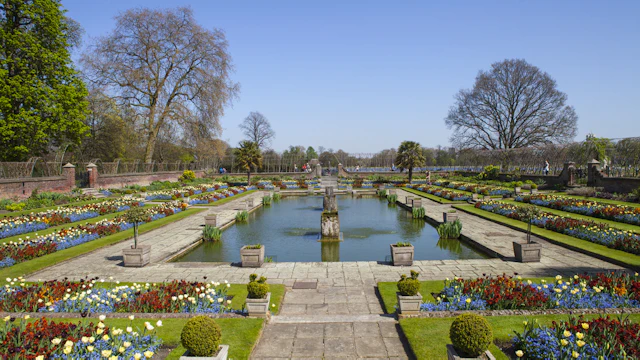

The correct planning unit is not the individual landmark. It is the district, the time window, and the reservation requirement. Group Westminster with the South Bank. Pair Kensington Palace with the museums around Exhibition Road. Treat Madame Tussauds as a timed indoor block, not as an add-on between unrelated attractions. Reserve experiences with limited capacity before building the rest of the day around them.
London rewards geographic compression. The fewer unnecessary crossings in your itinerary, the more of the city you actually see.
Start with London’s geography, not a list of attractions
Most first-time visitors concentrate on Central London. That is rational. The highest density of major sights sits within a relatively compact area, but the walking distances between them are still large enough to affect the schedule.
The city divides into several practical visitor clusters:
- Westminster and Whitehall: the Houses of Parliament, Westminster Abbey, Buckingham Palace, St James’s Park, and the ceremonial core of the city.
- South Bank and Bankside: the London Eye, Tate Modern, Shakespeare’s Globe, Borough Market, and the river walk.
- Kensington and South Kensington: Kensington Palace, the Victoria and Albert Museum, the Natural History Museum, the Science Museum, and Hyde Park.
- West End and Soho: theatres, Covent Garden, Leicester Square, Chinatown, Regent Street, and Oxford Street.
- Marylebone and Baker Street: Madame Tussauds, Regent’s Park, Wallace Collection, and access to the northern edge of the central sightseeing area.
- City of London and the Tower corridor: the Tower of London, St Paul’s Cathedral, Leadenhall Market, Sky Garden, and the riverside route toward the east.
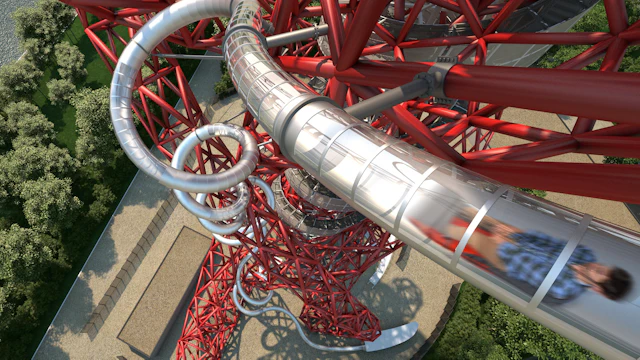
- Stratford and Queen Elizabeth Olympic Park: the ArcelorMittal Orbit, parkland, modern architecture, and a different urban scale from historic Central London.
The main planning error is treating these areas as interchangeable. They are not. Kensington to Stratford is not a casual transfer when the itinerary also includes a timed attraction, lunch, and a return journey. The same applies to a West End theatre booking after an evening reservation on the opposite side of the city.
A workable sequencing rule
Build each day around one anchor attraction with a fixed entry time. Add flexible sights within the same district before and after it.
A reliable sequence looks like this:
1. Select the attraction that requires the earliest booking or has the narrowest entry window.
2. Place nearby museums, parks, markets, and viewpoints around that anchor.
3. Keep at least one buffer period before any evening theatre, concert, or restaurant reservation.
4. Use the Underground for long transfers and walking for the final local connection.
5. Avoid crossing the Thames multiple times in the same day unless the river route is itself part of the plan.
London’s map can make distances look smaller than they are. The Underground reduces travel time, but stations are not uniformly efficient. Some interchanges involve long underground walks, escalators, or multiple platform changes. A route with fewer stops is not always the route with the lowest total time.
How to allocate one, two, or three days
A one-day visit requires a decision between breadth and interior access. You can cover the main ceremonial landmarks from the outside and add one booked attraction, or you can spend most of the day inside a museum or historic site. Attempting both at full depth is not a serious plan.
One day: central landmarks and one fixed attraction
Use Westminster in the morning. Walk through St James’s Park toward Buckingham Palace, then continue to Trafalgar Square and the West End. This provides a high concentration of recognisable London landmarks without requiring a long cross-city transfer.
The afternoon should be assigned to one of three formats:
- A booked museum visit in South Kensington.
- A river route through the South Bank.
- A timed immersive attraction such as Madame Tussauds.
Do not schedule Madame Tussauds, the Tower of London, Westminster Abbey, and a theatre performance in the same day. The theoretical sequence may fit on a map. It does not fit reliably once entry queues, security, food, and transport are included.
Two days: split the historic core from Kensington
On the second day, move west. Kensington Palace works well as an anchor because Hyde Park and the museums of South Kensington provide flexible extensions. The palace has multiple admission categories and accessibility arrangements, so the ticket type should be resolved before arrival rather than at the entrance.
Kensington Palace is also subject to changing presentation schedules. The Queen’s State Apartments are closed for re-presentation until spring 2027. That removes one interior component from the standard visit and changes the value calculation for visitors expecting a complete palace tour. Other palace spaces and exhibitions may remain available, but the current visitor offer should be checked against the date of travel.
The exhibition The Last Princesses of Punjab runs through 2026. It is relevant for visitors interested in the palace’s historical interpretation rather than only its architecture. The distinction matters. A palace visit is not a uniform product: exhibitions, state apartments, gardens, and temporary closures can alter the experience materially.
Three days: add the east or a deeper cultural route
The third day can support one of two approaches.
The first is a historic and financial-city route: the Tower of London, St Katharine Docks, Tower Bridge, St Paul’s Cathedral, and the City of London. This route has a strong geographic logic and can be completed without excessive backtracking.
The second is a modern east London route built around Stratford and Queen Elizabeth Olympic Park. The ArcelorMittal Orbit is the principal paid anchor. The structure combines viewing areas with the Helix tunnel slide, a technically constrained experience rather than a casual viewpoint. Visitors using the slide must meet a minimum height and age requirement and remain below the stated maximum weight limit. The published requirements are operational conditions. Staff can refuse participation when they are not met.
The slide itself is 178 metres long, contains 12 turns, and takes roughly 40 seconds for the descent. It reaches speeds of up to 15 mph. Those figures explain the experience more accurately than promotional language does: it is short, controlled, and engineered around a fixed route. It is not a full-day attraction. Pair it with the Olympic Park, not with a second major attraction in central London.
| Planning variable | Central historic route | Kensington route | Stratford and Olympic Park route |
|---|---|---|---|
| Primary strength | High density of iconic landmarks | Museums, palace history, and parkland | Modern architecture and open public space |
| Best anchor | Westminster Abbey, Tower of London, or St Paul’s | Kensington Palace or a major museum | ArcelorMittal Orbit |
| Booking pressure | High for major interiors | Moderate to high during school holidays | High when slide capacity is limited |
| Weather exposure | Medium | Low to medium | Medium to high |
| Transfer risk | Low if kept within one corridor | Low within Kensington | Higher if combined with central London |
| Suitable visit length | Half to full day | Half to full day | Half day with park extension |
Kensington Palace requires schedule discipline
Kensington Palace is often placed into an itinerary as though it were a quick stop inside Hyde Park. That assumption is structurally weak. The building contains historical rooms, exhibitions, landscaped grounds, and visitor routes that do not all operate as a single continuous circuit.
The practical approach is to separate the visit into three decisions:
Choose the admission category before travelling
Standard adult and child tickets are available, and eligible visitors receiving qualifying UK benefits may have access to a substantially reduced entry option. That arrangement applies under defined conditions and should be checked in advance. It is not a general walk-up discount.
Ticket availability may also vary by date and time. The operational question is not simply whether the palace is open. It is whether the available entry slot fits the rest of the day without forcing a long transfer or a missed reservation.
Allow time for security and internal movement
Historic buildings commonly impose slower internal circulation than modern attractions. Narrow stairs, controlled rooms, exhibition entrances, and staff-managed routes create friction that does not appear in a simple map estimate.
Hyde Park provides flexible recovery time. If the palace visit ends earlier than expected, the surrounding area can absorb the surplus. If it runs long, the museums of South Kensington remain accessible by a relatively short walk or local transport connection.
Do not assume every advertised room is open
The closure of the Queen’s State Apartments until spring 2027 is the relevant example. Historic sites change. Re-presentation, conservation, and exhibition installation can remove rooms from the public route for extended periods.
Before purchasing, confirm:
- Which rooms and exhibitions are open on the selected date.
- Whether timed admission is required.
- Whether the route includes stairs or accessible alternatives.
- Whether photography, food, or bag size restrictions apply.
- Whether the planned visit still justifies the time allocation after closures.
The principle is simple. The advertised name of an attraction is not the same as the operating product on a specific date.
Madame Tussauds is an indoor time block, not a spare-hour activity
Madame Tussauds London contains more than 150 wax figures across multiple immersive zones, with the total often described in a broader range depending on how figures and experiences are counted. The visit typically lasts between one and two hours. That duration is long enough to control the day and short enough to be misused in planning.
The attraction is near Baker Street and Regent’s Park. It can therefore be combined with Marylebone, a walk through Regent’s Park, or a later transfer toward the West End. It is less efficient as a stop between Kensington and the Tower corridor.
The experience is also more operationally complex than a conventional gallery. Visitors move through themed zones rather than a single open room. Congestion accumulates at popular figures and interactive sets. A standard visit can expand when queues form inside the attraction, even if the exterior entry process appears efficient.
The correct booking logic
Book in advance when the visit is tied to another fixed appointment. This is especially relevant during school holidays, weekends, and periods of high tourism demand. Door-desk availability and walk-up pricing can change on peak dates, so the absence of a reservation creates both capacity risk and budget uncertainty.
Plan Madame Tussauds as a defined block:
- Reserve a timed entry where available.
- Avoid placing a critical appointment immediately afterward.
- Add a meal or park walk nearby rather than another distant attraction.
- Treat the visit as mostly weather-proof, which makes it useful on wet days.
- Confirm the current attraction format before travel because immersive zones and displays can change.
The value of the attraction depends on the visitor’s tolerance for staged environments and crowd movement. It is not a substitute for the National Gallery, the Victoria and Albert Museum, or a historic site. It serves a different demand: recognisable figures, controlled spectacle, and an indoor itinerary component.
A timed attraction should control the day’s structure. It should not be forced into whatever gaps remain on the map.
Transport: calculate total movement, not just fares
London’s transport system is extensive, but the network does not eliminate planning friction. The relevant measure is door-to-door time: walking to the station, entering the system, waiting, changing lines, exiting at the destination, and walking again.
For most visitors, contactless payment or an accepted travel card is the simplest method. Daily and weekly fare caps may apply depending on the zones and transport modes used. Airport transfers require separate thought because route choice, luggage, and arrival time can outweigh a small fare difference.
Walking is often the fastest local connection
Within a cluster, walking usually produces a cleaner itinerary than repeated short Underground journeys. This is particularly true around Westminster, Covent Garden, the South Bank, and South Kensington.
Walking also reveals the city’s scale. The route from Westminster toward the South Bank is an attraction in itself, while a short Underground trip may involve station access and platform changes that provide no practical gain.
Use the Underground for corridor changes
Longer movement between districts is where rail transport earns its position. Use it to move from Westminster to Kensington, from central London to Baker Street, or from the centre to Stratford. Once there, consolidate the day locally.
The most common transport failures are predictable:
- Arriving at a station without checking for planned closures or engineering works.
- Underestimating the time required at major interchanges.
- Scheduling a fixed attraction immediately after a long cross-city transfer.
- Choosing a route based only on the number of stops.
- Forgetting that a return journey after a theatre performance may be slower or more crowded.
Check the network status on the day. London’s transport conditions can change faster than a static itinerary.
Afternoon tea: the main variable is format, not pastry
Afternoon tea in London ranges from informal cafés to formal hotel dining rooms. The price spread is wide, but the more useful distinction is operational.
A café-based tea is usually easier to fit into a sightseeing day. It may require less advance planning and can function as a flexible midday break. A heritage hotel experience is different. It often requires a reservation, a longer seating period, dress expectations, and a commitment to remain in one location.
The Ritz is the obvious example of the luxury end of the market. It should not be treated as a casual stop between attractions, and it should not be budgeted using the assumptions of a local café. Pricing at historic luxury hotels can approach the upper end of London’s afternoon-tea market and may exclude additions that visitors assume are standard.
Select the tea according to the itinerary
Use these distinctions:
- Café or casual venue: suitable for a flexible day and lower planning risk.
- Department-store or mid-market venue: useful when shopping districts are already on the route.
- Historic hotel: best treated as a destination reservation with a defined dress and timing policy.
- Themed or seasonal tea: attractive when the format is part of the purpose, but availability may be limited.
Reserve formal venues well ahead of the visit. The relevant constraint is seating capacity, not citywide supply. London has many places serving tea, but the specific room and time slot you want may have limited availability.
Do not place a formal afternoon tea directly before an attraction with a rigid entry window. Allow for the meal’s full duration, not the time required to consume the food. The setting, service sequence, and table turnover are part of the product.
Queues, seasonality, and the value of advance booking
London’s demand is uneven. School holidays, summer weekends, public holidays, and major events increase pressure on the same attractions. Weather changes the distribution rather than eliminating demand. Rain pushes visitors toward museums, covered markets, Madame Tussauds, and indoor palace or exhibition routes. A clear day increases demand for parks, viewpoints, walking routes, and riverfront areas.
Advance booking is most valuable where three conditions overlap:
1. The attraction has timed entry or finite daily capacity.
2. The visit is central to the itinerary.
3. A missed slot would create a chain reaction through the rest of the day.
Book first for:
- Major historic interiors.
- Popular immersive attractions.
- Formal afternoon tea.
- Theatre and evening performances.
- Experiences with physical eligibility requirements or limited session capacity.
- Restaurants located near a fixed event.
Leave flexible space for:
- Parks and public squares.
- River walks.
- Free museums and galleries where timed entry is not mandatory.
- Markets.
- Neighbourhood exploration.
- Weather-dependent viewpoints and outdoor routes.
This is a risk allocation problem. Fixed-capacity experiences should be secured early. Open public spaces should absorb schedule changes.
A practical three-day allocation
| Day | Morning | Afternoon | Evening |
|---|---|---|---|
| Day one | Westminster and St James’s Park | Trafalgar Square, Covent Garden, or South Bank | West End performance or central dinner |
| Day two | Kensington Palace and Hyde Park | South Kensington museums | Afternoon tea or a nearby restaurant |
| Day three | Tower corridor or Stratford | Complete the selected district locally | Flexible evening with minimal travel |
The table is a framework, not a mandatory route. If rain is forecast, move museums and Madame Tussauds forward. If weather is stable, use the clearer day for parks, viewpoints, and the river.
The next step is to lock the anchors
Before buying attraction tickets, write down four facts:
- The number of full days available.
- The area of your accommodation.
- Any fixed evening commitments.
- The attractions that would materially disappoint you if unavailable.
Then assign one anchor to each day. Check the official operating calendar, current closures, entry conditions, and booking requirements. Only after that should you fill the surrounding hours.
The binary projection is clear:
- If you reserve capacity-controlled attractions and group the itinerary by district, London will deliver high sightseeing yield with manageable transfer time.
- If you buy isolated tickets first and build the route afterward, transport and queue exposure will consume the margin.
The city is not difficult because it lacks options. It is difficult because the options compete for the same hours. A precise schedule resolves that competition before arrival.