Seattle Mayor Launches Executive Order to Fast-Track Residential Construction
Mayor Katie B. Wilson signed Executive Order 2026-4 on August 19, 2026, as reported by Seattle.gov, directing the city to streamline housing permitting and convene a Housing Production Task Force within existing department resources.
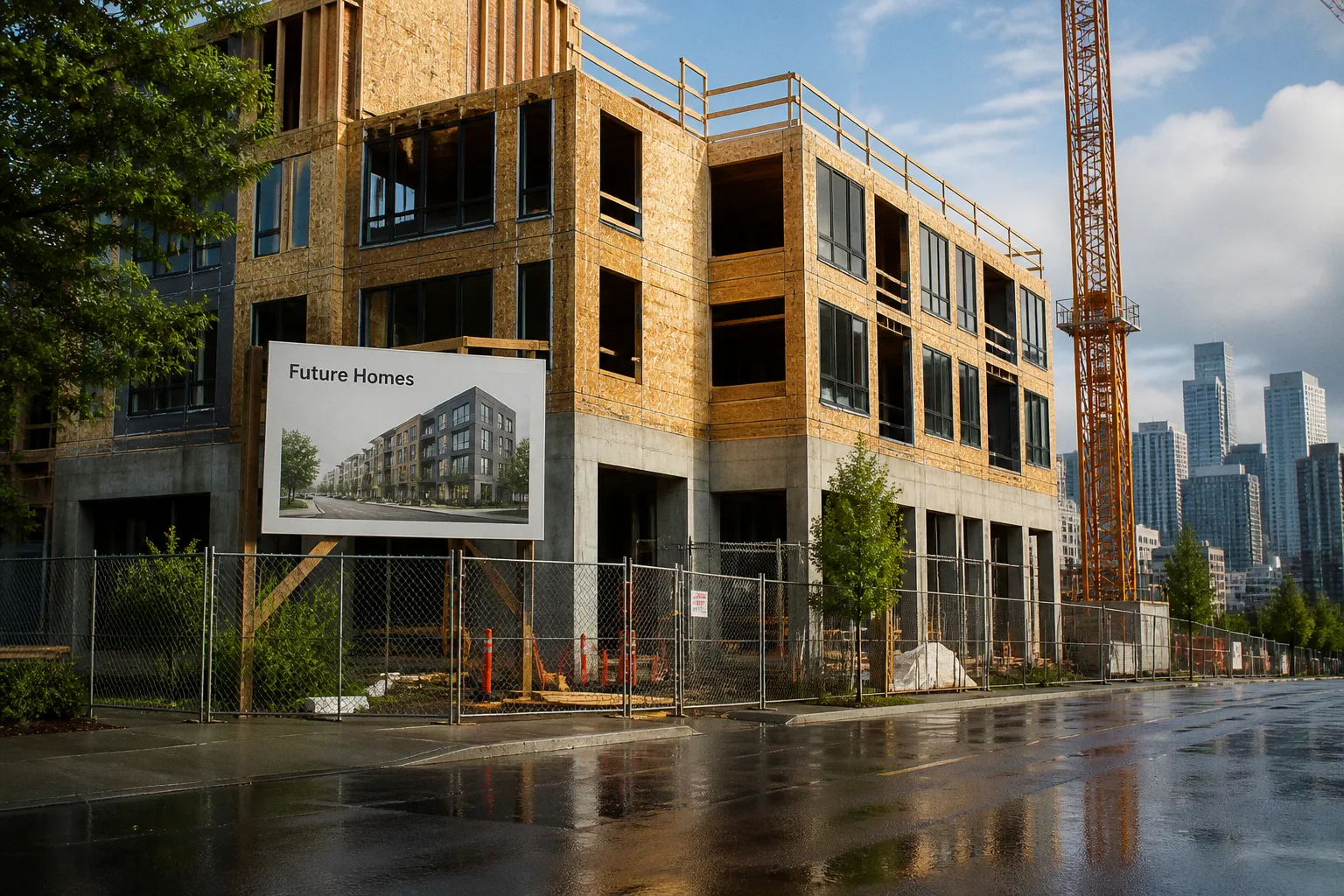
The order targets both affordable and market-rate supply and explicitly ties permitting timelines to housing-cost outcomes. For Puget Sound buyers, sellers, and developers, this resets one of the three core variables shaping local median prices: the conversion rate from entitled land to delivered units.
Timeline and Deliverable Cadence
The task force runs on a 12-month work cycle. A status report with 2027 policy recommendations is due no later than February 2027. Final recommendations covering 2028 and 2029 land by September 2027. That sequencing is the actionable signal: any permitting reform enacted in the first half of 2027 can shift construction starts within 12 to 18 months, directly compressing or extending the current supply gap. City departments have already been moving on parallel tracks; the order formalizes that work and forces interdepartmental coordination between the Mayor's Office, the Office of Planning and Community Development, the Office of Housing, and SDCI.
Stakeholder Composition
Co-chairs are Councilmember Eddie Lin (District 2), Tiffany Kelly-Gray (Director of Strategic Initiatives at Bryd Barr Place), Cartner Nelson (Director of Government Affairs at CREDA), and Joel Ing (Principal at Edge Developers). Membership spans labor, affordable housing providers, community-driven organizations, and market-rate developers. Inclusion of market-rate capital signals the order targets the full yield curve of residential product, not subsidized units alone. CREDA and Edge Developers bring transaction-side data to a process historically dominated by policy-side voices.
Policy Targets
Six deliverables anchor the work: production for households below 50% of area median income, larger household unit types, updates to the Mandatory Housing Affordability program, restructuring of Design Review, expansion of permanent supportive housing, and anti-displacement preservation of existing affordable stock. The order also names coordination with King County's Breaking the Cycle workgroup, King County's countrywide housing revenue table, and the Washington Accelerator for Residential Production. Multi-jurisdictional alignment reduces the risk that Seattle's reforms are undercut by adjacent county-level friction.
Direct Attribution
Mayor Wilson framed the action in the official announcement: "Housing that people can afford is critical to a city that works for everyone. We can't control every force that drives up the cost of building homes, but we can act where it counts. This Executive Order is about clearing the path, cutting the delays, and building the housing Seattle needs — now." Councilmember Lin added: "I'm honored and incredibly excited to work with this diverse and extremely accomplished group. As we work collaboratively, we must be laser focused on building and preserving housing for people of all incomes."
Binary Projection
If SDCI implements a permitting cycle reduction of 20% or more by Q3 2027, expect median compression on attached product in Seattle's urban villages within 18 months, with measurable absorption-rate shifts in the multifamily segment. If the task force produces advisory output without binding SDCI process changes, current inventory absorption persists and pricing pressure on the single-family median continues at the trajectory observed since 2023. The next data point to watch is the February 2027 status update — that document will determine whether the order converts to throughput or remains policy theater.