Seattle and Tacoma Home Sellers Are Cutting Prices at Record Speeds
Existing-home sales fell 1.7% in July, according to The Seattle Times, with record prices and elevated mortgage rates cited as the primary constraint on would-be buyers.
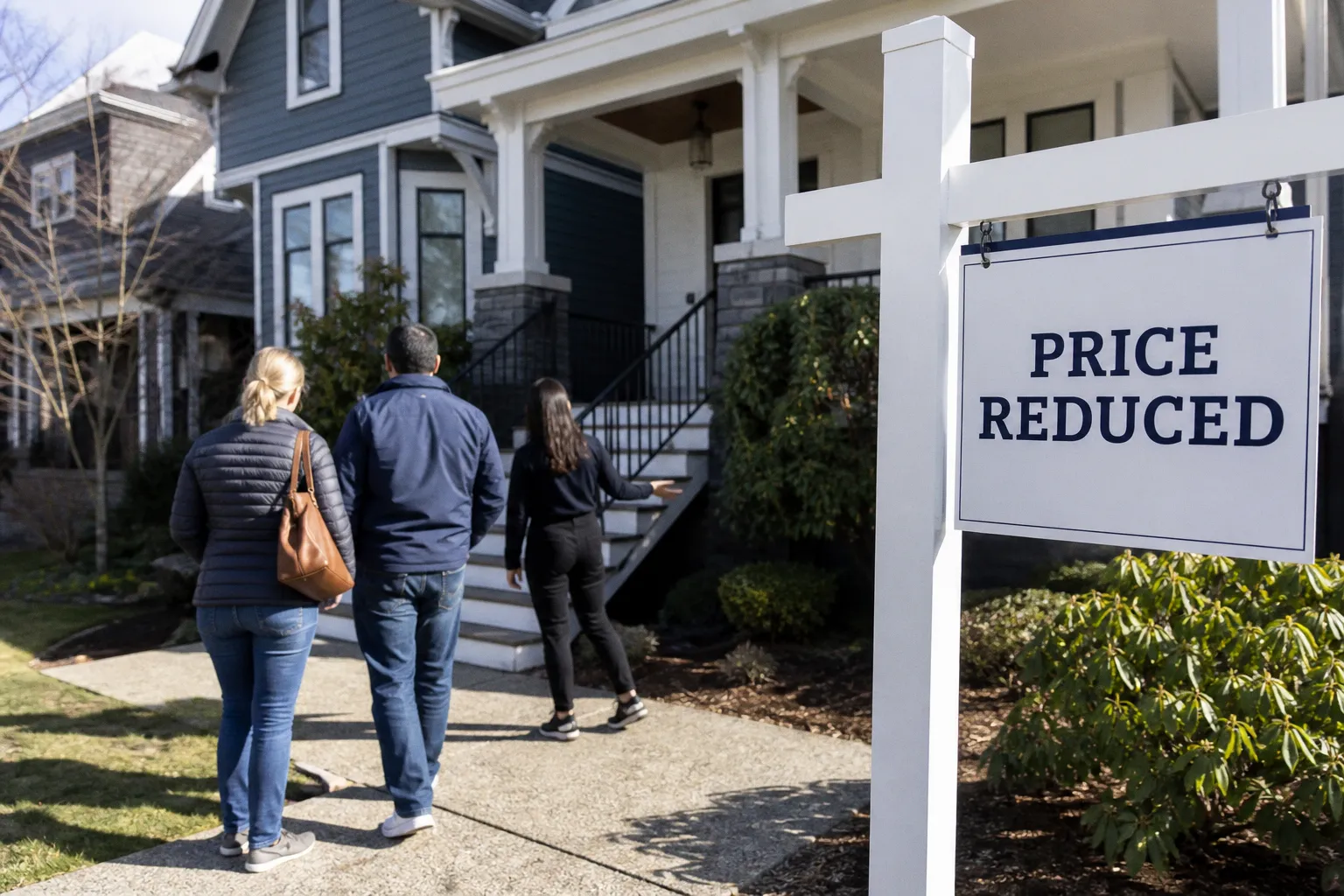
Against that national backdrop, a report highlighted by 570 KVI places Seattle and Tacoma among the U.S. metros where sellers are cutting asking prices at the fastest rates in the country.
The pricing data
The 570 KVI report places the Seattle-Tacoma market among the top tier of U.S. metros where listing reductions are accelerating. Specific reduction percentages are not detailed in the available reporting. What is confirmable: the national existing-home transaction count contracted 1.7% in July, with The Seattle Times citing record prices and elevated mortgage rates as the binding constraint on the buyer side.
The pricing dynamic in Seattle and Tacoma is consistent with a market working through inventory that priced too aggressively in earlier cycles. When list prices outrun absorption rates, the correction shows up first in the share of active listings carrying at least one price reduction—not necessarily in headline median shifts. Median compression follows only when reductions accelerate across a sufficient share of the active stock. The current signal is that the correction has not yet compressed the median; it has compressed the asking-price distribution.
The rate curve
Per the Seattle Post-Intelligencer, average mortgage rates declined modestly for the first time in six weeks but remain steeper than the same period last year. The direction matters less than the level. A small move changes monthly payment calculations at the margin; a larger move resets affordability across multiple price bands.
For sellers, the implication is direct: the longer rates hold at current levels, the more inventory sits and the more listings join the reduction column. For buyers, the implication is inverse but equally mechanical: every week rates stay flat is a week of inventory expansion, which feeds into median compression over the next reporting cycle.
What to track
- Inventory weeks of supply in King and Pierce counties, measured against the 30-day moving average.
- Median compression—the gap between median list price and median sale price, month-over-month.
- The rate trajectory across the next two reporting cycles.
The projection
The binary read: if rates hold near current levels through the next reporting cycle, the reduction rate in Seattle and Tacoma is likely to remain in the national top tier, with inventory continuing to expand and the gap between list and sale price widening. A material rate decline—sized enough to reset affordability calculations across at least one price band—would arrest the correction, pull inventory off the market faster, and compress the reduction frequency back toward the regional mean.