Pyramids of Giza: visitor access before and after booking
The biggest mistake visitors make at the Pyramids of Giza is assuming that one admission ticket unlocks the entire site. It does not.
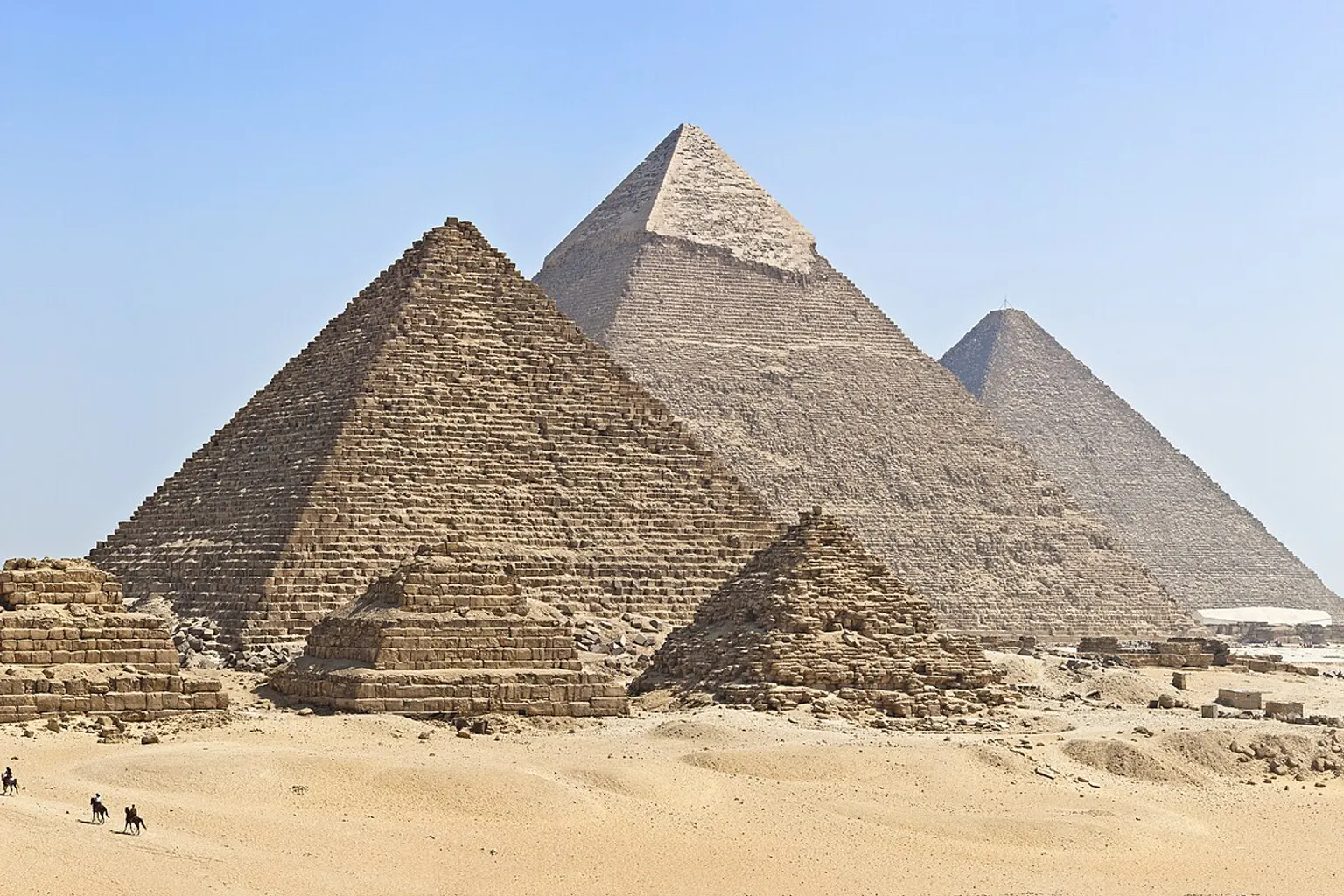
General admission covers the Giza Plateau, the exterior views, and access to the Sphinx viewing area, while entry inside the pyramids and several tombs requires separate tickets.
Tickets and prices
Pyramids of Giza
I
Save
Box office and online booking
- Adult EGP310.67
EGP310.67
Official websiteII
entry ticket
Entry ticket · QR code direct access
This general admission QR code ticket lets you enter directly without waiting in ticket lines and explore the site at your own pace.
EGP897.17
Book ticketsIII
combo ticket
Combo tour · 7 hours with hotel pickup
This 7-hour combo trip includes hotel pickup, visits to multiple historic sites, and optional lunch at a local restaurant.
EGP11962.31
Book ticketsThat distinction changes the entire planning equation. If you only want to walk the plateau and photograph the Great Sphinx of Giza, the basic admission route may be enough. If you want to enter the Great Pyramid of Khufu, visit the interior of the Pyramid of Menkaure, or add the Tomb of Meresankh III, you need to make those decisions before you reach the gate.
The modern process is built around digital reservations, QR-code verification, and card payments. The old assumption—arrive with cash, stand in line, and decide everything at the counter—no longer gives you a reliable plan.
The Giza Plateau entry system has two separate layers
A visit to the Giza Necropolis is easier to manage when you separate the experience into two layers:
1. Access to the plateau itself
2. Access to individual interiors and additional attractions
The Giza Plateau general admission ticket is the foundation. It provides entry to the archaeological site, exterior views of the three main pyramids, and the Sphinx viewing area. It does not automatically include the interiors of the pyramids.
This is not merely a pricing detail. It affects your route, your time budget, and whether you can realistically add an interior visit after arriving.
The plateau is large, exposed, and physically demanding. Moving between the entrance, the Great Pyramid, the other pyramids, the Sphinx, and the available tomb areas takes more effort than a simple museum visit. A visitor who arrives without deciding which add-ons matter may spend valuable time navigating the site and then discover that the preferred interior option requires a separate booking or is no longer practical that day.
If your goal is primarily photography and exterior architecture, keep the plan lean. If the interior of the Great Pyramid is a non-negotiable part of the trip, treat it as a separate reservation decision rather than an automatic part of admission.
General admission gets you onto the plateau. It does not turn every doorway in the necropolis into an open door.
What general admission covers
The standard site ticket generally gives you:
- Entry to the Giza Plateau grounds
- Exterior views of the Great Pyramid of Khufu, the Pyramid of Khafre, and the Pyramid of Menkaure
- Access to the Sphinx viewing area
- Permission for ordinary mobile-phone photography without an additional photography charge
What it does not cover:
- Entry inside the Great Pyramid of Khufu
- Entry inside the Pyramid of Menkaure
- The Tomb of Meresankh III
- The Workers’ Cemetery, also described as the Labor Tombs area
- Other separately ticketed experiences
That structure is straightforward once you know it, but easy to miss during a fast online purchase. The word “pyramids” in a ticket title does not necessarily mean interior access to every pyramid.
How to book tickets for the Pyramids of Giza
The most controlled approach is to reserve through the official digital ticket portal operated for Egypt’s archaeological sites. The booking flow is designed to produce a digital ticket with a QR code. That code is presented to security personnel at the entry gate.
Third-party reservation platforms may also issue QR-code tickets or sell guided options. The practical question is not simply whether the ticket is digital. It is what the ticket actually includes.
Before paying, read the product description as if you were reviewing a renovation scope of work: identify the base allowance, the exclusions, and the optional upgrades. A listing may include entry to the plateau but not an interior visit. Another may combine admission with a guide or transportation while still excluding specific pyramid interiors.
A clean booking workflow looks like this:
1. Choose the date and review the available entry option.
Look for the distinction between standard plateau admission and any interior-access add-on.
2. Confirm the visitor category.
Student pricing is tied to a valid student identification card, and the student must be no older than 24. If the documentation does not match the booking category, the discount is not a dependable saving.
3. Decide whether an interior visit is essential.
The Great Pyramid of Khufu has its own interior ticket. The Pyramid of Menkaure and selected tombs have separate access arrangements.
4. Complete the digital reservation and save the QR code.
Keep it accessible offline on your phone. A screenshot or downloaded copy is more practical than relying on a weak mobile connection at the gate.
5. Bring the same identification or supporting documents used for the booking.
A student ticket without a valid student ID is not a complete travel plan.
6. Arrive within the published operating window.
Last entry is earlier than the time many visitors expect, so arriving at the site near closing is a poor use of the ticket.
The advantage of booking ahead is control. You know what you paid for, which access category you selected, and what document you need at the gate. The disadvantage is that an online purchase can expose a mismatch immediately: the booking may be non-refundable or difficult to correct if you select the wrong visitor category or confuse general admission with an interior ticket.
Digital booking versus buying at the ticket counter
On-site counters remain part of the entry process, but their payment rules make spontaneous purchasing less flexible than many travelers expect. Official ticket counters at the Giza Plateau accept bank cards only. Cash is not accepted for official tickets at those counters.
That single operational detail can derail an otherwise simple morning. A traveler may have Egyptian pounds in cash, no usable card, and no completed digital reservation. The archaeological site itself does not become inaccessible in principle, but the payment method becomes the bottleneck.
| Booking route | Best for | Main advantage | Main risk |
|---|---|---|---|
| Official digital portal | Visitors who know their date and access needs | QR code and clearer advance planning | Selecting the wrong ticket category |
| On-site official counter | Visitors making a same-day decision with a working bank card | Direct purchase at the site | Card-only payment and less planning flexibility |
| Third-party QR reservation | Visitors who want a packaged entry option or guided service | May combine admission with additional logistics | Inclusions vary; exterior access may be mistaken for interior access |
The practical recommendation is not to treat one route as universally superior. Use the official portal when the date and ticket type are clear. Use a third-party booking only after checking whether the product includes general admission, interior access, a guide, transportation, or simply a QR-code entry service.
General admission versus interior access
The three main pyramids are not interchangeable from a visitor-access perspective.
The Great Pyramid of Khufu—also called the Pyramid of Cheops—is the most recognizable structure in the complex and the one most travelers associate with an interior visit. Entry inside it requires a separate ticket. The exterior view from the plateau is included in general admission, but the narrow internal passages and chambers are not.
The Pyramid of Menkaure also has its own interior-access option. The pricing and availability structure is separate from the Great Pyramid ticket, so a visitor who wants to enter both should not assume that one add-on covers the pair.
The Pyramid of Khafre is visually central to many views of the plateau, particularly because of the surviving smooth casing near its summit. But an exterior view of Khafre is not evidence that its interior is included in the standard admission product. The ticket description controls the access, not the fact that the monument is visible from the grounds.
Other areas create the same distinction:
- The Tomb of Meresankh III requires separate access.
- The Workers’ Cemetery, sometimes referred to as the Labor Tombs, is not included in basic plateau admission.
- The Sphinx viewing area is included in the general site experience, but access to the full complex should still be checked against the ticket description.
Should you pay for an interior visit?
For many travelers, the answer is no—and that is not a failure to experience the Pyramids of Giza. The exterior scale, the plateau views, and the relationship between the pyramids and the Sphinx are the core of the visit. Interior access can be physically cramped, hot, and less visually rewarding than the monumental exterior.
Pay for an interior ticket when one of these conditions applies:
- You have a strong personal interest in ancient construction and funerary architecture.
- You understand that the interior is about passageways, chambers, and spatial experience rather than decorated walls.
- You are comfortable with stairs, narrow sections, and uneven movement.
- You have enough time to complete the interior visit without sacrificing the rest of the plateau.
Save the add-on when your priority is a manageable site visit, strong exterior photographs, or a better-paced itinerary with the Sphinx and the surrounding viewpoints.
This is the same logic I use in pre-sale renovation work: do not fund the feature because it sounds essential in the listing. Fund it when it improves the experience you actually want.
The card-only policy changes the arrival plan
Cash is often useful in Egypt, but it is not the correct assumption for official Giza Plateau ticket counters. The counters accept bank cards only, so payment preparation belongs on the pre-visit checklist.
That means checking the practical details before leaving your hotel:
- Is the card enabled for international transactions?
- Does it have sufficient available balance?
- Do you know the PIN if the terminal requests one?
- Is a second payment card available in case the first is declined?
- Is your digital QR ticket saved in a way that does not depend on live data service?
A cash-only plan is not a frugal plan if it forces you to search for another purchase route at the last minute. It creates delay and may push the visit toward the hottest or busiest part of the operating window.
Mobile-phone photography inside the plateau is free. That does not mean every type of camera equipment has the same treatment. Professional camera gear may involve additional permissions or fees, so do not assume that a phone-camera policy applies to commercial or professional equipment.
For a normal visitor, the cost-to-value ratio is clear: carry a charged phone, save the QR code, and avoid adding equipment complications unless photography is the purpose of the trip.
Student discounts and age-based exemptions
Discount categories are useful only when the documentation is usable at the gate.
Student tickets require a valid student ID, and the student must be no older than 24. The booking form may make the reduced category look simple, but the actual saving depends on presenting the required proof. A passport alone does not replace a student card when the ticket conditions require one.
Free entry applies to specific categories, including children under six, Egyptians with special needs, and Egyptians over 60. These exemptions are not interchangeable across nationalities or age groups. A foreign child who is six or older should not be assumed to qualify under the same rule as a child under six.
Plan the group by ticket category rather than by one total booking:
1. List each traveler’s age and nationality.
2. Mark whether a student ID is available and valid.
3. Identify any traveler who may qualify for an exemption.
4. Match each person to the correct ticket category.
5. Carry the supporting documents together, not buried in separate luggage.
This is a small administrative step, but it prevents a common form of budget leakage: purchasing a discounted or exempt category without the evidence needed to honor it.
Opening hours, last entry, and the QR-code handoff
The Giza Plateau begins admitting visitors at 7:00 a.m. during the regular summer and winter schedules. Last entry is at 4:00 p.m. During Ramadan, the operating day begins later, at 8:00 a.m., with last entry at 3:30 p.m.
The last-entry cutoff matters more than the closing time. A visitor who arrives at the gate at the edge of the admission window may technically reach the site but have too little time for the plateau, the Sphinx, and any interior visit. Treat the final entry time as the hard boundary for arrival, not as the point at which you should begin the journey.
For most visitors, an early start has three advantages:
- It gives you more usable time before the final entry cutoff.
- It reduces the chance that a delayed transfer consumes the visit.
- It leaves room to handle security, ticket verification, and the long walking distances between areas.
After an online booking or third-party reservation, the QR code is presented to security at the entry gate. Keep the code legible and ready before you reach the checkpoint. Switching between email, browser tabs, and payment apps while a line forms behind you is an avoidable operational error.
If you are traveling with a group, one person should hold the booking information while each visitor keeps their identification and supporting documents available. The goal is simple: the QR code confirms the reservation, and the documents confirm the visitor category.
The smoothest Giza entrance is usually decided before the taxi arrives: the right ticket, the right payment method, and the QR code already on the phone.
A practical itinerary for the plateau
The Giza Plateau rewards a route planned around physical effort rather than a random sequence of monuments. The exact order depends on your ticket type and transportation, but the logic is consistent: complete the most time-sensitive or physically demanding section while you still have energy.
A practical structure is:
1. Enter with the QR code ready
Do not wait until the security line to locate the reservation. Open the ticket before approaching the gate and keep your phone charged.
2. Start with the ticketed interior, if you booked one
Interior access is the element least suited to improvisation. If the Great Pyramid of Khufu is the reason you selected an add-on, address that first or follow the time instructions attached to your ticket.
3. Work through the exterior viewpoints
Allow time for the three major pyramids rather than treating them as one photograph from a single angle. Khufu, Khafre, and Menkaure have different visual relationships to the plateau, and the apparent distances between them can be deceptive.
4. Finish at the Sphinx viewing area
The Sphinx is not a quick roadside stop. Give yourself enough time to understand the alignment between the monument, the temple structures, and the surrounding plateau.
5. Leave space for heat, walking, and delays
Do not build an itinerary that assumes every transition will be immediate. A tight schedule can turn a planned interior visit into a rushed compromise.
A certified Egyptologist guide can add context that signage and a self-guided route cannot. The value is highest when the guide is used to explain construction phases, funerary practices, workers’ communities, and the changing role of the plateau—not simply to point at the largest stones.
The Giza Sound and Light Show is a separate evening-style experience and should not be confused with daytime plateau admission. If it is part of your plan, treat it as its own ticket and time commitment.
Common booking mistakes that cost time
The errors at Giza are rarely dramatic. They are administrative, and that makes them easy to prevent.
Mistake 1: Buying only general admission and expecting interior access
The exterior ticket is not a universal pass. If the Great Pyramid interior matters, select the separate access option.
Mistake 2: Bringing cash to the official counter
Official on-site ticket counters accept bank cards only. A wallet full of cash does not solve the payment requirement.
Mistake 3: Choosing the student category without the right ID
The student rate requires valid proof, and the age limit is 24. If either condition is uncertain, resolve it before booking.
Mistake 4: Treating the QR code as optional
The QR code is part of the entry workflow for digital reservations. Save it offline and keep the screen readable.
Mistake 5: Arriving near last entry
The site may remain open beyond the moment you reach it, but admission is controlled by the last-entry time. A late arrival creates the worst value: a valid booking with insufficient time to use it.
Mistake 6: Assuming professional photography is covered by mobile-phone rules
Phone photography on the plateau is free. Professional equipment may have different permissions or charges.
Mistake 7: Booking a package without reading its inclusions
A guided tour, transport service, QR reservation, and interior ticket are different products. Read the scope before treating them as one package.
Spend versus save: the decision that actually matters
For most visitors, the best-value plan is general admission plus a carefully chosen itinerary across the plateau and Sphinx. The exterior experience is substantial, and the site’s scale does not require an interior add-on to justify the visit.
Spend on interior access when you have a specific reason, enough physical capacity, and enough time to use it properly. The Great Pyramid of Khufu is the obvious upgrade for travelers who want the internal architecture of the most famous monument. The Menkaure interior or the tomb options may be better suited to visitors with a focused interest in funerary spaces beyond the headline attraction.
Save on add-ons when your priority is:
- Exterior photography
- A shorter or less strenuous visit
- A family itinerary with young children
- A broader Cairo schedule
- A guided explanation of the plateau rather than access to every interior
The booking system rewards precision. Select the base admission you need, add only the interiors that genuinely matter, pay with a usable card, and keep the QR code ready. That approach gives you a cleaner arrival and a better cost-to-value ratio than purchasing every option simply because it appears on the menu.
The definitive verdict: spend on the one access feature you would regret missing; save on the rest, and put the time into seeing the plateau properly.
Practical info
Currency: EGP
Driving: on the right
FAQ
Does a general admission ticket include entry inside the Great Pyramid of Khufu?
Can I buy tickets at the Giza Plateau using cash?
What documents do I need to use a student ticket?
Is photography allowed at the Giza Plateau?
What is the last entry time for the Giza Plateau?
Photo: KennyOMG / CC BY-SA 4.0 — Wikimedia Commons