Paestum tickets: 3 ways to book your entry
The mistake that costs visitors most at Paestum is not a wrong turn on the A3 or a missed train from Salerno.
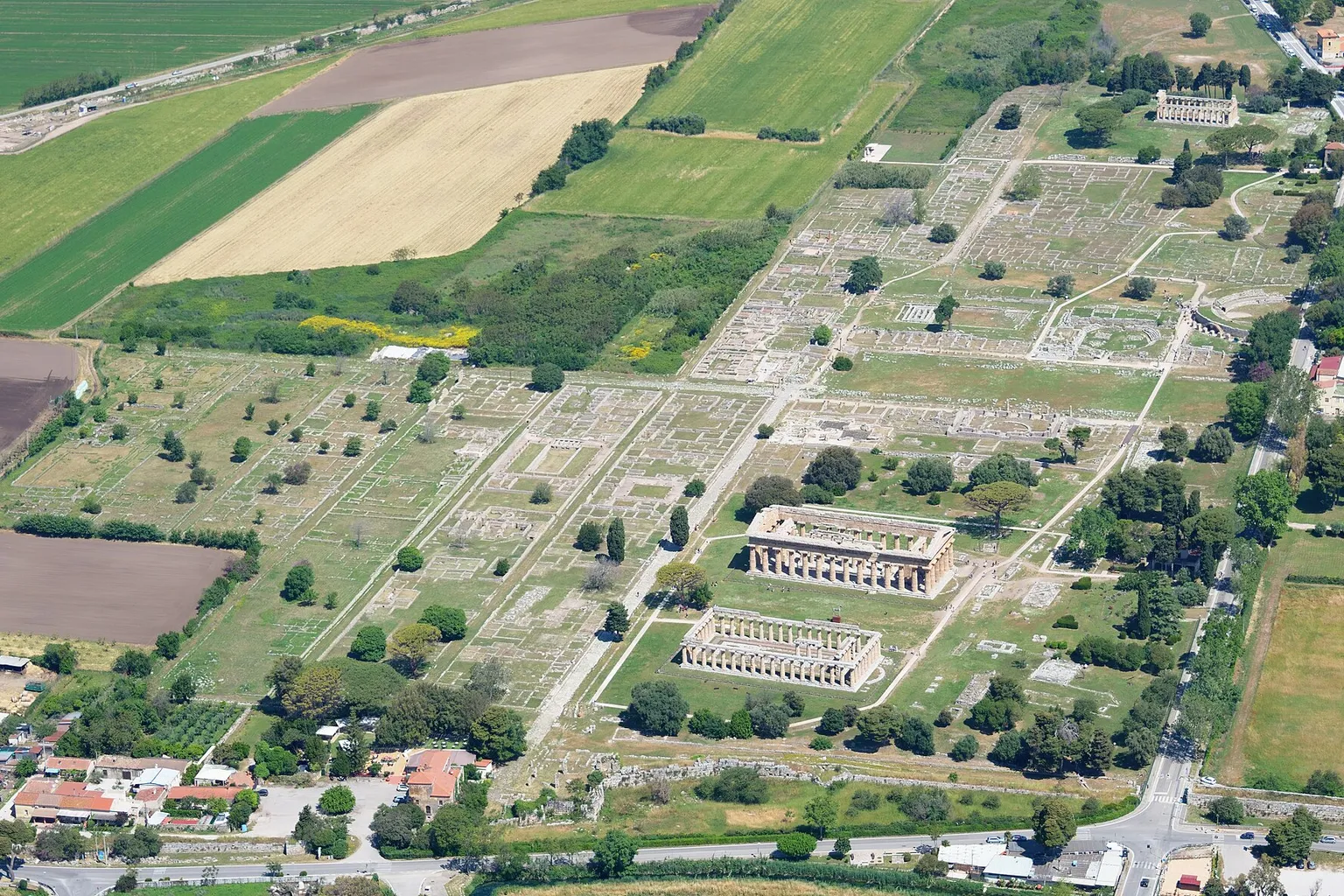
It is arriving at the entrance without understanding what the ticket covers, where to buy it, or whether the queue in front of them is actually necessary. Paestum does not operate under the same reservation pressure as the Colosseum or Pompeii, but that does not mean ticketing can be left entirely to chance.
Tickets and prices
Paestum
I
Save
Box office and online booking
- Adult €10
€10
Official websiteII
skip-the-line
Skip-the-line ticket with train transport
This one-day skip-the-line ticket includes train transport to visit the temples and archaeological museum.
€39
Book ticketsIII
combo ticket
Combo tour with dairy farm visit and lunch
This 2.5 to 6.5-hour tour includes a dairy farm visit, buffalo mozzarella tasting lunch, and transfers.
There are three practical ways to arrange admission: buy through the official online platform, use a regional pass such as the Campania Artecard, or purchase at the on-site ticket office. None is universally best. The right choice depends on whether Paestum is your only cultural stop, how fixed your day is, and whether you want the flexibility to visit the other included sites within the ticket’s validity period.
Get that decision right before you arrive, and the visit is pleasantly simple. Get it wrong, and you can overpay, queue unnecessarily, or discover too late that the ticket on your phone also covers a museum and a site almost an hour’s drive away.
The three ways to book tickets for Paestum at a glance
| Channel | Best for | Main advantage | Main limitation |
|---|---|---|---|
| Vivaticket online | Independent visitors with a planned itinerary | Admission arranged in advance and less time spent at the ticket-sales counter | Less useful if your schedule is completely open and the park is quiet |
| Campania Artecard | Travelers visiting several Campania museums and archaeological sites | One regional pass can cover Paestum alongside Pompeii, Naples, Herculaneum, and other stops | The pass has its own conditions, validity rules, and possible validation steps |
| On-site ticket office | Spontaneous stops and flexible low-season visits | No advance planning and no online transaction to manage | The slowest option on busy mornings |
That is the decision in compressed form. The detail matters because Paestum’s admission is broader than many first-time visitors expect: the standard ticket combines the archaeological area, the on-site museum, and Velia, and the ticket remains valid across three consecutive calendar days.
Official online booking via Vivaticket: the cleanest option for a planned visit
For visitors who know when they will reach Paestum, the official Vivaticket platform is the straightforward way to book tickets online. It is particularly useful when Paestum is a scheduled stop rather than an unplanned detour and when you have a train, transfer, museum visit, or dinner reservation later in the day.
The practical benefit is not necessarily a guaranteed timed-entry appointment. Standard admission does not normally work through a fixed time slot. The benefit is that you can arrange admission in advance and avoid the queue for purchasing a ticket at the counter. On a quiet winter afternoon, that distinction may save only a few minutes. On a summer morning, when independent travelers and tour groups arrive together, it can change the shape of the visit.
You buy online, keep the ticket in the format required by the booking platform, and follow the signs for visitors who already have admission. The exact handling of online tickets can vary with the current operating arrangements, so read the instructions attached to the booking rather than assuming that every ticket is processed in exactly the same way. The important point is that online admission is designed to reduce the time spent at the sales counter, not to promise a reserved minute-by-minute entrance.
What the standard admission covers
The standard combined ticket covers three destinations:
- the Paestum Archaeological Area, including the temple complex and the remains of the ancient Greek and Lucanian city;
- the National Archaeological Museum of Paestum, located near the archaeological area;
- the Archaeological Site of Velia, farther south on the Cilento coast.
At Paestum itself, the archaeological area includes the major Doric temples, the city walls, the necropolis, and the remains associated with the ancient settlement. The museum adds the objects that are difficult to understand in the open air: painted tomb slabs, ceramics, architectural elements, and other material from the Greek and Lucanian phases of the site.
Velia is the detail that catches many travelers off guard. It is not a second monument inside the Paestum enclosure. It is a separate archaeological site, roughly an hour’s drive south, and it requires its own transport and planning. The combined ticket gives you access under its validity conditions; it does not make Velia a casual ten-minute add-on after the temples.
If you are visiting Paestum only once and have no time for Velia, do not treat the unused portion as a booking error. The combined ticket is the standard structure described for admission, and the fact that you do not reach every included site does not invalidate the Paestum and museum visit. What matters is knowing this before you buy, so the extra coverage does not come as a surprise at the gate.
What online admission does not include
Base admission is not the same thing as every experience offered around the park. Guided tours, audio guides, and special programming may be arranged separately. The same applies to themed or after-hours activities when they are available, such as evening walks, talks focused on particular discoveries, or special museum openings.
Vivaticket is therefore the place to arrange the core entry, not necessarily every element of a more elaborate day. If a tour operator or special event is part of your plan, check whether that product includes admission or expects you to buy the archaeological park ticket separately. Paying for a guided experience and then discovering that the gate ticket is not included is an avoidable nuisance.
Online booking is not compulsory at Paestum. Its value is simpler: it removes the ticket-purchase queue and gives a planned visit one less moving part.
When Vivaticket makes the most sense
Book online when:
- you are visiting during the busier part of the year;
- you have a fixed afternoon commitment;
- you are arriving with children or a larger group and want to reduce counter time;
- you are combining Paestum with a train, transfer, or pre-arranged excursion;
- you want to use the three-day validity as protection against a weather or itinerary change.
You can reasonably skip online booking when you are visiting in a quiet period, have an entirely open day, and do not mind buying at the entrance. The online channel is a convenience and a queue-management tool. It is not a requirement for a normal visit.
Campania Artecard: useful when Paestum is one stop on a regional route
The Campania Artecard is designed for travelers who are not visiting one archaeological site in isolation. It bundles access across a network of cultural attractions in Campania, including major destinations such as Pompeii, Herculaneum, the Naples National Archaeological Museum, Paestum, and other museums and sites depending on the pass type.
That makes it a planning instrument rather than a Paestum-specific ticket. If your trip contains only Paestum, the pass may add complexity without adding value. If you are already building a route through Naples and the surrounding archaeological sites, the calculation changes.
The sensible way to evaluate it is to list the paid admissions you genuinely expect to use. Do not count every possible museum in the region simply because the pass mentions it. Count the sites that fit your route, transport connections, energy level, and available days. A pass that looks attractive on paper can become poor value if a planned third visit is abandoned because the itinerary is too crowded.
The pass tiers matter
Artecard products differ in their validity periods, included transport arrangements, and the balance between free admission and discounted admission. Some versions are built around a shorter validity window and free entry to selected sites; others provide a longer period but apply discounts or residual charges at individual attractions.
Read the conditions for the specific pass rather than relying on a general description of Campania Artecard. The words “included,” “free,” and “discounted” do not always mean the same thing in practical use. A pass may require validation, may cover only the first entries under a particular formula, or may leave a fee payable at the site.
At Paestum, the pass is used according to its own terms. You may need to present it at the ticket office for validation, and the precise process can depend on the type of Artecard you hold. Carry the pass in the form required by its conditions and allow a little time for staff to process it. A regional pass can reduce the cost of a multi-site trip, but it does not always mean that you walk straight from the parking area into the archaeological zone without any administrative step.
The calculation that actually matters
Suppose Paestum is paired with Pompeii and the Naples Archaeological Museum. In that case, compare the combined cost of the individual admissions with the price of the Artecard for your dates and party. Add any residual admission charges and consider whether the pass includes transport that you would otherwise pay for separately.
The pass becomes more persuasive as the number of paid sites increases and as the itinerary fits within its validity period. It becomes less persuasive when Paestum is your only paid attraction or when the rest of your trip is built around free sights, beaches, villages, and outdoor travel.
Do not buy it because a travel forum called it the smart option. Buy it because the arithmetic and the route support it.
Artecard is a regional tool, not a Paestum shortcut. Use it for a multi-site itinerary, then check the pass conditions before you arrive at the gate.
The on-site ticket office: the reliable fallback for flexible travelers
Buying at the ticket office remains a perfectly legitimate way to enter Paestum. It is the natural choice for a spontaneous stop, a road trip along the Cilento coast, or a low-season visit when your timetable is deliberately loose.
The ticket office is at the main entrance. According to the operating schedule used for the park, it opens with the site at 8:30 a.m. and stops selling admission at 6:30 p.m. Last admission is also at 6:30 p.m. The park may remain open later for visitors who are already inside, but that does not extend the period in which a new visitor can buy a ticket and enter.
This distinction is easy to miss. Arriving after the last admission time is not a minor delay that can be solved by walking faster through the temples. If you are outside the entrance after the cutoff, the visit is over for that day.
When the counter is the right call
The on-site office works well when:
- you are driving and have not committed to an exact arrival time;
- you are stopping at Paestum between other Cilento destinations;
- you are traveling in the quieter months;
- you want to ask staff about the current admission categories or site arrangements;
- you have no later reservation that makes a queue risky.
It is less attractive on busy summer mornings, especially when tour groups arrive together. The queue may still move steadily, but buying a ticket takes longer than walking through with admission already arranged. If you have a train, rental-car return, guided excursion, or transfer later in the day, treat counter time as part of the itinerary rather than as an invisible detail.
There is no need to invent a dramatic time penalty. The real issue is uncertainty. A short line can become a substantial delay when several groups reach the same window, and you cannot control how many ticket categories or pass validations need to be processed ahead of you.
Standard admission does not normally mean a timed slot
The on-site purchase process also clarifies a common misunderstanding. Standard admission is not generally based on a fixed timed-entry slot. You buy the applicable ticket, enter according to the park’s operating arrangements, and use the ticket under its validity conditions.
That does not mean every special event, temporary measure, or separate experience follows the same rule. If you are booking a guided activity or a program with its own schedule, follow that product’s instructions. But for ordinary entry to the archaeological area and museum, do not assume that an online purchase has assigned you a precise minute of arrival unless the booking itself explicitly says so.
The combined ticket and its three-day validity
The standard Paestum admission is easy to undervalue because many visitors think of it as a single visit to the temples. In practice, the ticket covers the archaeological area, the National Archaeological Museum of Paestum, and Velia, subject to the rules printed on the ticket and the current operating arrangements.
The ticket activates on first use and remains valid for three consecutive calendar days. This is not the same as a rolling 72-hour period. If the first scan takes place on a Wednesday morning, the validity runs through the relevant three-day window ending on Friday, rather than extending indefinitely until the same hour three days later.
That distinction matters when you arrive late in the day. A first entry close to the last admission cutoff still uses the first calendar day of the validity period. If you expect to split the visit across multiple days, check the dates carefully before scanning the ticket.
One ticket, three very different visits
The three included destinations require different amounts of time and different logistics.
The Paestum Archaeological Area is the core visit. The temples are the obvious draw, but the site is larger than a quick photograph from the main path. The city walls, streets, necropolis, and other remains reward a slower circuit. The experience changes with the weather: in bright heat, the open ground around the temples can become physically demanding, while early morning gives you cooler conditions and gentler light.
The National Archaeological Museum of Paestum provides the context that the ruins cannot. Painted tomb slabs, ceramics, architectural fragments, and objects from the settlement help explain what you are seeing outside. It is also a useful pause in the middle of a hot day. Many visitors plan the museum as an afterthought and then discover that they have left too little energy or time for it.
Velia is a separate excursion. The site belongs to the same broader archaeological story, but it is not within walking distance of Paestum. Reaching it requires a deliberate transport plan, and you should not assume that a combined ticket eliminates the travel time between the two locations.
A sensible sequence is to visit the temples in the morning, move to the museum when the sun is strongest, and reserve another day for Velia if the rest of your route permits it. If you are staying nearby, the three-day window gives you room to separate the outdoor and indoor portions of the visit. If you are making a day trip, you may use only Paestum and the museum, and that is still a coherent visit.
What the three-day period does not mean
The validity window should not be read as an unlimited re-entry pass. It does not automatically turn the ticket into unrestricted admission to the same location every day. The practical interpretation is access to the included sites within the stated period, not an open-ended invitation to scan in and out whenever you like.
If repeat entry matters to your plans, ask the ticket office or consult the current conditions before your first scan. The wording on the ticket and the operating rules take priority over assumptions based on the phrase “three-day validity.”
Paestum entry fee: seasons, categories, and annual admission
The Paestum entry fee is not one universal amount for every visitor. The price can depend on the season, the type of admission, and whether the visitor qualifies for a reduced or free category. The most useful approach is to check the current tariff while planning the trip, rather than relying on an old travel article or a screenshot saved from a previous season.
The seasonal difference is especially relevant for repeat visitors. During the higher-price period, two full-price visits at €15 each total €30. An annual pass priced at €30 is therefore no more expensive than two such visits; it does not become cheaper after the second visit. The value of the pass begins with the additional access and the convenience it provides beyond that break-even point.
That distinction may sound minor, but it is exactly the kind of arithmetic that makes a ticket comparison trustworthy. A pass can still be attractive because it offers further visits within its period of validity, but the second €15 visit itself only brings the total to the price of the €30 annual pass.
Full-price, reduced, and free admission
Before selecting a ticket, check which category applies to every person in your party. The usual distinctions are:
- full-price admission for visitors who do not qualify for an exemption or reduction;
- reduced admission for eligible visitors under the current rules;
- free admission for categories recognized by the national museum and archaeological-site regulations;
- special arrangements for school groups, organized groups, or particular cultural initiatives when applicable.
Eligibility is not always established simply by selecting a cheaper option online. Staff may request proof of age, identity, student status, nationality, disability, professional status, or another qualifying condition. Bring the relevant document in the form accepted by the site. A reduced ticket without supporting identification can create a delay at precisely the point when you thought the online purchase had settled everything.
Children’s admission also deserves a careful check. Age thresholds and exemptions can differ from assumptions imported from another Italian museum. Do not infer that a child is free, reduced, or full price solely because the same rule applied at Pompeii or in Naples. Use the current Paestum tariff and the conditions attached to the booking.
Are annual or recurring passes worth considering?
An annual pass is worth examining if Paestum is within easy reach, you are staying in the area for an extended period, or you expect to return for different seasons and exhibitions. It is rarely the logical choice for a one-day traveler whose only goal is to see the temples once.
The break-even calculation should be stated accurately:
- one full-price visit costs less than the annual pass;
- two €15 visits total €30, which is the same as a €30 annual pass;
- any additional eligible visit can make the annual pass more valuable, provided its terms allow that use.
Also check what the pass includes. It may relate to the archaeological park and its associated institutions without covering guided activities, special events, transport, or every temporary exhibition. A recurring pass is useful when it matches how you will actually visit, not merely because its headline price looks attractive.
How to choose the right way to book Paestum tickets
The decision becomes easier if you start with the shape of the day rather than with the ticket platform.
Choose Vivaticket if your arrival is planned, the season is busy, or a queue could interfere with transport or another reservation. The online route is also the cleanest option when you want to buy Paestum tickets online before leaving for Italy and keep the visit organized.
Choose Campania Artecard when Paestum forms part of a larger cultural itinerary in the region. Compare the pass price with the admissions you will actually use, include any remaining charges, and check the validation procedure. The pass is most useful when the route is dense enough to justify it.
Choose the on-site ticket office when you are traveling flexibly, arriving by car, visiting in a quieter period, or making a last-minute decision to stop at Paestum. The trade-off is the possibility of a queue and the need to respect the final admission time.
A simple planning table can help:
| Your situation | Most practical option | Why |
|---|---|---|
| Paestum is fixed into a day with transport connections | Vivaticket | Removes the ticket-purchase step from the arrival |
| You are visiting Pompeii, Naples, Herculaneum, and other paid sites | Campania Artecard | May consolidate several admissions and transport benefits |
| You are driving through Cilento with no fixed schedule | On-site ticket office | Preserves flexibility when arrival time may change |
| You want to return to included sites over several days | Standard combined ticket | The three-day validity can make a split itinerary possible |
| You are visiting twice or more over a longer period | Annual pass or recurring option | Compare the break-even point with the actual admission tariff |
A few practical details before you leave
A ticket is only one part of the visit. Paestum is an open archaeological site, and the walking conditions are different from those at a compact indoor museum. Comfortable shoes are more useful than an elaborate plan, particularly if you intend to see the walls, necropolis, and less central remains rather than staying near the temples.
In warm weather, plan the exposed archaeological area around the most comfortable part of the day. The museum is not merely an optional add-on: it gives the site historical and visual context, and it can provide a break from the sun. If Velia is included in your plans, treat it as a separate destination with its own driving time and opening arrangements.
Keep the booking confirmation, pass, and identity documents accessible. Screenshots may not always substitute for the format requested by the booking system, and a discounted or free admission category may require proof at the entrance. If your ticket is on a phone, make sure the screen can be displayed clearly and that you are not depending on a weak mobile signal at the gate.
Finally, check the operating information close to the day of your visit. Opening times, last admission, ticket procedures, and special arrangements can change. The general logic remains stable—online booking for planning, Artecard for regional routes, and the counter for flexibility—but the current rules always take priority.
The sensible answer for most visitors
There is no single best way to book tickets for Paestum. For a scheduled visit, Vivaticket is usually the least complicated option because it removes the sales-counter queue without forcing you into the assumption of a rigid timed slot. For a wider Campania itinerary, Artecard can work well, but only after you have done the arithmetic. For a spontaneous or low-season visit, buying at the entrance remains entirely reasonable.
The more important point is to understand what you are buying. The standard admission is broader than the temples alone, the museum is part of the experience rather than a footnote, Velia requires separate transport planning, and the three-day validity runs by calendar days rather than as a rolling 72-hour clock.
Once those details are clear, the choice is uncomplicated. Book online when certainty matters, use the regional pass when the whole route justifies it, and keep the ticket office as a practical fallback when flexibility is worth more than advance planning.
Practical info
Currency: EUR
Driving: on the right
Emergency number: 112
Key facts
Built: 600 BC
Heritage status: part of UNESCO World Heritage Site
Official website: parchipaestumvelia.cultura.gov.it
FAQ
What are the ways to buy Paestum tickets?
What does the standard Paestum ticket include?
How long is a Paestum ticket valid?
Does buying Paestum tickets online guarantee a timed entry?
Is Campania Artecard worth it for Paestum?
Can I buy Paestum tickets at the entrance?
Photo: Carsten Steger / CC BY-SA 4.0 — Wikimedia Commons