Neue Nationalgalerie: a step-by-step ticket acquisition plan
The Neue Nationalgalerie ticket process is simple once its constraints are clear. Online day-ticket sales open only four weeks before the visit.
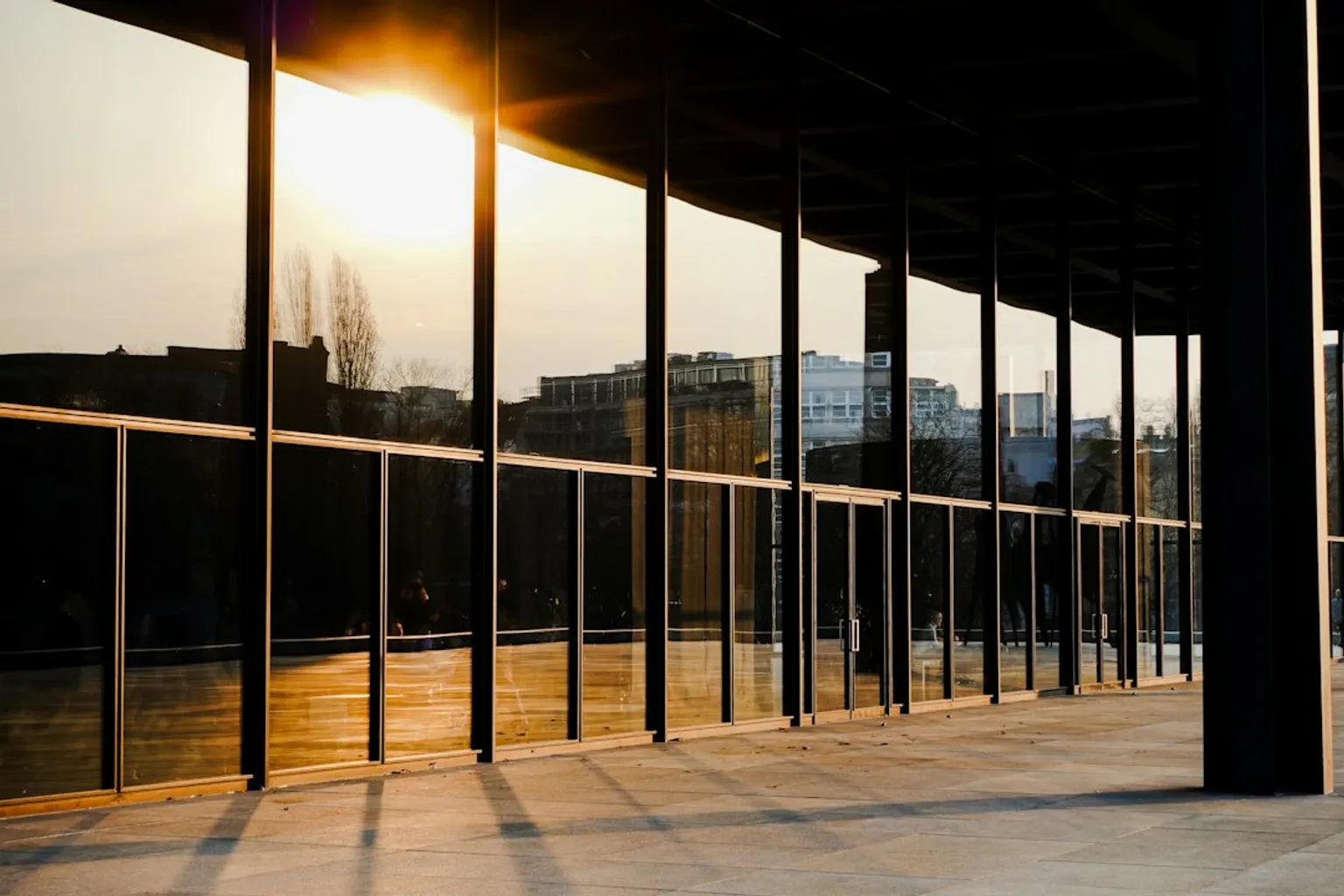
The museum sells several admission categories, and the correct choice depends on whether you want the permanent collection, temporary exhibitions, or the wider Kulturforum complex.
Tickets and prices
Neue Nationalgalerie
I
Save
Box office and online booking
- Adult €10
- Child free
- Reduced €5
€10
Official websiteII
entry ticket
Entry Ticket · Audioguide Included
This ticket includes entrance to the exhibitions along with an audioguide.
€20
Book ticketsThe operational risk is not price. It is misalignment between ticket type, opening hours, and the date you select. A visitor who books too early will find no inventory. A visitor who chooses a collection-only ticket may not have access to every exhibition on view. A visitor who arrives on a Monday will find the building closed under the regular schedule.
This is the efficient sequence:
1. Confirm the date against the museum’s weekly schedule.
2. Check the official Staatliche Museen zu Berlin ticket shop within the four-week booking window.
3. Select the admission category that matches the intended route.
4. Verify concession or free-entry eligibility before payment.
5. Keep the ticket available for presentation on arrival.
6. Use the ticket counter only as a fallback or for a same-day purchase.
The Neue Nationalgalerie is located at Potsdamer Straße 50 in Berlin’s Kulturforum. The building, designed by Ludwig Mies van der Rohe, is itself a major part of the visit. Access planning therefore has two separate components: securing admission and allocating enough time for the building, collection, and current exhibitions.
Start with the booking window, not the itinerary
The official online booking system sells day tickets up to four weeks in advance. That is the controlling timeline. It is not a system designed for reservations several months ahead.
For a planned visit, calculate backward from the intended date. If the visit is scheduled for a Saturday, check the ticket shop four weeks before that Saturday. The useful inventory may appear on a rolling basis rather than in a single annual release. Searching too early creates a false negative. No ticket visible today does not necessarily mean that the date is sold out. It may simply be outside the release window.
The practical process is:
- Open the official Staatliche Museen zu Berlin online ticket shop.
- Search for the Neue Nationalgalerie and the selected date.
- Review the available admission categories.
- Select the required ticket type rather than the first available option.
- Check the visit date and museum before completing the order.
- Save the confirmation in a format accessible at the entrance.
The ticket counter at the museum remains an alternative. It is useful for visitors making a same-day decision, for people who do not want to use online booking, and for situations in which the digital inventory does not match the planned visit. It is not a reason to ignore the four-week release schedule. Advance planning still provides better control over timing and ticket scope.
The phrase “timed-entry ticket” should be treated cautiously. The available ticket system may display a date and admission conditions, but specific future temporary exhibitions can impose additional booking requirements. Those requirements can change. The only reliable basis is the booking information shown for the selected date and exhibition at the time of purchase.
The four-week booking window is the central variable. Search too early and the system tells you almost nothing about future availability.
Choose the ticket according to the route you intend to take
The Neue Nationalgalerie offers more than one admission structure. The distinction is functional, not cosmetic.
A collection ticket is designed for access to the museum’s permanent collection. An all-exhibitions ticket covers the broader exhibition offer at the Neue Nationalgalerie on the selected day. A Kulturforum day ticket extends the visit beyond one building and covers multiple museums on the plaza.
These options should not be treated as interchangeable.
Collection admission
Choose the collection option if the primary objective is the Neue Nationalgalerie’s permanent holdings and the Mies van der Rohe building. This is the narrowest scope and usually the most efficient choice for a short visit.
The collection route is appropriate when:
- You have limited time in Berlin.
- The temporary exhibitions are not a priority.
- You want to focus on twentieth-century modern art.
- The architectural experience is as important as the exhibition schedule.
- You plan to visit another Berlin museum separately.
The permanent collection is not a minor add-on to the building. The Neue Nationalgalerie is a key institution for modern art, and the relationship between the works, the open upper hall, the lower gallery spaces, and the surrounding site is part of the museum’s logic. A collection-only ticket can therefore support a complete visit if the objective is focused.
All-exhibitions admission
Select the all-exhibitions option when current temporary exhibitions are part of the plan. This is the more flexible category for visitors who want to reduce the risk of discovering at the entrance that a separate exhibition requires a different admission scope.
The selection is more rational when:
- The visit is a primary cultural activity rather than a short stop.
- You want to see both the permanent collection and the current temporary program.
- The exhibition schedule is the reason for choosing a specific date.
- You are already allocating several hours to the Kulturforum area.
Do not infer that every future exhibition will have identical access rules. Exhibition conditions can change, and specific shows may use additional time-slot controls. Confirm the scope attached to the date you are booking.
Kulturforum day ticket
The Kulturforum day ticket is a portfolio decision. It is designed for visitors who want to combine the Neue Nationalgalerie with multiple museums on the same plaza.
That option has value when the day is organized around the Kulturforum rather than a single museum. It is less efficient if the Neue Nationalgalerie is the only planned stop.
A Kulturforum route can include:
- The Neue Nationalgalerie.
- Other museums located at the Kulturforum.
- A broader concentration of twentieth-century art and cultural institutions.
- A full-day museum itinerary without repeated transfers across Berlin.
The constraint is time. Buying a wider ticket does not create more usable hours. It only increases the number of institutions included in the admission structure. If the itinerary contains too many stops, the result is lower attention per collection and more transit inside the same plaza.
Use the admission categories as a time-allocation tool
Ticket selection should follow the intended duration of the visit. The Neue Nationalgalerie is large enough to reward a measured pace, but the correct duration depends on the scope of admission.
A practical allocation looks like this:
| Visit objective | Suitable admission logic | Planning consequence |
|---|---|---|
| Building and permanent collection | Collection admission | Keep the itinerary concentrated on the Neue Nationalgalerie |
| Permanent collection plus temporary exhibitions | All-exhibitions admission | Reserve a longer museum block and verify the current program |
| Several museums at the Kulturforum | Kulturforum day ticket | Build the day around the plaza rather than one gallery |
| Low-cost evening access | Monthly Art4All admission | Align the visit with the first Thursday schedule |
| Same-day decision | Ticket counter, subject to availability | Allow time for the purchase process and current entry conditions |
The table is not a ranking. It is a scope test. The cheapest or narrowest option is not automatically the most efficient. The correct ticket minimizes the gap between what you pay for and what you actually use.
For visitors with a fixed travel schedule, the sequence should be reversed from the usual impulse. Do not start by selecting an attractive ticket category. Start with the available hours in Berlin, identify the exhibitions you will actually enter, then select the narrowest ticket that covers that route.
Concession and free-entry rules
The Neue Nationalgalerie provides several reduced-admission and free-entry categories. Eligibility is specific.
Free entry is available to children and young people up to the age of 18. A 50% concession applies to several groups, including schoolchildren, students, people receiving ALG I unemployment benefits, and people with a severe disability rating of at least 50%.
The correct procedure is to determine eligibility before starting the booking process. If the online system requires a concession category, select it only when the visitor can present the relevant proof. The admission price is not the only variable. The documentation requirement is part of the transaction.
The principal categories are:
- Under 18: free admission.
- Schoolchildren and students: reduced admission, with valid supporting identification.
- Unemployed persons receiving ALG I: reduced admission, with the applicable proof.
- Visitors with a severe disability rating of at least 50%: reduced admission, subject to the required documentation.
- Other visitors: standard admission category.
A child who qualifies for free entry may still need to be included in the booking process if the ticket system asks for the number of visitors. Do not assume that a free admission category means no operational step is required. The booking interface determines how the visitor is recorded.
The same principle applies to concessions. A reduced ticket without evidence can create a delay at the entrance. The efficient approach is to carry the document that establishes the category, not merely a digital explanation of eligibility.
Opening hours determine the viable visit date
The regular opening schedule is fixed enough to guide planning:
- Tuesday, Wednesday, Friday, Saturday, and Sunday: 10:00 AM to 6:00 PM.
- Thursday: 10:00 AM to 8:00 PM.
- Monday: closed.
Thursday has the highest scheduling utility because it extends the operating day into the evening. It is also the day that overlaps with the monthly free-admission program, discussed below. That creates additional demand pressure during the free window.
The regular schedule does not eliminate holiday exceptions. The museum is closed on December 24 and December 31. On January 1, it has special opening hours from 12:00 PM to 6:00 PM. These dates should not be treated as ordinary weekdays.
The practical implications are direct:
- Do not place the Neue Nationalgalerie on a Monday itinerary.
- Use Thursday for a longer visit or a late entry.
- Treat December 24 and December 31 as closure dates.
- On January 1, plan for a later start.
- Recheck the official schedule when traveling around holidays.
A visit at 5:30 PM on a normal Tuesday is not equivalent to a visit at 5:30 PM on Thursday. The building may remain open later on Thursday, but the available time for the collection and exhibitions is still constrained by the visitor’s arrival. Late opening improves flexibility. It does not convert a short stop into a full museum day.
The first-Thursday free admission program
The first Thursday of every month includes free admission from 4:00 PM to 8:00 PM through the Volkswagen Group Art4All initiative. This is the strongest cost-control option in the standard schedule, but it has a capacity problem: the most financially attractive window is also likely to be the most concentrated.
The free period works best for visitors who can accept a narrower time range and a potentially busier environment. It is less suitable for a visitor who has one opportunity to see several exhibitions at a slow pace.
Use the program when:
- The first Thursday fits the Berlin itinerary.
- The visit can begin at or after 4:00 PM.
- The primary goal is to reduce admission cost.
- You are prepared to manage a concentrated evening visit.
- You have checked the current entry conditions for that date.
Do not use the free evening merely because it is free. The opportunity cost is four hours, and the effective value depends on what you intend to see. A paid daytime visit may produce a better result if you need several hours, want to avoid peak concentration, or are combining the museum with a wider Kulturforum itinerary.
The program also changes the booking logic. A standard ticket may be unnecessary for the free window, but the museum can still apply operational controls on busy dates. Check the official information for the selected first Thursday rather than assuming that free admission guarantees immediate entry without any queue or booking condition.
Free admission improves the cost basis. It does not remove capacity constraints, reduce the size of the building, or create additional viewing time.
How to plan the visit inside the Mies van der Rohe building
The Neue Nationalgalerie is not a conventional sequence of small rooms. Its architecture changes how visitors move through the collection. The elevated glass hall, the lower exhibition level, the broad structural grid, and the surrounding open space create a different access pattern from a compact gallery museum.
That matters when deciding how much time to reserve.
A focused visit should account for:
- The permanent collection in the context of the building.
- Any temporary exhibition included in the selected ticket.
- The lower-level gallery spaces.
- The upper hall and its changing display conditions.
- The exterior relationship between the pavilion, plaza, and Kulturforum.
The building’s visibility can create a planning error. Visitors often treat the upper hall as the entire museum because it is the most recognizable element. That produces a compressed visit and leaves the lower exhibition areas under-allocated.
A more controlled route is:
1. Enter with the ticket category already confirmed.
2. Establish whether temporary exhibitions are included.
3. Move through the permanent collection without treating the upper hall as the endpoint.
4. Allocate time to the lower galleries.
5. Reassess the remaining time before adding other Kulturforum museums.
6. Exit only after confirming that the planned admission scope has been used.
This is not a prescribed visitor path. It is a method for avoiding scope failure. If the ticket covers multiple exhibitions, the visit should be structured around the exhibition closing times and the museum’s operating hours. If the ticket covers only the collection, the route can remain more concentrated.
Visitors interested in Classical Modernism should reserve time for the building itself rather than treating architecture as background. The Neue Nationalgalerie is a case where access and design are inseparable. The admission decision determines which spaces you enter; the building determines how those spaces are read.
What to do if online inventory is unavailable
An unavailable online date can mean several different things:
- The date is outside the four-week advance window.
- The selected ticket category is not offered for that day.
- The exhibition has a separate access condition.
- The available inventory has been exhausted.
- The booking system is showing a temporary technical limitation.
Do not collapse these into one conclusion. First, check the date relative to the four-week window. Then test the other ticket categories. If the date is within the booking period and the desired category is unavailable, consider whether the collection-only option meets the purpose of the visit. If the museum is the central reason for the trip, retain the date and investigate the ticket counter as a secondary route.
The ticket counter can also be the better option when the visit is spontaneous. It gives the museum a chance to explain current admission scope and same-day conditions. It does not guarantee immediate entry, and no general claim about queue length should be treated as permanent. Capacity, exhibitions, and visitor demand change.
Avoid purchasing a broad Kulturforum ticket as a substitute for unavailable Neue Nationalgalerie access unless the ticket conditions explicitly include the museum on that date. Admission categories should be read as contractual scope, not as approximate suggestions.
A controlled booking workflow
For a low-error purchase, use this sequence:
1. Fix the date.
Select a date that falls within the regular opening schedule. Exclude Mondays and confirm holiday exceptions.
2. Count backward four weeks.
Begin checking the official online ticket shop only when the date enters the advance-sale window.
3. Define the museum scope.
Decide whether the visit is limited to the permanent collection, includes temporary exhibitions, or extends across the Kulturforum.
4. Check visitor categories.
Separate standard visitors, concession visitors, and people eligible for free admission.
5. Review the current exhibition conditions.
A temporary exhibition may have conditions that differ from the general museum ticket structure.
6. Complete the purchase with the date visible.
Recheck the museum name, visit day, ticket category, and number of visitors before final confirmation.
7. Prepare supporting documents.
Concession eligibility is only useful if it can be demonstrated at entry.
8. Plan arrival with a time buffer.
The ticket controls admission scope. It does not eliminate the practical time required to reach the museum, orient yourself, and enter.
9. Keep a fallback.
If the online route fails, assess the ticket counter and alternative dates rather than improvising a wider ticket that does not match the intended visit.
This workflow is deliberately procedural. Most ticket problems arise before the visitor reaches Berlin. They begin with an incorrect assumption about booking availability, admission scope, or opening hours.
Final assessment
The Neue Nationalgalerie ticket decision has two valid outcomes.
If the priority is control: book through the official Staatliche Museen zu Berlin system within the four-week window, select the narrowest ticket that covers the intended collection and exhibitions, and use Thursday only when the extended hours improve the itinerary.
If the priority is minimum admission cost: target the first Thursday from 4:00 PM to 8:00 PM under the Volkswagen Group Art4All program, accept the tighter time window, and verify the current entry conditions before traveling.
Both strategies work. The failure point is choosing neither. An early search produces no reliable inventory. A broad ticket creates unused scope. A Monday arrival produces no visit. The efficient plan is binary: either optimize for certainty through advance booking or optimize for cost through the scheduled free evening.
Practical info
Currency: EUR
Driving: on the right
Emergency number: 112