Cosmos Museum Tickets: Fast Entry Without the Queue
The fifteen-minute validity window is tied to the entry time you select, not to the moment you pay for the ticket. If you choose a 14:30 slot, the ticket is valid for the fifteen minutes beginning at 14:30.
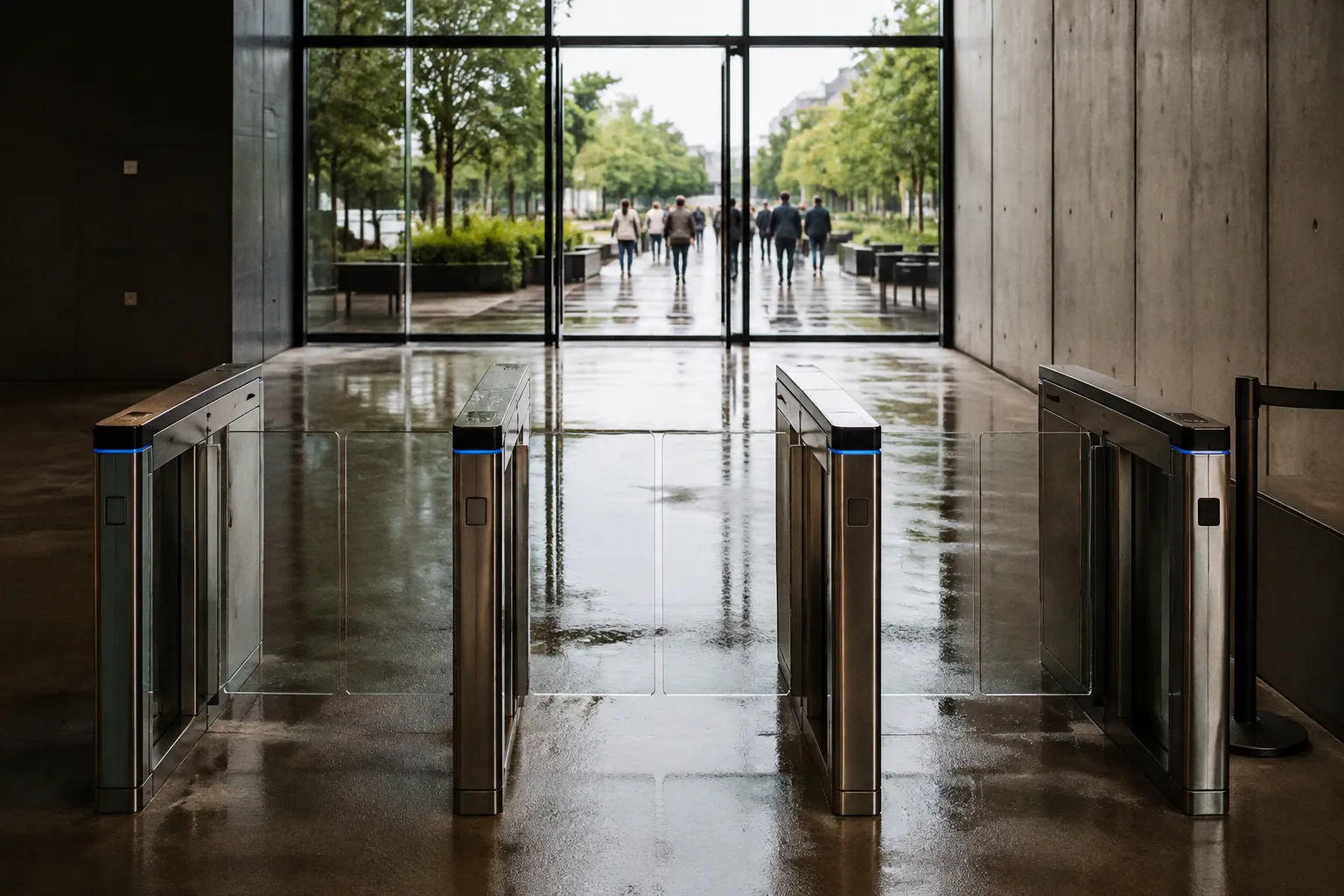
That distinction matters: buying a ticket at lunch does not start the clock, but arriving well after the selected slot can still leave you outside the priority-entry window.
Tickets and prices
Cosmos Museum
I
Save
Box office and online booking
- Adult PLN40
- Child PLN24
- Reduced PLN19
PLN40
Official websiteII
entry ticket
Entry ticket · Available today and tomorrow
This entrance ticket provides access to illusions and interactive exhibits.
PLN43.30
Book ticketsCosmos Museum in Warsaw runs on timed-entry logic, and timed-entry logic rewards the visitor who treats the booking time as a real appointment rather than a suggestion. Walk up to 15/3 Łucka without a reservation and the experience begins with a queue whose length is impossible to predict. It may move quickly; it may already be twenty minutes deep, depending on the day's footfall. The calmer route is to book from home, save the confirmation, and arrive with enough margin to use the slot properly.
The payoff is not merely convenience. A confirmed online ticket gives the front-of-house team a clear time, a clear admission category, and a visitor who has already been placed into the museum's flow. That is what makes Cosmos Museum tickets most useful when they are booked directly and used on schedule.
Why Direct Online Booking Is Essential for Priority Access
The single most useful phrase on the museum's official booking page is priority entry. It means that visitors arriving with a confirmation from the official website are directed through the priority route instead of joining the ordinary walk-up line. This is not a premium add-on hidden inside an expensive package. It is the practical advantage attached to buying through the museum's own booking channel.
That difference becomes easy to miss when search results fill with reseller pages and tour aggregators. A third-party listing may show a similar headline price, but the conditions can be different. Some reseller products do not include line-skipping, while others replace the museum's own timed confirmation with a voucher that must be exchanged or checked at the entrance. If avoiding the queue is the point of buying in advance, adding an intermediary can defeat the purpose.
Direct booking also makes the time conditions easier to understand. The confirmation displays the entry time you selected, and the ticket's fifteen-minute validity is measured from that time. Select 14:30 and plan around the 14:30–14:45 window. Select 16:00 and the relevant window begins at 16:00. The purchase timestamp is not the starting point.
That is a small technical distinction, but it changes how you plan the day. You can book in the morning for a later visit without worrying that the ticket is already losing validity. At the same time, you should not treat the chosen slot as an approximate indication of when you might appear. Arriving a few minutes early is the sensible approach, particularly on a weekend when the entrance area is busier and finding the address may take longer than expected.
A confirmed slot is not a suggestion. It is the difference between walking in and waiting in.
There is another reason to use the official booking page: it is the place where the museum's current categories, family options, and available times appear together. The information is easier to compare before payment, and the confirmation comes from the same system used by the staff at the door. That removes one unnecessary question from an already busy arrival: whether the ticket you bought elsewhere carries the same entry conditions.
What to have ready at the entrance
Keep the booking confirmation accessible on your phone before you reach the front desk. A slow connection at the door is a minor problem, but it becomes irritating when other visitors are moving through the priority lane. If your group includes different ticket categories, check that the booking reflects the correct ages or concessions before arriving. The entrance is a poor place to reconstruct the details of a reservation made in a hurry.
The best rhythm is simple:
1. Choose the correct date and entry time.
2. Save the confirmation where it can be opened without searching through email.
3. Arrive a little before the selected time.
4. Present the confirmation within the fifteen-minute validity window that starts at the booked entry time.
This is not bureaucracy for its own sake. Timed entry works only when arrivals are distributed across the day. The more accurately visitors use their slots, the less pressure builds at the entrance and the more useful priority access becomes.
Official Pricing Structure and Family Bundle Savings
The official pricing structure is divided into recognizable admission tiers rather than one flat rate. The full-rate adult ticket sits at the top. Below it, the museum offers a concessionary category for students aged twelve and up, as well as a separate lower rate for children up to age twelve and seniors aged sixty and over. Visitors with disabilities have their own further-reduced ticket category.
For a mixed-age group, this matters more than the headline adult price. A family does not need to treat every visitor as a full-price admission, and the categories are designed to reflect the composition of the group. Before paying, make sure each person is assigned to the category that matches the museum's conditions; the saving comes from choosing accurately, not from searching for a complicated discount code.
The family bundles are where the structure becomes most useful. The museum offers three configurations:
| Family option | Included visitors |
|---|---|
| Family bundle 1 | Two adults and one child |
| Family bundle 2 | Two adults and two children |
| Family bundle 3 | Two adults and three children |
The child places in these bundles apply to children within the museum's twelve-and-under age band. This makes the options easy to compare with individual tickets. A household with two adults and one child can look at the first family bundle; a larger family can move directly to the second or third instead of adding separate admissions one by one.
As a practical rule, a group with two adults and at least one child should compare the family bundle before buying individual tickets. The larger the number of eligible children, the more likely the bundle is to be the cleaner and better-value option. It also avoids the small errors that happen when several ticket categories are added separately under time pressure.
The family options are available through the same online channel that provides priority entry. Choosing a bundle does not mean giving up the benefit of booking directly. You retain the timed confirmation and the priority route, provided the reservation is made through the museum's own system and used within the selected entry window.
Why the checkout page still deserves a careful look
Ticket prices can be refreshed, and the checkout widget is the final place to confirm the amount attached to each category. Rather than relying on an old screenshot, a search snippet, or a travel page written for a previous season, check the current figures at the point of booking. The useful comparison is not only the price of one adult ticket but the total for the whole group.
For a family, write down the group in plain terms before opening the booking page: number of adults, children, students, seniors, and visitors who qualify for the reduced-access category. Then compare the relevant family configuration with the sum of individual admissions. It takes less than a minute and prevents the familiar problem of discovering at checkout that the chosen option does not match the group.
The same discipline helps with dates. A cheaper or more convenient ticket is of little value if the selected time forces the rest of the day into a rushed sequence. The booking decision should fit the museum's opening hours, the last-entry rule, and the time you actually want to spend inside.
Navigating Opening Hours and Last-Entry Logistics
The museum's schedule divides into two straightforward patterns. From Monday through Friday, it opens at 10:00 and closes at 20:00. On Saturday and Sunday, it opens at 09:00 and closes at 21:00. In both cases, the last entry is allowed sixty minutes before closing.
That produces two useful planning points:
| Day | Opening hours | Last entry |
|---|---|---|
| Monday–Friday | 10:00–20:00 | 19:00 |
| Saturday–Sunday | 09:00–21:00 | 20:00 |
The weekday 19:00 time deserves precise wording. It is the stated last-entry cutoff, not a time that sits past the cutoff. A visitor selecting a 19:00 weekday slot is arriving at the final permitted entry time. The booking system should not be described as rejecting that slot simply because it is at the cutoff. If the time is offered for booking, it is the last-entry option for that day.
The sensible choice, however, is to arrive at the beginning of that slot rather than treating 19:00 as a loose target. The ticket remains governed by the fifteen-minute validity period beginning at the selected entry time, but the closing schedule still matters. A 19:00 weekday booking should be approached as a 19:00 arrival, not as permission to appear at any point much later in the evening. The final hour is the boundary for new admissions, and there is no benefit in testing how much flexibility the door staff can provide.
The same logic applies on weekends. At 20:00, the museum reaches its last-entry cutoff even though the building remains open until 21:00. That final hour is reserved for visitors already admitted, not for starting a new visit. If you want time to explore the installations without watching the clock, select an earlier slot.
Choosing the least stressful time
Weekday mornings and early afternoons are usually the calmest parts of the schedule. The entrance tends to be easier to navigate, and the installations are less likely to be occupied by several groups at once. Late weekday afternoons can become busier as after-work and after-school visitors arrive. The final entry period concentrates arrivals because some people attempt to fit the museum into the end of the day.
Weekends are the more demanding option, especially on Saturday and Sunday afternoons. Booking ahead is most valuable then, and an early slot gives you more flexibility if the day includes other plans in central Warsaw. It also leaves room for delays on public transport, a slow lunch, or the simple fact that a museum visit rarely ends exactly when the calendar says it will.
The booking calendar is most useful when treated as a planning tool rather than a last-minute formality. If the visit is tied to a particular weekend, secure the time once the rest of the day is reasonably clear. The goal is not to fill every minute around the museum; it is to protect enough time for the visit to feel unhurried.
Location Details and Essential Visitor Restrictions
The address is 15/3 Łucka Street in Warsaw's Wola district. The museum occupies a ground-floor unit, which makes the final approach relatively direct once you are on Łucka. There is no long museum complex to cross or hidden gallery route to decode, but first-time visitors should still allow a few minutes to orient themselves before the booked slot begins.
The most useful metro stop is Rondo Daszyńskiego on the M2 line. From there, Łucka is a short walk, and the station's connections make the museum convenient from other parts of central Warsaw. Visitors arriving from the Old Town or the central station can use the metro network, with a change at Świętokrzyska when needed. The route is simpler than attempting to build the visit around driving and parking near the museum.
The practical issue is what you carry. Bags larger than 55 × 35 × 20 cm are not permitted inside the exhibit area. That limit covers most full-size suitcases and some of the larger travel backpacks. If the museum is one stop during a day of sightseeing, a compact day bag is the safer choice.
The museum provides free lockers near the entrance, but their number is limited and use is first-come, first-served. That is helpful for a small backpack or a case that falls within the available storage arrangements, but it is not a reason to arrive with luggage you could have left at your accommodation. On busy weekend periods, lockers may be taken before every visitor has entered.
A good arrival plan therefore looks like this:
- Leave a full-size suitcase at your hotel or accommodation whenever possible.
- Use a smaller bag that stays within the permitted dimensions.
- If you need a locker, arrive early enough to avoid relying on the final available spaces.
- Keep the booking confirmation and essential items easy to access rather than buried under travel gear.
There is also an accessibility limitation that should be understood before the visit. The exhibit occupies more than one level, and there is no lift to the upper floor. Visitors who use wheelchairs or cannot manage stairs should speak with the front-desk staff about the ground-floor route before committing to the full experience. The lower level still contains substantial installations, but the upper-floor material is not accessible to anyone unable to climb the stairs.
That conversation is best had before the ticket is scanned and the visit is underway. It gives staff a chance to explain what can be reached and lets the visitor decide how to pace the experience without discovering the limitation halfway through the route.
Maximizing Your Experience with Over 50 Interactive Exhibits
The exhibit floor rewards slowness, but not necessarily the kind of slowness that means standing in every room for the same amount of time. Cosmos Museum contains more than fifty interactive and visual installations, and the variety is broad. Some pieces communicate their effect immediately; others need a minute before the mechanism or illusion becomes clear. Trying to give every installation equal attention can turn the visit into a tiring exercise in completion.
The most recognizable crowd-magnets include the mirror maze and the vortex tunnel. The mirror maze uses repeated reflections to disrupt your sense of direction, while the vortex tunnel works on balance and depth perception. Both invite photographs, and both can become congested when several groups arrive together. If one of them is occupied, moving through the next rooms and returning later can be more effective than waiting in the middle of the main flow.
A useful way to read the museum is in three overlapping waves:
1. Immediate visual rooms reward a quick look and a photograph. Their effect is clear almost as soon as you enter.
2. Interactive rooms need a little more attention. The first impression is only the setup; the way the illusion changes as you move is the real point.
3. Atmospheric installations reward the longest pause. Light tunnels, infinity-style mirror rooms, and smaller optical-illusion spaces often become more interesting after the camera is lowered.
The mirror maze and vortex tunnel sit between the first two groups. The initial disorientation is not the entire experience; the changing reflections and movement through the space are what make them worth more than a hurried photograph. The more immersive rooms belong to the third group. They are the places where a visitor benefits from resisting the urge to move on immediately.
How to pace a visit without missing the point
A relaxed visit can cover a great deal of ground in around ninety minutes, but there is no prize for completing every room at full attention. Pick two or three installations you genuinely want to experience slowly. Let the others operate as a lighter sequence of visual stops. This keeps the visit from becoming repetitive and leaves enough energy for the pieces that need concentration.
If you are visiting with children, the practical balance is even more important. Some rooms will hold their attention through movement and touch; others may work better as short visual encounters. Give the group permission to move on when a room has made its point, then slow down when something draws everyone back in. The museum is interactive, but that does not mean every installation needs the same amount of participation.
Photography is part of the experience, especially in the mirror and light installations, but it can also flatten the visit if it becomes the only objective. Take the photograph, then look at the room without framing it through the phone. Optical illusions often change when you shift position, and that detail is easy to miss while checking whether the image came out correctly.
The point is not to count installations. It is to find the two or three that genuinely change how a room feels.
The final stretch of the visit is worth planning as well. If the busiest installation is near the beginning, do not assume that the whole museum will remain equally crowded. Groups move at different speeds, and a room that was full on your first pass may be more manageable when you return. Conversely, do not leave every favorite piece until the end; the last-entry schedule and the museum's closing time leave less room for improvisation late in the day.
Making the Visit Work as a Whole
Cosmos Museum tickets are most useful when the booking, arrival, and visit length are considered as one sequence. Direct online booking provides the priority route. The selected time establishes the beginning of the fifteen-minute validity window. The opening schedule determines how much room remains after arrival, while the last-entry rule tells you when the museum stops admitting new visitors.
For a weekday visit, keep 19:00 in its proper place: it is the last-entry cutoff, not a time already beyond the rules. A 19:00 slot should be treated as a final arrival appointment, with no reason to postpone entry into the evening. On weekends, the comparable cutoff is 20:00. Earlier bookings are the better choice for anyone who wants to explore without compressing the visit into the final hour.
The rest is logistical rather than complicated: use Rondo Daszyńskiego on the M2 line, avoid bringing a large suitcase, allow for limited locker space, and ask about the stair-free route if accessibility is a concern. Once inside, resist the urge to turn more than fifty installations into a speed test. Choose a few rooms for real attention and let the rest unfold at their own pace.
That combination is what makes the visit feel straightforward. The Wola district takes care of the setting, the direct confirmation takes care of the entrance, and a little patience takes care of the exhibits. Book the right slot, arrive inside its actual validity window, respect the closing cutoff, and leave enough time for the museum to do more than provide a series of photographs.
Practical info
Currency: PLN
Driving: on the right
Emergency number: 112