Ancient Agora of Athens: a step-by-step ticket acquisition plan
The Ancient Agora of Athens is straightforward to visit, but the ticket process has changed enough to trip up travelers who are relying on older guidebooks, cached search results, or advice from a previous trip.
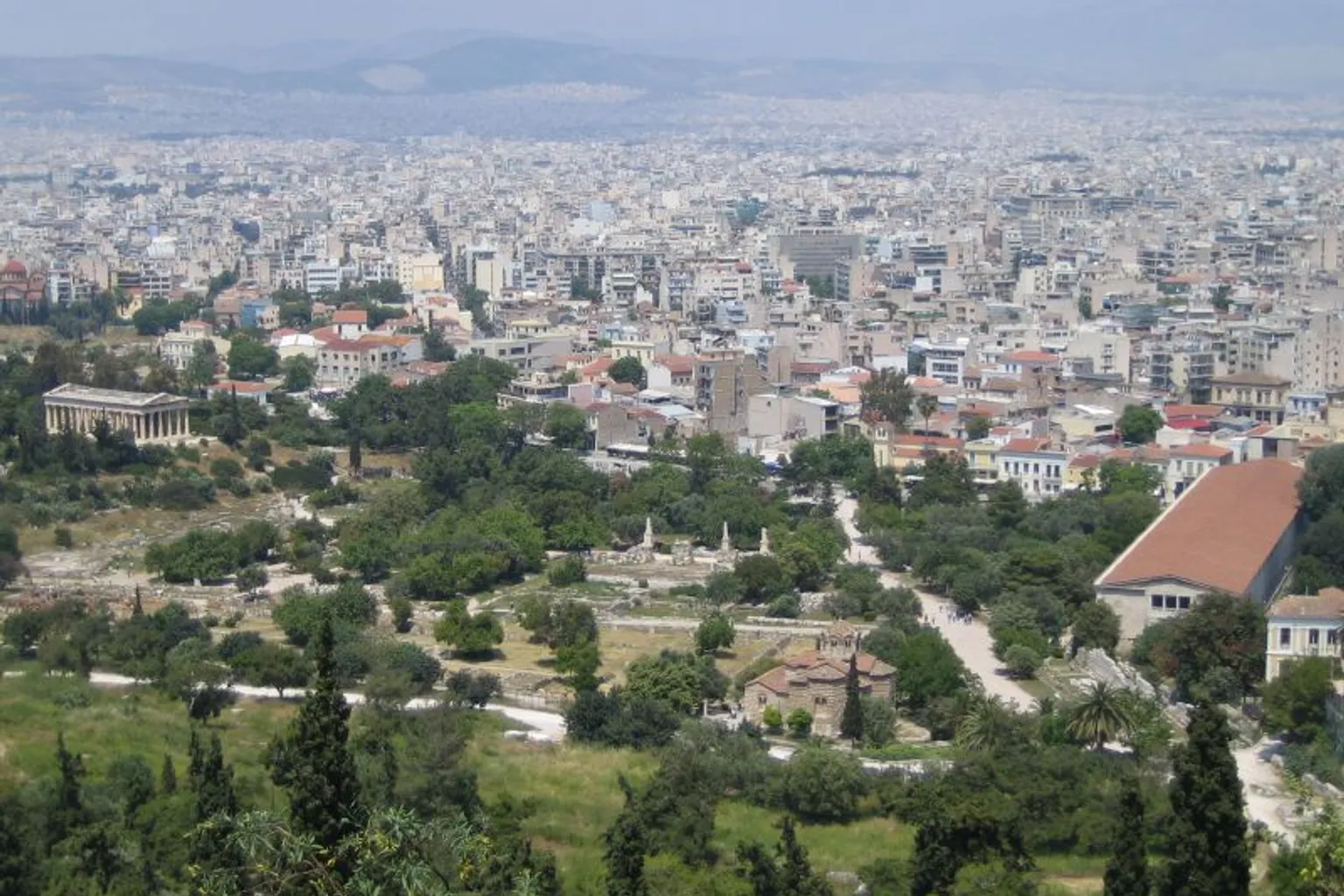
The former multi-site combined ticket is no longer the assumption to build your day around. Entry is now organized around a single ticket for the Agora archaeological site and the Museum of the Ancient Agora, with separate planning needed if you also want to visit the Acropolis or other monuments.
Tickets and prices
Ancient Agora of Athens
I
Save
Box office and online booking
- Adult €20
€20
Official websiteII
guided tour
Self-guided audio tour · 1.5–2 hours
Includes a pre-booked e-ticket paired with a self-guided smartphone audio tour lasting 1.5 to 2 hours.
€26
Book ticketsIII
entry ticket
Entry ticket · 2 sites & 2 audio tours
Includes 2 time-slotted e-tickets for 2 landmarks and 2 audio tours for your smartphone.
€44
Book ticketsThere is another practical change: since July 1, 2025, visitors have been routed through the Thiseio Square archaeological gate while redevelopment work affects the former entrance at Adrianou 24. That changes the walking approach, but not the value of the visit. The site still gives you one of the clearest ways to understand how public life, commerce, law, philosophy, and religion worked in classical Athens—provided you arrive with the right ticket and enough time to use it.
Start with the correct ticket assumption
For most visitors, the cleanest option is a standard single-entry ticket for the Ancient Agora of Athens. This admission includes:
- The archaeological site itself.
- The Museum of the Ancient Agora inside the reconstructed Stoa of Attalos.
- Access to the main paths and monuments within the site during the selected operating period.
Do not plan around an Athens combined archaeological ticket that includes the Acropolis, Ancient Agora, Roman Agora, and other major sites. That multi-site product was discontinued under the updated ticketing policy of the Greek Ministry of Culture. Older travel articles may still describe it as the obvious money-saving choice, but that advice is no longer reliable.
This is a classic case of confusing a good historical tip with a current purchasing option. The combined ticket may once have simplified a multi-day itinerary. Today, the practical approach is to evaluate each archaeological site on its own schedule, entry policy, and location.
The best Ancient Agora ticket strategy is not the one with the most inclusions. It is the one that matches your actual route through Athens.
The Ancient Agora ticket is also not the same thing as a ticket to the Acropolis Museum. The Acropolis Museum sells admission independently, so do not expect the official archaeological-site portal to handle that purchase.
Step 1: Choose online booking or the on-site ticket counter
The official digital ticketing system for Greek archaeological sites and monuments is operated through the Hellenic Heritage platform, associated with ODAP and the Ministry of Culture. It is the right starting point for online booking for Athens historical sites, including the Ancient Agora.
An online purchase makes sense when:
- Your Athens itinerary is built around a fixed morning or afternoon.
- You are visiting during a busy travel period.
- You want the ticket stored before leaving for the site.
- You are coordinating several people and do not want a payment decision at the gate.
- You need to generate documentation for a reduced or complimentary admission category.
On-site purchase remains a reasonable choice when your schedule is flexible, you are already in the Thiseio area, or you want to confirm the day’s access conditions in person. The site has physical ticket counters, but a counter cannot restore time you have lost by arriving after the final admission window. A ticket is only useful if it fits the operating hours.
When booking online, use the official Hellenic Heritage portal rather than a generic ticket page that borrows the name of the monument. Read the product description carefully. You want admission to the Ancient Agora archaeological site and its museum, not an audio tour or a third-party walking experience that may have a different meeting point.
What to confirm before payment
Treat the checkout screen like a small project specification. Before you finalize, confirm:
- The product names the Ancient Agora of Athens.
- The ticket includes the archaeological site and the Museum of the Ancient Agora.
- The date matches your intended visit.
- The selected visitor category is correct.
- The entry instructions refer to the current Thiseio Square gate.
- You understand whether the ticket is digital, printable, or tied to an identification document.
- Any audio guide or guided-tour add-on is clearly separate from admission.
The distinction between admission and an enhanced tour matters. A digital audio tour can be useful if you prefer a self-guided route, but it does not replace the archaeological admission ticket. Third-party products may package the Ancient Agora with the Roman Agora or add audio content. Those can be practical for some travelers, especially when available for immediate or next-day use, but they should be treated as tour formats rather than as evidence that the discontinued combined ticket has returned.
Step 2: Select the right visitor category
The standard adult ticket is not the only admission category. Reduced and complimentary entry depend on eligibility, age, citizenship, and documentation. This is where a small amount of preparation can protect both your budget and your time.
Free-entry provisions include:
- EU citizens under 25, with valid identification.
- Non-EU visitors under 18, with valid identification.
- Visitors entering on designated free-admission days.
- Other categories recognized under the current rules, where applicable and properly documented.
The precise document requirement depends on the category. Bring a passport or national identity document rather than relying on a phone photograph. If your eligibility is based on age, the document should make that easy to establish. If it is based on citizenship, use an accepted official ID.
For online booking, the system may ask you to select the relevant category and generate a ticket or reservation. For an on-site visit, the ticket office can verify eligibility directly. Either way, do not select a reduced or free category simply because it looks cheaper at checkout. If you cannot prove the category at entry, the saving disappears into a last-minute correction at the counter.
A practical document setup
Keep these items together before you leave your accommodation:
1. Your ticket confirmation or booking reference.
2. The identification document used to establish eligibility.
3. A backup copy stored offline if your phone battery is unreliable.
4. The address or map pin for the Thiseio Square gate.
5. A note of the site’s closing time for your visit date.
This is not bureaucracy for its own sake. Archaeological sites operate on controlled access, and a small mismatch between the ticket category and your documents can create more friction than the ticket purchase itself.
Step 3: Plan around the Thiseio Square entrance
The entrance change is the most visible logistical adjustment for current visitors. From July 1, 2025, entry and exit were rerouted to the Thiseio Square archaeological gate because redevelopment work affected the main Adrianou 24 entrance.
That means a route that looks correct on an older map may bring you to the wrong side of the site. Build your walking plan around Thiseio Square, not around the former Adrianou entrance. This is especially useful if you are approaching from Thiseio metro station, walking from Monastiraki, or combining the Agora with a meal or museum visit in the surrounding neighborhood.
The new access point also changes the way you should estimate arrival time. A visitor who allows only a few minutes to find the entrance is spending the same kind of false economy as a homeowner who budgets for paint but forgets surface preparation. The ticket may be secured, but the project is not ready.
Allow time for the approach
Give yourself a buffer for:
- Walking from the metro or your previous attraction.
- Finding the correct archaeological gate.
- Passing through ticket control.
- A security check, if applied.
- Orienting yourself once inside.
- Reaching the first monument you actually came to see.
The Ancient Agora is not a single room with one photo stop. The site spreads across open ground, paths, trees, ruins, reconstructed structures, and museum rooms. If you arrive close to final admission, you may technically get inside but still have too little time for a worthwhile visit.
The route from Thiseio Square is also a reminder that the Agora works best as a planned neighborhood stop. It sits within a dense historical zone, and visitors often combine it with the Acropolis, the Roman Agora, the Acropolis Museum, or a walk through Plaka. That can work, but only if you separate the ticket logic for each attraction.
Step 4: Match your arrival to the seasonal schedule
The Ancient Agora’s operating hours change through the year. During the peak summer period, the site generally operates from 08:00 to 19:30. As daylight and seasonal schedules shift, closing moves earlier, reaching approximately 16:30 or 17:00 in winter.
The final admission cut-off is 30 minutes before closing.
That final-entry rule should control your itinerary. If the site closes at 17:00, arriving at 16:35 is not a clever late-day shortcut; it is outside the normal entry window. If you arrive at 16:20, you may be admitted but should not expect a full visit.
A workable arrival strategy looks like this:
| Visit pattern | Best use | Main trade-off |
|---|---|---|
| Early morning | Cooler temperatures, softer light, more time before the day’s crowds build | Requires an early start and a route that gets you to Thiseio first |
| Midday | Easy to combine with central Athens sightseeing and lunch | Heat and exposed walking paths can reduce comfort |
| Late afternoon | Good for a shorter visit and warmer light on the ruins | Limited time near closing, with no room for a delayed arrival |
| Free-admission day | Useful for eligible itinerary planning and a no-cost cultural stop | Demand may be higher, and eligibility or access conditions still need to be checked |
Summer heat is not a decorative detail. The Agora contains open areas with limited shade, stone surfaces that hold warmth, and enough walking to make water and sun protection part of the admission plan. Comfortable shoes are a better investment than an elaborate outfit, and a hat will do more for the experience than any last-minute styling decision.
Step 5: Build the visit around the Stoa of Attalos
The Museum of the Ancient Agora is housed in the Stoa of Attalos, one of the site’s defining structures. It is included with the Ancient Agora admission and should not be left to the final few minutes.
The Stoa gives the visit a useful interior sequence after time among the exposed ruins. Its displays help explain the objects and civic practices connected to the Agora, including the everyday infrastructure of public life. If you see the archaeological site first and the museum second, the exhibits can give names and functions to details that might otherwise blur together.
The upper-floor exhibition has been subject to maintenance-related changes, with a temporary closure beginning November 1, 2025. The exact reopening date is not established in the available visitor information. Plan around the museum as part of the ticketed complex, but do not assume every exhibition area is available on every date.
A sensible route through the site gives priority to:
1. The Stoa of Attalos and its museum collection.
2. The Temple of Hephaestus, one of the best-preserved ancient Greek temples.
3. The central open areas where political, commercial, and social activity took place.
4. The paths associated with the Panathenaic Way.
5. Smaller remains and viewpoints once you have understood the main layout.
This order is not mandatory, but it protects the high-value parts of the visit. If you wander without a sequence, it is easy to spend your available time on scattered fragments and then rush past the museum.
The free-entry calendar can change the economics of your day
Certain designated days offer free admission to the Ancient Agora and its museum. The annual dates include:
- March 6, Melina Mercouri Memorial Day.
- April 18, International Monuments Day.
- May 18, International Museums Day.
- The last weekend of September, European Heritage Days.
- October 28.
These dates can make a difference to a family or a traveler moving through several archaeological sites. They can also affect demand. Free admission does not guarantee a frictionless or uncrowded visit, and it does not remove the need to verify the current access procedure.
Use the calendar as an itinerary tool, not as a reason to force the entire trip around one monument. If a free day places the Agora in the middle of a crowded route and leaves no time for the museum, the nominal saving may come with a poor experience. This is the same cost-to-value ratio calculation used in a renovation: the lowest line-item cost is not always the best finished result.
Ancient Agora entry requirements: the small details that prevent a failed visit
The admission process is uncomplicated when the practical details are aligned. Before leaving, run through the following short list:
- You have selected Ancient Agora admission rather than an unrelated Athens tour.
- Your ticket date and visitor category are correct.
- Your identification is available if you qualify for free or reduced entry.
- You know that the current entrance is at Thiseio Square.
- You have checked the seasonal closing time.
- You are planning to arrive at least 30 minutes before the official closing time, with additional walking buffer.
- You have separated the Agora ticket from any Acropolis Museum purchase.
- You have allowed enough time to see the Stoa of Attalos museum rather than treating it as optional overflow.
The most common planning mistake is not a complicated ticket rule. It is an itinerary that assumes every Athens attraction sits on the same clock. The Ancient Agora, Acropolis, Roman Agora, Acropolis Museum, and neighborhood sites each have their own admission systems and operating patterns. A good day in Athens comes from sequencing them, not from trying to make one ticket solve the whole city.
Treat the Ancient Agora as a two-part visit: the open archaeological landscape first, the Stoa of Attalos museum as the interior finish.
Should you buy a self-guided tour or use a basic ticket?
A basic admission ticket is the right fit for visitors who have already researched the site, prefer to move independently, or want to spend their time photographing and observing without an audio narrative.
An audio tour or combined third-party experience can be useful when:
- You want historical context without joining a fixed group.
- You are visiting the Ancient Agora and Roman Agora in the same day.
- You prefer a pre-built route rather than interpreting the ruins alone.
- You want a tour option that can be booked for the current or following day.
- Your group has mixed interests and needs structure to keep moving.
The trade-off is simple. A basic ticket gives you flexibility and keeps the purchase focused. A tour package adds interpretation and convenience but may include content, meeting instructions, or a route that does not match your preferred pace.
Read the inclusions before booking. A product described as an e-ticket with audio tours may be a good fit, but it should not be confused with official admission policy or with the discontinued Athens combined ticket. If a listing uses broad language about multiple monuments, confirm exactly which sites are covered and where you must enter each one.
A practical half-day sequence
If the Ancient Agora is one part of a larger Athens day, the following sequence keeps the logistics clean:
Option A: Agora first
- Travel toward Thiseio Square in the morning.
- Enter through the current archaeological gate.
- Walk the main site while temperatures are manageable.
- Spend deliberate time in the Stoa of Attalos museum.
- Continue toward Monastiraki or Plaka for lunch.
- Visit another attraction only if its ticket and closing time fit independently.
This is the strongest option when the Agora is a priority. You are protecting the most schedule-sensitive part of the day before fatigue and heat accumulate.
Option B: Agora after the Acropolis area
- Complete an early Acropolis or Acropolis Museum visit.
- Walk toward the Agora through the central historical district.
- Use Thiseio Square as the arrival reference point.
- Enter only if you are comfortably ahead of the final admission cut-off.
- Keep the visit focused on the Temple of Hephaestus, central remains, and Stoa of Attalos rather than attempting every corner.
This sequence can be efficient, but it has less tolerance for delays. The Acropolis area often absorbs more time than expected, especially when security, queues, transport, or photo stops enter the plan. If the Agora matters more than fitting in one additional landmark, reverse the order.
Option C: A flexible neighborhood day
- Start at the Agora.
- Walk through Thiseio and the surrounding archaeological district.
- Use the afternoon for food, shopping, or a museum with its own ticketing.
- Keep the evening open rather than buying a second attraction with a tight final-entry window.
This is often the best value for travelers who want depth rather than a checklist. The Agora is more rewarding when you have enough attention left to read the site’s layout and connect it to Athenian civic life.
What the ticket does—and does not—guarantee
An Ancient Agora ticket gives you the right to enter the ticketed archaeological complex during the applicable operating period. It does not guarantee:
- Access through the former Adrianou 24 entrance.
- Entry after the final cut-off.
- Admission to the Acropolis Museum.
- A multi-site discount covering the Acropolis and other monuments.
- Access to every exhibition area if part of the Stoa of Attalos is closed for maintenance.
- A guided explanation of the ruins unless your selected product includes one.
- A crowd-free visit on a free-admission day or during peak travel periods.
That distinction keeps expectations realistic. The ticket is one component of the visit, not a substitute for route planning.
Final spend-versus-save verdict
Spend on: official online booking when your date is fixed, a small arrival buffer, comfortable footwear, and an audio tour if you want interpretation without a guide.
Save on: outdated bundled-ticket advice, duplicate purchases, and rushing from one attraction to another simply to claim more inclusions.
The Ancient Agora of Athens does not require an elaborate ticket strategy. It requires a current one. Use the official Hellenic Heritage system or the on-site counter, select the single-site admission that matches your plan, carry the correct identification for any concession, and route yourself to the Thiseio Square gate. Then protect enough time for both the archaeological grounds and the Stoa of Attalos museum.
That is the disciplined version of the visit: fewer assumptions, no obsolete combined-ticket math, and a better return on the hours you have in Athens.
Practical info
Currency: EUR
Driving: on the right
Emergency number: 112
FAQ
Is there a combined ticket for the Acropolis and the Ancient Agora?
Where is the entrance to the Ancient Agora of Athens?
Does the Ancient Agora ticket include the Acropolis Museum?
What documents do I need for a reduced or free ticket?
How late can I enter the Ancient Agora?
Photo: https://www.flickr.com/people/jonezes/ / CC BY-SA 2.0 — Wikimedia Commons