Things to do in Amsterdam: selecting sites by visitor profile
The most common Amsterdam planning mistake happens before anyone buys a ticket: you choose attractions by reputation instead of by fit.

Then you spend half a day crossing the city for a museum that does not match your interests, queue outside another one because you did not reserve ahead, and discover that your carefully packed itinerary has no room for lunch, weather, or basic human fatigue.
Top attractions and activities in Amsterdam

Amsterdam rewards selection, not accumulation. The city has major museums, small specialist collections, historic neighborhoods, canal districts, markets, parks, and architectural landmarks packed into a relatively compact area. That does not mean you can see everything efficiently. It means you need an Amsterdam sightseeing strategy that matches your travel style, available time, and tolerance for crowds.
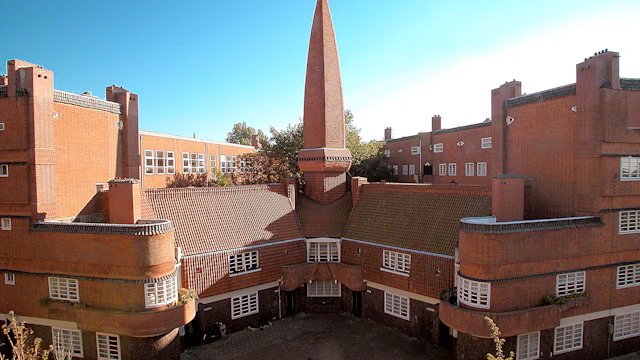
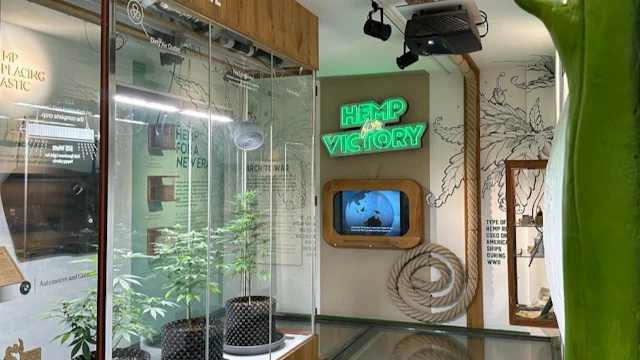
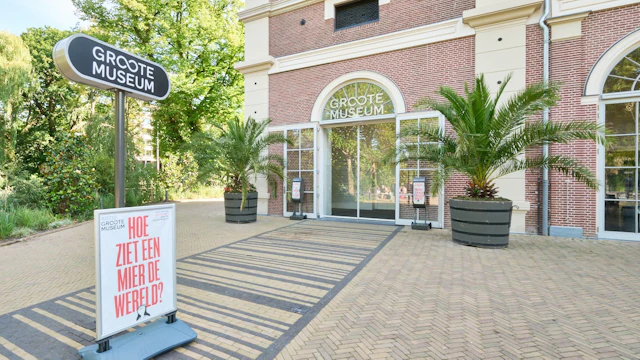
If you are traveling with an architecture enthusiast, build around architectural districts and Museum Het Schip. If your group is interested in science, the body, or natural history, choose Body Worlds and ARTIS Groote Museum as separate experiences rather than treating them as interchangeable museums. If your interest is cannabis culture and industrial history, the Hash Marihuana & Hemp Museum gives you a focused stop—but not a free pass to make assumptions about what is permitted inside.
Start with the visitor profile. Then build the route. The city will still be there when you finish arguing with the map.
Amsterdam works better by district than by attraction list
A standard list of the best museums in Amsterdam for visitors is useful only until you open the map. After that, the list starts making expensive decisions for you.
Amsterdam’s central canal belt is where many first-time visitors begin: Dam Square, the canal streets, the Jordaan, the Nine Streets, and the area around Amsterdam Centraal. This is the city’s high-demand zone. It is walkable, visually dense, and crowded for exactly the reasons you already know. You can cover a lot on foot, but short distances become slow when streets are busy, bridges are narrow, and everyone is stopping in the middle of the pavement to photograph a canal house.
The Museum Quarter, south of the central canal belt, is a different operating environment. It is anchored by major cultural institutions and open spaces, with broader streets and more room to reset between visits. This is usually where you place a major art museum or a long indoor block, not where you improvise after a full morning of walking.
The eastern side of the city gives you ARTIS, the Plantage neighborhood, and a calmer sequence of cultural stops. The western districts bring you toward Museum Het Schip and the architecture of the Amsterdam School. The north, reached by the free ferry from behind Centraal Station, feels less like a museum circuit and more like a change of city rhythm, with modern architecture, waterfront views, and industrial spaces.
Use this basic rule:
- If you have one day, stay within two connected areas. A central walking route plus one booked museum is enough.
- If you have two days, assign one day to the historic center and one to either the Museum Quarter, eastern Amsterdam, or the western architectural districts.
- If you have three days, add a specialist interest day instead of stuffing more famous names into the first two.
Do not confuse geographic compactness with unlimited capacity. A ten-minute map distance can become a thirty-minute real-world transfer once you add ticket lines, weather, bicycles, and the group member who has suddenly developed a philosophical objection to walking.
The best things to do in Amsterdam are not the attractions you can name fastest. They are the stops that fit the route you can actually execute.
Choose the site by what you want to understand
Amsterdam is not one museum city. It is several different cities sharing canals and a transportation network.
For architecture: make Museum Het Schip a western Amsterdam anchor
Museum Het Schip is the right choice when your interest is not simply in attractive buildings but in the ideas behind them. The building, designed by Michel de Klerk and constructed in 1919, is one of the defining examples of the Amsterdam School movement.
That distinction matters. You are not visiting only to admire decorative brickwork, expressive windows, and unusual forms. The Amsterdam School was connected to a broader period of housing reform and social ambition. The Dutch Housing Act of 1901 helped drive the development of social housing, and the buildings that followed were not treated as anonymous containers. Design, public life, and housing standards were part of the same argument.
Museum Het Schip works especially well for three types of visitors:
1. Design travelers who want an architectural movement with a clear local identity rather than another generic historic interior.
2. Urbanism and housing enthusiasts interested in how policy, construction, and everyday life meet at street level.
3. Visitors who have already seen the central canal belt and want a different version of Amsterdam—less postcard, more city-making.
The museum offers adult admission with an optional guided tour lasting about forty-five minutes. If the guided option is available for your visit, use it when you want the building explained as a system rather than photographed as a façade. Otherwise, you risk reducing a substantial architectural story to a set of decorative details.
If you are staying in the center, plan Museum Het Schip as part of a western route rather than as an isolated detour. Pair it with a walk through the surrounding housing architecture, then continue toward the Jordaan or return by tram. The exact route depends on your starting point, but the principle does not change: give the neighborhood enough time to make the museum’s subject visible outside the museum.
Bold warning: Do not schedule Museum Het Schip between two unrelated central attractions with only a narrow buffer. That is how a thoughtful architecture visit becomes a rushed box-ticking exercise.
For anatomy and science: know what Body Worlds is before you enter
Body Worlds: The Happiness Project is located at Damrak 66, directly in one of Amsterdam’s busiest visitor corridors. The location is convenient. The experience is not lightweight.
The exhibition presents more than two hundred real human anatomical specimens preserved through plastination and arranged across six floors. Its subject is the body: structure, systems, health, aging, and the relationship between physical condition and the exhibition’s theme of happiness.
That combination attracts visitors who want a direct, visual science experience. It also means you should be honest about your group’s comfort level. The specimens are real human remains. This is not a conventional natural-history display and not a casual attraction to drop into without reading the description.
Body Worlds is open daily from morning until late evening, which creates more scheduling flexibility than many museums offer. Use that flexibility strategically:
- If you want the central Amsterdam experience, visit during a lower-pressure part of the day and continue through the canal belt afterward.
- If your group is sensitive to crowds, reserve a timed entry where available and avoid treating the attraction’s long opening hours as a reason to arrive without a plan.
- If you are traveling with children or mixed interests, explain the subject in advance. A surprise encounter with human anatomical specimens is poor itinerary management.
- If you have already spent hours in historic interiors, Body Worlds provides a more concentrated, contemporary science stop—but allow time afterward before moving to another demanding museum.
The practical mistake here is assuming that a central location means a quick visit. Six floors and a dense exhibition can take longer than the address suggests. Keep your next commitment flexible.
For natural history and systems thinking: use ARTIS Groote Museum differently
ARTIS Groote Museum is not a replacement for a zoo visit, and it is not simply another building on the ARTIS grounds. Its focus is the relationship between humans, animals, and plants.
The museum reopened to the public in May 2022 after having been closed since 1947. It occupies Amsterdam’s oldest museum building, constructed between 1852 and 1855. That history gives the visit an architectural layer, but the main reason to choose it is conceptual: the museum asks you to see human life as part of a larger biological network rather than as a separate category.
This is a strong fit for:
- Visitors who enjoy natural history but want interpretation and connections, not just specimen cases.
- Families and groups with different interests, because the human-animal-plant framework offers multiple entry points.
- Travelers who want to combine an indoor museum with the eastern Plantage neighborhood and the broader ARTIS experience.
Treat ARTIS Groote Museum as a half-day area decision. If you book only the museum and ignore the surrounding district, you may underuse the location. If you attempt to combine it with a distant museum on a tight schedule, you will spend your afternoon negotiating transfers instead of looking at anything.
If/Then planning rule: If your group likes biology, ecology, and big-picture science, make ARTIS Groote Museum the anchor and build outward. If the group wants paintings, canal houses, or design history, do not force it into the itinerary because the building happens to appear on a general list of Amsterdam attractions.
A specialist stop needs a clear reason to exist
The Hash Marihuana & Hemp Museum is a focused cultural visit in the historic center, with locations on Oudezijds Achterburgwal. It was founded in 1985 by Ben Dronkers and presents a collection of more than nine thousand cannabis-related artifacts.
That collection gives the museum a different role from the city’s major art and history institutions. It is about the cultural, industrial, agricultural, and historical uses of cannabis and hemp. The right question is not whether the museum is famous enough to justify your time. The right question is whether its subject connects to your interests.
Choose it if you are interested in:
- The history of cannabis and hemp as materials and crops.
- Cultural history, prohibition, commerce, and changing public attitudes.
- A short, specialized stop in the central canal district.
- A museum experience that is more specific than a general Amsterdam history survey.
The museum offers an audio guide with admission, which can help structure a collection that might otherwise feel fragmented. Use it. Specialist museums are often strongest when you follow the interpretive thread rather than wandering through objects as if you are browsing a shop window.
Keep the legal and practical boundaries clear. A museum about cannabis is not the same thing as permission to smoke or purchase recreational cannabis inside the museum. Do not build your itinerary around assumptions that the institution has not made.
Because the museum is in the old center, it can be paired with a walking route through the canal district. But watch the clock. The same area can feel easy in the morning and congested later, especially around the busiest central streets.
Build one, two, or three days without turning the trip into a drill
A workable itinerary has anchors, buffers, and a reason for each transfer. Here is a practical framework for things to do in Amsterdam without making every hour answerable to a spreadsheet.
One day: central Amsterdam with one serious indoor stop
For a single day, do not attempt a museum championship.
Start with a morning walk through the canal belt, the Jordaan, or the Nine Streets. Choose one direction and follow it. Add one central attraction—Body Worlds is the obvious specialist choice if anatomy and science interest you, while the Hash Marihuana & Hemp Museum works better for a targeted cultural stop.
Leave time for lunch and a slower canal route. Amsterdam’s central streets are not designed for aggressive scheduling. They are designed to make you stop, turn, cross a bridge, and wonder why you are suddenly three streets away from where you intended to be.
If you want a major art museum as well, make that your principal booking and treat the rest as neighborhood time. You cannot responsibly fit every headline attraction into one day simply because the city map looks manageable.
Two days: separate the historic core from a specialist district
On the second day, move away from the center.
Choose Museum Het Schip if architecture, housing, or urban design is your priority. Choose ARTIS Groote Museum if your group is more interested in biology and the connections between people, animals, and plants. In either case, plan the surrounding district rather than calculating the visit as a standalone ticket.
A strong two-day structure looks like this:
| Day | Main area | Anchor experience | Supporting plan |
|---|---|---|---|
| One | Historic center and canal belt | One central museum or specialist stop | Walking route, canals, lunch, flexible evening |
| Two | Western or eastern Amsterdam | Museum Het Schip or ARTIS Groote Museum | Neighborhood exploration and one low-pressure indoor or outdoor activity |
This works because each day has a different job. The first introduces the city’s historic density. The second lets you follow an interest without dragging it through the entire center.
Three days: add depth, not clutter
Three days gives you enough space to build a more personal Amsterdam itinerary. It does not give you permission to schedule six major museums.
Use the third day for the interest your group had to compromise on:
- Add Museum Het Schip if you spent the first two days in the center and still want architecture.
- Add ARTIS Groote Museum if your itinerary has been dominated by art and historic streets.
- Add the Hash Marihuana & Hemp Museum if you want a compact specialist visit between broader neighborhood walks.
- Add Body Worlds if your group is genuinely interested in anatomy and science and you did not want to place it on a crowded first day.
You can also use the third day for Amsterdam beyond the standard center: the northern waterfront, a market, a park, or a slower neighborhood route. The objective is not to collect one more building. It is to leave with a coherent sense of the city.
A third day should buy you flexibility, not another race between timed entries.
Tickets, queues, and the logistics that decide whether the plan works
Amsterdam’s most popular attractions operate on demand, not on your personal sense of urgency. Book ahead when the venue uses timed entry, when your visit falls during a busy travel period, or when the attraction is central enough to attract a constant flow of visitors.
The strongest candidates for advance planning are:
- Major museums with timed admission.
- Body Worlds, particularly if you want a specific part of the day.
- Guided tours at Museum Het Schip, if the tour schedule is important to your visit.
- ARTIS-related visits when you want to coordinate multiple activities in the same area.
- Any attraction you are placing between a train arrival and a fixed evening reservation.
Do not assume that buying a ticket solves the whole problem. Check the entry time, arrival instructions, duration, and location. A booking is not a force field against a late tram, a missed ferry, or the group’s inability to locate the correct entrance.
For transport, use walking where the route is genuinely central and manageable. Use trams, metro services, buses, and ferries when they save a cross-city transfer or protect your energy for the attraction itself. The free ferry from behind Amsterdam Centraal is particularly useful for reaching Amsterdam Noord, but it is not a shortcut to every destination in the city.
Bicycles are part of Amsterdam’s transport system, not a decorative tourism prop. Stay out of marked cycle lanes, look both ways before stepping across them, and do not stop in the middle of a cycling route to consult your phone. This is not merely etiquette. It is basic collision avoidance.
Weather changes the deal. Rain can make a walking-heavy itinerary unpleasant, while bright weekends increase pressure on central attractions and outdoor routes. Build one indoor anchor into each day, but avoid chaining indoor attractions so tightly that a delay at the first one destroys the rest.
The operational rules that keep the itinerary intact
1. Book the anchor before filling the day around it. Start with the attraction that has the least flexibility, then add walking and food nearby.
2. Keep one buffer block every day. Use it for queues, weather, coffee, or the inevitable detour.
3. Cluster by geography. Do not cross Amsterdam repeatedly because a list told you that every attraction is a must-see.
4. Check the sensitivity of the experience. Body Worlds requires a different level of preparation from a canal walk.
5. Treat specialist museums as deliberate choices. The Hash Marihuana & Hemp Museum is worthwhile for the right visitor and unnecessary for the wrong one.
6. Do not make evening reservations immediately after a distant museum. A tight connection is not a strategy; it is a bet.
Seasonality changes the order of operations
Amsterdam has no single travel season in which every attraction behaves the same way.
During popular spring and summer periods, central walking routes, canal areas, and headline museums tend to feel more pressured. Start earlier when you can, reserve major attractions before the day, and keep outdoor sightseeing for the part of the day when you have the most patience.
Autumn and winter can make museum-based planning more comfortable, but weather becomes a larger factor. Shorter daylight and rain argue for placing outdoor neighborhood walks around the strongest daylight window. Do not save every outdoor activity for evening simply because the museum closes later.
On wet days, choose an indoor anchor and keep the second half of the plan close by. Body Worlds in the center can support a canal district route if the rain eases. ARTIS Groote Museum gives you an eastern Amsterdam base with options nearby. Museum Het Schip provides a western architectural focus that still works when the weather is not cooperating, though you should not pretend that the surrounding buildings are irrelevant to the visit.
On clear days, reverse the order: walk first, then use a museum as the fixed point later. You will see more of the city before crowds and fatigue start making decisions for you.
The final selection: make the itinerary defendable
When choosing among things to do in Amsterdam, ask four questions:
- What does this site actually offer that the others do not?
- Which neighborhood does it belong to?
- How much time and concentration does it require?
- What happens if the weather, queue, or transport connection goes against you?
If the answer is vague, remove the attraction.
Museum Het Schip belongs in an architecture and housing itinerary. Body Worlds belongs in a science-focused plan, with a clear warning about its real anatomical specimens. ARTIS Groote Museum belongs in a natural-history and interconnection route, especially when you can give the eastern district enough time. The Hash Marihuana & Hemp Museum belongs in a cannabis and hemp cultural itinerary, not as an automatic stop for every first-time visitor.
That is the difference between an Amsterdam travel itinerary and a pile of reservations. One reflects your interests and the city’s geography. The other is just paperwork with walking attached.
The hard rule is simple: choose the visitor profile first, the neighborhood second, and the ticket third. Never let a famous attraction dictate a route that makes the rest of the day collapse.