SEA LIFE Sydney Aquarium tickets: 4 smart ways to book
Walking up to the SEA LIFE Sydney Aquarium ticket booth on Wheat Road, Darling Harbour, and paying the gate price is how tourists burn money without realizing it. The price on the window is the worst deal you’ll find on that entire strip.
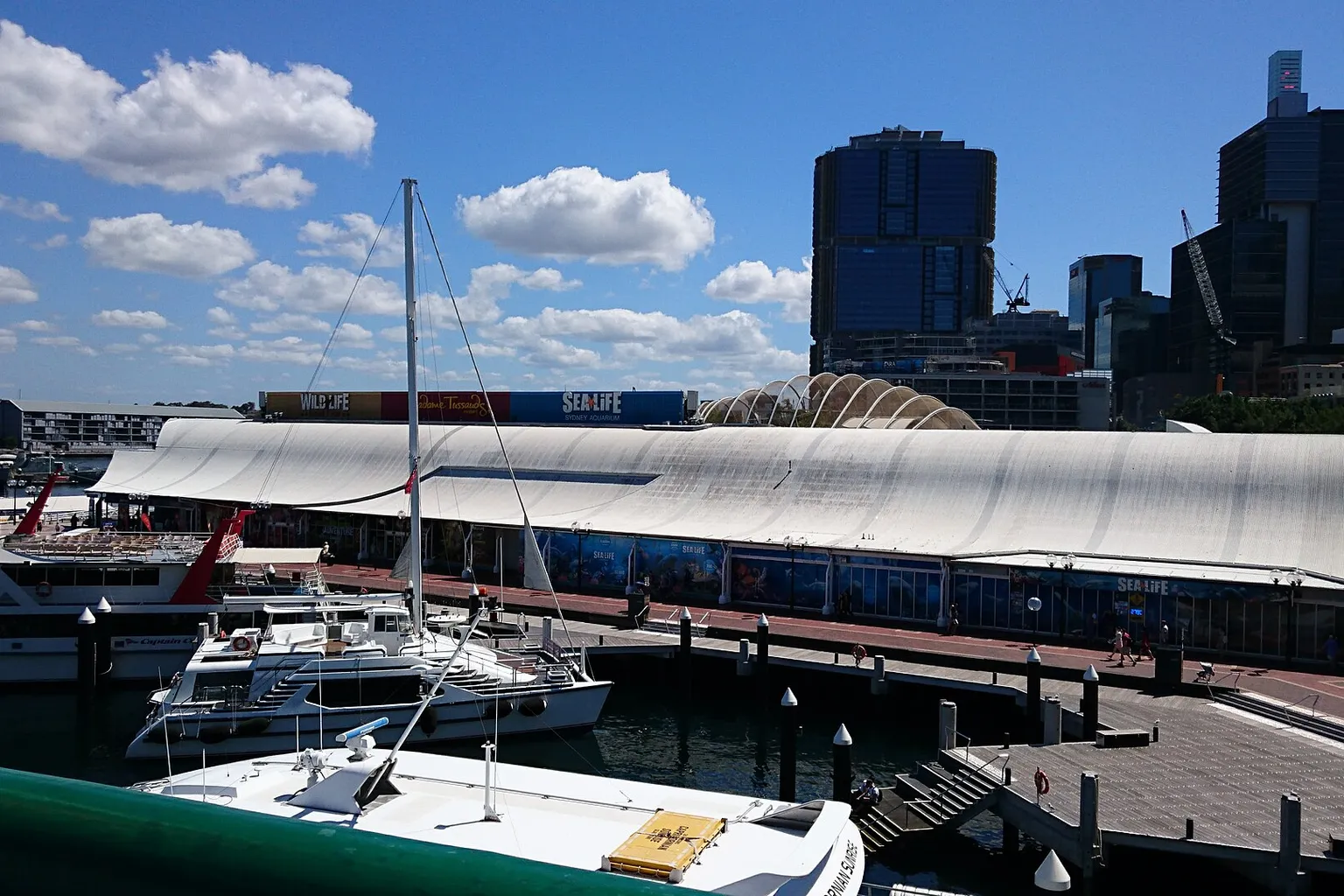
Locals and seasoned visitors know this: advance online bookings and combination passes consistently undercut the walk-up rate. Third-party platforms and annual passes can also deliver value, but the savings depend on the specific offer, the platform, and how many visits you’ll actually make.
Tickets and prices
SEA LIFE Sydney Aquarium
I
Save
Box office and online booking
- Adult AUD39
- Child AUD24
AUD39
Official websiteII
entry ticket
Entry ticket · Available tomorrow
This ticket grants entry to see over 12,000 animals, including sharks, dugongs, stingrays, and penguins.
AUD43.55
Book ticketsThe trick isn’t digging for a discount code buried in an influencer’s story. It’s choosing the right booking channel before you leave the hotel—and understanding what each channel guarantees, what it excludes, and how much flexibility you retain if your Sydney plans change.
SEA LIFE Sydney Aquarium tickets are not all interchangeable. A cheap-looking ticket can be tied to a date, a time, a particular attraction bundle, or a strict change policy. The best purchase is the one that fits your itinerary, not necessarily the one with the largest percentage printed beside it.
Book direct, book early — the gate price is the ceiling, not the floor
The single biggest mistake at the aquarium ticket window is treating the posted price as the starting point. It’s the ceiling. Walk-up rates exist for impulse buyers who didn’t plan, and that convenience premium is built into the price.
Advance online tickets can save up to 30% or more versus gate prices, depending on the date and ticket tier. The exact saving is not fixed across the calendar, so don’t assume every visitor will receive the same discount. A weekday visit booked ahead can be priced differently from a Saturday visit during school holidays, and both can differ from the rate available at the entrance.
That variability is the point. SEA LIFE Sydney uses demand-based pricing, so a quieter morning slot can cost less than a popular afternoon period. The booking date matters, but the visit date and time matter just as much. A visitor who is willing to build the day around a less competitive slot may pay less than someone who books the first available Saturday afternoon.
The online booking route also gives you a clearer view of the available inventory. You can compare dates, see the ticket tier before committing, and decide whether the saving is worth giving up some flexibility. At the gate, you are making that decision under pressure, often with children waiting, a fixed sightseeing schedule, and no guarantee that your preferred entry time remains available.
How to approach the official booking flow
The practical move is straightforward:
- Pick your date first. Aquarium tickets are tied to specific entry arrangements. Have at least two preferred dates before you start the booking process, particularly if you are visiting during school holidays or a long weekend.
- Compare time slots, not only dates. A cheaper date may still have an expensive or inconvenient afternoon slot. Look at the whole day before choosing.
- Book ahead when the itinerary is reasonably firm. During quieter periods, last-minute availability may be fine. During busy periods, early booking gives you more choice and protects you from having to accept the remaining slot.
- Use the official site as your reference point. It sets out the venue’s current pricing, availability, change conditions, and the ticket types that are actually being sold.
- Save the confirmation immediately. Keep the booking email or digital ticket accessible offline, especially if your group includes several admissions or complimentary child tickets.
Booking online on the morning of your visit can still work if space remains, but it removes much of the advantage. The attractive time slots may already be gone, and the price may be closer to the gate rate. It also leaves less room to correct a mistake, such as selecting the wrong date or discovering that the chosen time clashes with another reservation.
There is another reason to decide before arriving at Darling Harbour: the aquarium is often only one part of a tightly packed day. Visitors combine it with WILD LIFE Sydney Zoo, Madame Tussauds, Sydney Tower Eye, a harbour cruise, or a meal reservation. A timed aquarium ticket can either anchor the day neatly or create an awkward gap between activities. Booking early lets you arrange the rest of the itinerary around the admission time rather than trying to fit the aquarium into whatever space is left.
The walk-up price is a convenience fee disguised as a ticket. Treat it that way.
Use the Sydney Big Ticket when the itinerary is genuinely multi-attraction
If you’re doing Darling Harbour properly—SEA LIFE, WILD LIFE Sydney Zoo, Madame Tussauds, and Sydney Tower Eye—you’re not simply buying four admissions. You’re deciding whether a bundled route is more economical than separate SEA LIFE Sydney Aquarium tickets.
The Sydney Big Ticket combines access to several attractions in one product, with savings of up to 60% compared with buying equivalent gate admissions separately. That headline saving can be substantial, but it only matters if you use enough of the included attractions. A bundle is not automatically cheaper just because its maximum advertised saving looks impressive.
The right comparison is between the pass and the individual tickets you would realistically buy. If your group is certain about visiting three or four included venues, the pass can make the day—or several days—less expensive. If one or two attractions are only vague possibilities, individual advance tickets may be the safer choice.
When the combination pass earns its place
| Your situation | Is the combo worth considering? | Why |
|---|---|---|
| You are in Sydney for four or more days and plan to visit at least three included attractions | Usually yes | The saving accumulates across several admissions, and the validity period gives you room to spread the visits out |
| You are in town for one night and might visit one additional attraction | Usually no | The unused portion can eliminate the expected saving, while individual advance tickets keep the plan flexible |
| Your group includes children aged 0–1 | Yes, but adjust the calculation | Children in this age range enter free without a paid ticket, so compare the pass against the actual number of paid admissions |
| You already hold a Merlin Annual Pass | Check that route first | Annual pass holders follow separate access conditions and may not need a Sydney Big Ticket |
| Your schedule depends on weather or several reservations | Possibly | The longer validity period can help, but only if timed-entry availability works for every attraction |
The 60-day validity window is the useful part that is easy to overlook. You can visit SEA LIFE on the first day of a trip and use the remaining attraction credits later, rather than forcing every venue into one exhausting sightseeing circuit. That can be valuable in Sydney, where weather, ferry schedules, restaurant bookings, and simple travel fatigue can rearrange a plan quickly.
It also changes the way you should think about the cost. The pass is not necessarily a single-day product, even if many visitors use it that way. Spread across the validity period, it can support a slower itinerary. The danger is buying it because the included venues sound attractive and then discovering that your group only wants one or two of them.
Two rules that matter
First, the combo does not remove the need to reserve an entry time. You must pre-book a free timed-entry slot for each attraction. The pass reduces the admission cost, but it does not guarantee that you can arrive at any hour and walk straight in. On a busy day, the available slots may be limited.
Second, read the attraction list before paying. Bundles are specific products, not general passes to every nearby venue. SEA LIFE, WILD LIFE, Madame Tussauds, and Sydney Tower Eye are the key attractions associated with this combination, but the exact inclusions and conditions should be checked during booking. If one venue is not of interest to anyone in your group, remove its theoretical value from the calculation.
The pass works best when it reflects a route you already intend to take. It works poorly when the route exists only on paper.
Third-party platforms: useful for convenience, not automatically cheaper
Klook, Booking.com, GetYourGuide, and other authorised online travel agencies sell SEA LIFE Sydney Aquarium tickets. They often provide instant e-tickets that can be scanned at the entrance. From the visitor’s point of view, the entry process may look almost identical to an official booking: open the code, present it at the venue, and follow the instructions for the selected date and time.
That does not mean every third-party purchase has the same conditions. The important difference is usually not the barcode. It is the support channel, the cancellation policy, the currency shown at checkout, and the way changes are handled.
Third-party platforms can be useful in several situations:
- You are already booking the rest of the trip there. Keeping accommodation, tours, transport, and attraction tickets in one account can simplify confirmation management.
- A bundle is genuinely better. Some platforms combine admission with a harbour cruise, city tour, or other activity. Check the inclusions carefully so you do not pay twice for something already covered elsewhere.
- You prefer to pay in your home currency. A platform may make the final total easier to understand for international visitors, although you should still check exchange-rate markups and service charges.
- The platform has a meaningful promotion. Compare the final checkout total rather than the headline discount. A lower advertised price can be offset by fees or by a less flexible ticket type.
- The official inventory is difficult to navigate. A familiar interface can save time, especially for a group booking, but convenience should not obscure the underlying restrictions.
There are also clear limits.
Discounts rarely stack. You generally cannot combine an official advance price, a third-party promo code, and another attraction offer into one unlimited reduction. Compare the final prices across channels and choose the strongest single offer.
Timed-entry rules still apply. A third-party e-ticket does not automatically grant open access throughout the day. If the ticket requires a date or slot, follow the platform’s instructions precisely. Some bookings may confirm a date but still require an additional reservation through the venue’s system, so read the confirmation rather than relying on the phrase instant ticket.
Customer service is another dividing line. With a direct purchase, the venue is the obvious first contact. With an agency booking, the platform may be responsible for amendments, cancellations, or refunds. That can be perfectly manageable when the trip goes to plan. It becomes more important when a flight is delayed, a child becomes ill, or you need to move the visit outside the permitted change period.
Before choosing a third-party offer, check:
- the exact attraction and ticket type;
- whether the date is fixed or open;
- whether a time slot must be selected separately;
- the deadline for changes or cancellation;
- whether the price includes all taxes and fees;
- which company handles support;
- whether the ticket is valid for every member of the group, including infants who need to be counted for entry.
If the final price is close to the official rate, booking direct is usually the cleaner decision. If the third-party offer is meaningfully cheaper and the conditions are acceptable, the entry experience may be just as simple. The saving is real only if you understand what happens when the original plan changes.
If the price difference is less than the cost of a coffee at the aquarium café, book direct. Cleaner change and refund rules are worth something.
Timed entry, date changes, and the rules that actually bite
This is where visitors lose money without noticing. SEA LIFE Sydney operates around timed entry, and the flexibility attached to an online ticket is narrower than many people assume.
Single online tickets
The core rule for single online tickets is that you can change your date up to three times, provided the change is made at least seven days before the original visit date and the new slot is in the same price tier or a lower one. Miss the seven-day window or attempt a fourth change, and the booking becomes effectively fixed. There is no automatic refund or credit simply because you forgot to review the calendar.
That condition should influence which date you choose. If your itinerary is unsettled, do not select a date that is only technically possible. Choose the earliest date you can realistically use and leave room to move forward if necessary. A ticket booked several weeks ahead offers more time to make a permitted adjustment than a ticket bought the evening before.
The seven-day rule also interacts with availability. Even if you are allowed to change the date, the replacement slot must exist. A popular Saturday may be full by the time you decide to move your visit. The change policy protects you from some planning mistakes; it does not create capacity where none remains.
Peak periods deserve extra caution. School holidays, long weekends, and the December-to-January travel period can produce stronger demand for the most convenient slots. If your group has other reservations, build the aquarium visit into the schedule rather than leaving it as a moveable piece with no backup.
Infants and complimentary admissions
Children aged 0–1 enter free, but they still need a complimentary ticket or entry record so they are counted in the group’s slot allocation. This is a small administrative detail with practical consequences. Skipping the infant admission during the booking process can leave you with a child who is not attached to the reservation, even though the child does not require a paid ticket.
Do not assume that free means no booking action. For a timed-entry attraction, capacity is about the number of people entering, not only the number of paid admissions.
Combination passes
The Sydney Big Ticket gives you 60 days from the first attraction visit to use the remaining credits. After that period, unused admissions expire. The window is generous enough to spread visits across a longer stay or return to an attraction later in the trip, but it is not an open-ended account.
Before buying, sketch the likely sequence. You do not need to create a rigid hour-by-hour itinerary, but you should know which attractions are definite, which are weather-dependent, and which are merely convenient if time allows. The pass becomes poor value when the expensive part of the calculation rests on several maybes.
Every attraction still requires its own free timed-entry reservation. A pass gives you the right product for admission; it does not guarantee an available time at the exact moment you arrive.
Annual passes
Annual pass holders must also reserve a free timed-entry slot for each visit. The pass covers admission, but it does not function as a walk-in privilege. On busy days, the inventory available to annual pass holders may be managed separately from general ticket inventory, and those slots can fill.
That matters most for locals who want to visit spontaneously. An annual pass may be good value for repeated visits, but it should not be confused with unlimited access at any time. If your preferred visits are weekends or school holidays, check the reservation process before assuming that the pass will solve every availability problem.
If something changes, act as soon as you know. The seven-day window does not pause while you decide, and the preferred replacement date may disappear in the meantime. The earlier you contact the relevant booking platform or follow its change process, the more options remain.
Annual passes and group rates: when volume changes the calculation
Two other routes are worth considering before you settle on individual SEA LIFE Sydney Aquarium tickets.
Annual passes for repeat visitors
Annual passes make sense for Sydney locals and long-stay visitors who expect to return to the aquarium several times within a year. The calculation becomes more favourable when you are planning more than two visits, particularly if single-ticket prices would otherwise be higher on the dates you want.
The value is not limited to the admission arithmetic. A pass can make short visits feel worthwhile. You do not have to spend half a day inside to justify the ticket if you are nearby and want to see a particular exhibit or bring visiting family members through the aquarium.
But the access rules still matter. Annual pass holders need timed reservations, and peak-day capacity can limit the spontaneity that people associate with an annual product. Before buying, consider how often you would visit on quieter weekdays versus how often you would want to go at the busiest times.
For a local, the pass can be a practical way to spread visits across the year. For a traveller staying only a few days, a combination pass or an advance single ticket is usually easier to justify.
Group rates
Group rates of up to 25% off may apply to parties of ten or more. That can be useful for school groups, corporate outings, family reunions, and organised tours, but the booking process is different from the standard online purchase.
A group organiser typically needs to contact the group sales team rather than place ten separate admissions into a normal checkout. That adds coordination around names, payment, the preferred date, and the entry time. It also means the group should begin planning before everyone’s itinerary is finalised.
Do not compare only the per-person discount. Consider the administrative cost of coordinating the booking and the consequences if several people cancel. For a large group with a fixed schedule, the saving can be worthwhile. For a loosely organised group of friends, individual advance tickets may be simpler even if the theoretical group rate is better.
The same timed-entry principle applies: a group rate does not necessarily mean unrestricted arrival. Make sure the agreed booking includes a practical entry time for the whole party, especially if the aquarium visit is linked to a meal, coach transfer, or another attraction.
The rule of thumb
Stop treating the aquarium ticket like a souvenir purchase you make when you arrive at Darling Harbour. Treat it more like a flight: decide early, compare the real options, and choose the product that matches the number of attractions you will actually visit.
For one aquarium visit, compare the official advance price with reputable third-party offers, then give serious weight to the change and support conditions. For three or four attractions, calculate the Sydney Big Ticket against the individual admissions you would genuinely buy. For repeated local visits, investigate an annual pass, but remember that timed reservations still apply. For ten or more people, group rates may change the equation, provided the organiser can manage the additional booking steps.
The gate is the most expensive and least flexible place to make the decision. Online booking gives you more than a possible discount: it gives you visibility of dates, time slots, ticket types, and restrictions before you commit.
If you only remember one thing, book your preferred date through the official site at least seven days ahead when your plans allow it. That preserves more room for a permitted change, helps you avoid the weakest time slots, and keeps the booking conditions clear. From there, choose the bundle or platform only when it matches the actual shape of your trip.
The system rewards visitors who plan around their itinerary rather than around the ticket window. Plan first, book the right product, and leave the gate price for people who enjoy paying extra for making decisions late.
Practical info
Currency: AUD
Driving: on the left
Emergency number: 000
FAQ
Is it cheaper to buy tickets online in advance?
Do I need to book a time slot if I have a combination pass or annual pass?
Can I change the date of my online ticket if my plans change?
Do infants need a ticket for the aquarium?
When is a combination pass worth buying?
Photo: Moatazayman / CC BY-SA 4.0 — Wikimedia Commons