Museum of the Future tickets: what changed with timed entry
Museum of the Future tickets are no longer a simple matter of choosing a day and turning up when the Dubai skyline feels most convenient.
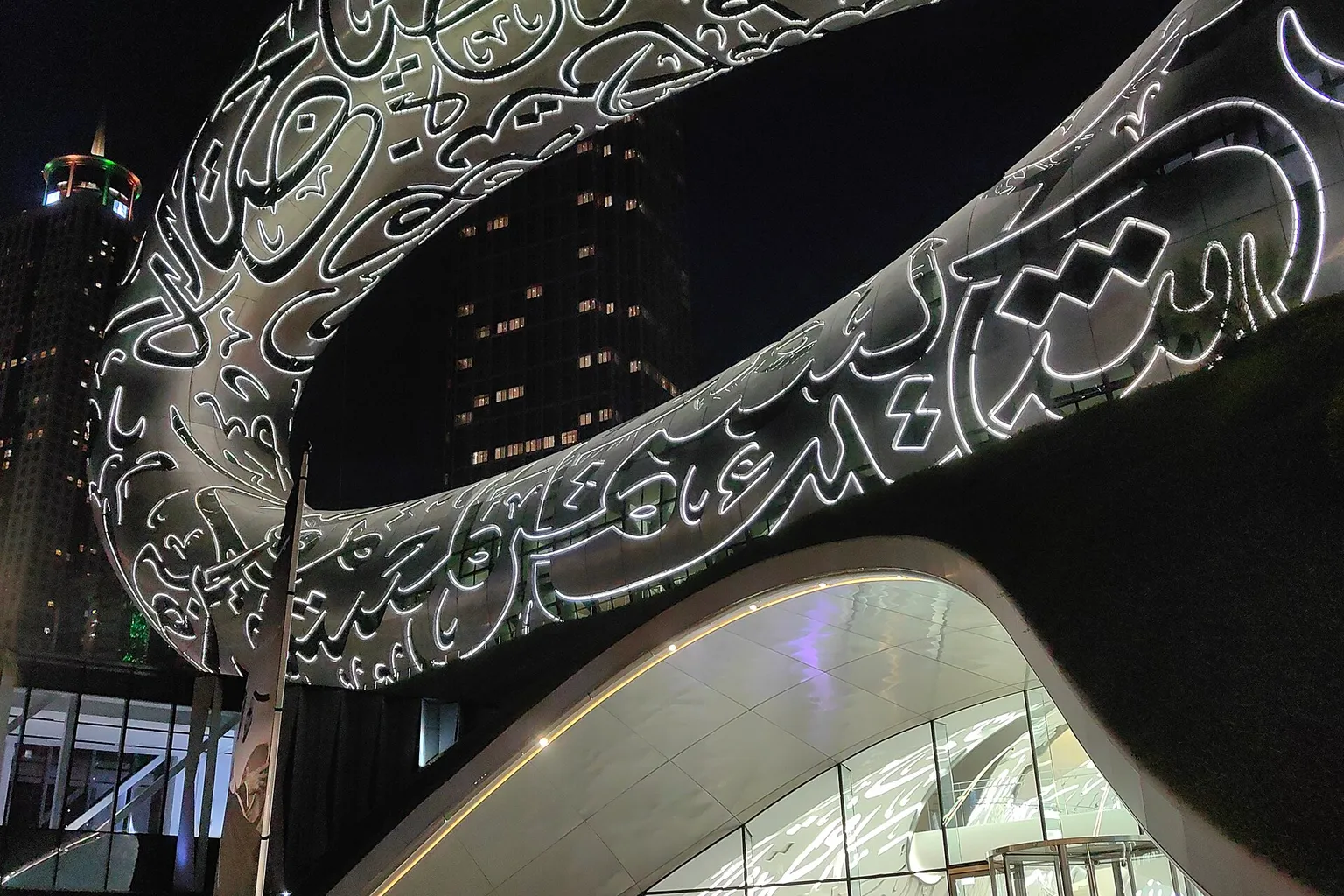
For standard visitors, admission is tied to a specific date and entry slot, and the booking now shapes the entire visit: when you leave the hotel, how much time you allow for traffic, whether lunch fits beforehand, and how much room you have for the kind of small delay that is almost inevitable in Dubai.
Museum of the Future
Available at short noticePrices checked on August 12, 2026 · current price on the partner page.
- Official Ticket · Ages 4 and abovefromAED169
Official website — museumofthefuture.ae
Prices are indicative and may change — confirm the price and availability on the partner page.
Partner link — GetYourGuide ticketsThe rule is straightforward, but the consequences are easy to underestimate. Guests should arrive 15 minutes before the time printed on the ticket, and the venue allows a 30-minute grace period before or after the reserved slot. Outside that window, standard ticket holders can be refused entry. The museum provides a cushion, but not enough to turn a timed ticket into an all-day pass.
A timed ticket does not only reserve your place inside the museum; it sets the rhythm of your Dubai day.
The mechanics of Museum of the Future entry slots
The central change in the booking experience is that standard admission is both date-specific and time-specific. You select the day, choose an available entry period, and receive a ticket that corresponds to that appointment. The slot is not a casual recommendation from the booking page. It is part of the condition of entry.
If your ticket is for late morning, arriving much earlier does not generally mean you can begin the visit ahead of schedule. If the slot is in the afternoon, a leisurely lunch that stretches into an hour-long delay may put the booking at risk. The grace period gives you breathing room; it does not erase the appointment.
For a smoother visit, read the slot as a small travel itinerary:
1. Choose the museum date around your wider Dubai plans. A visit linked to a tightly timed airport transfer, desert excursion, or restaurant reservation leaves little space for traffic or navigation delays.
2. Build in the requested early arrival. The venue advises guests to arrive 15 minutes before the allocated time, which gives you a practical margin for finding the entrance and getting organized.
3. Treat the 30-minute grace period as protection, not planning time. It can help when a taxi is slow or a metro connection takes longer than expected, but it should not become the reason you book an impossibly tight schedule.
4. Check the ticket before leaving your accommodation. The date and time are the details that determine whether the ticket works at the door.
5. Keep the rest of the day flexible enough for the visit. The museum is designed as an immersive experience rather than a quick photo stop, so rushing away immediately after entry can flatten the whole outing.
This is especially useful for travelers staying across Dubai's long transit corridors. A hotel near the Marina, Downtown Dubai, or the older neighborhoods around Deira can create very different journeys depending on traffic, roadworks, and the time of day. The museum's distinctive silver, calligraphy-clad exterior is easy to recognize once you are nearby, but recognizing it from the car window is not the same as being ready at the entrance.
How the 30-minute grace period works in practice
The 30-minute window runs before or after the booked time. A ticket reserved for 2:00 p.m. therefore gives you some flexibility around that appointment, but it should not be interpreted as permission to arrive whenever you like during the afternoon. The safest habit is still to aim for the official arrival recommendation rather than calculate the latest possible minute.
The wording matters because travelers often plan around the outer limit of a policy. A visitor who arrives 20 or 25 minutes late may still be within the stated window, but that does not make the delay risk-free. Queues, directions, ticket checks, and the final approach to the entrance all happen in real time. The grace period is better understood as a buffer for an otherwise well-planned journey.
A late arrival can be particularly uncomfortable when your day already includes a fixed reservation. If you are traveling with young children, coordinating a stroller, or moving through Dubai with a larger family group, the practical margin disappears faster than it does for a solo visitor carrying only a phone and a small bag.
The same applies to visitors coming from other attractions. Dubai's landmarks may appear close together on a map, yet the experience of crossing the city is governed by road layout, hotel pickup timing, and the changing pace of the day. When you book Museum of the Future tickets, allow the city's geography to influence the slot rather than choosing the most attractive time in isolation.
Standard admission or Pioneer Pass: flexibility versus simplicity
For most visitors, the standard ticket is the natural starting point. It provides access on the selected date and within the chosen time arrangement, but the booking is less forgiving if your schedule changes. Standard tickets are non-refundable and non-transferable unless the booking includes the relevant protection option.
That sentence needs to be read carefully. The protection option does not turn a standard ticket into an unrestricted, transferable booking. Protection Free affects cancellation and refunds only. If the option is included and its conditions are met, it may allow you to cancel the booking and recover the ticket value; it does not give you the right to hand the same ticket to another person.
The Pioneer Pass, also described as the VIP or premium option, is built around a different kind of day. It includes priority entry and flexible arrival at any time during the museum's operating hours on the chosen date. It also includes complimentary valet parking and retail credit for the lobby shop. The attraction is not simply prestige; it is the ability to move through Dubai without watching the clock quite so closely.
Here is the practical difference:
| Booking feature | Standard ticket | Pioneer Pass / VIP ticket |
|---|---|---|
| Date selection | Required | Required |
| Specific arrival slot | Required | Flexible arrival during operating hours on the selected date |
| Entry priority | Regular entry process | Priority entry |
| Parking benefit | Not included as part of the standard ticket | Complimentary valet parking |
| Retail benefit | Not included | Lobby shop credit |
| Best suited to | Visitors with a predictable itinerary | Visitors who value flexibility, convenience, or a changing schedule |
| Cancellation position | Generally non-refundable and non-transferable; Protection Free may change the cancellation and refund position | Check the terms attached to the selected premium booking |
The premium option makes the most sense when your day has moving parts: a driver arriving at an uncertain time, a family group that cannot be hurried, or a Dubai itinerary that depends on weather, shopping stops, and traffic. It can also suit travelers who would rather pay for flexibility than turn every transfer into a countdown.
That does not mean the standard ticket is a poor choice. If you already know where you will be before and after the museum, a reserved entry slot can give the day a pleasant structure. The key is to choose the format that reflects your actual habits. A person who plans every transfer precisely may find standard admission perfectly comfortable; a person who likes to follow the city's energy may feel constrained by it.
The same distinction applies when comparing ticket prices. A premium ticket may appear expensive next to ordinary admission, while a standard ticket with Protection Free may cost more than the basic version. These are not interchangeable purchases. One changes the arrival experience; the other changes the financial consequences of cancellation. Neither should be described as permission to transfer a standard booking to someone else.
The right ticket is less about status than about how much uncertainty your day can absorb.
Why arrival logistics matter more than the ticket page suggests
The museum sits in a part of Dubai where road access, drop-off timing, and the final walk from transport can affect your arrival more than a booking confirmation makes visible. The building itself is a landmark, but the last part of the journey still deserves attention, particularly if you are arriving during a busy period or with children.
For a standard ticket, the cleanest approach is to work backward from the entry slot. Start with the time you need to be at the entrance, then allow room for the trip across the city, the transition from vehicle or station to the venue, and the minor pauses that come with real travel. A taxi that is five minutes late, a crowded station exit, or a child who suddenly needs water can use up the grace period quickly.
A simple day plan might look like this:
- Before departure: confirm the booked date and entry time, charge your phone, and keep the ticket accessible rather than buried in a crowded travel folder.
- During the journey: monitor the route instead of assuming the map's first estimate will hold throughout the day.
- Near the museum: leave enough time to orient yourself, especially if you are carrying bags or coordinating several people.
- At the entrance: aim to be there 15 minutes before the reserved slot, as requested by the venue.
- After entry: avoid scheduling an immediate second attraction unless you have allowed a generous transition period.
The museum is not the sort of place where the exterior is the whole experience. The building's architecture creates the first impression, but the visit continues through galleries, projections, interactive displays, and changing perspectives on future cities, technology, and human life. A schedule that gives you barely enough time to get through the door can make an otherwise carefully purchased ticket feel unnecessarily restrictive.
If you are traveling through Dubai by public transport, map the final approach in advance. Transit corridors can be efficient while still leaving a slightly awkward last stretch, and that last stretch is where visitors tend to lose their margin. If you are using a car, valet parking is specifically associated with the Pioneer Pass, so do not assume that the premium arrival experience applies to every ticket type.
A note on last-minute Museum of the Future tickets
Last-minute Museum of the Future tickets may be available when you search, but availability should not be treated as guaranteed. The official ticket structure is designed around reserved dates and entry periods, and the most desirable times can disappear while the rest of your Dubai itinerary is still taking shape.
If you are booking close to the visit, look first at the actual slots available for your chosen day rather than building a plan around a preferred hour that may no longer exist. An early or late slot can still work well if you arrange the surrounding geography thoughtfully. What tends to create trouble is buying whatever remains and then trying to force it into a day already packed with fixed commitments.
Walk-in availability for standard visitors on high-capacity days should not be assumed. The safer strategy is to secure a ticket in advance, particularly for weekends, school holidays, or dates when your travel schedule cannot easily move.
There is also a difference between finding a ticket at short notice and finding a ticket that fits your day. A remaining afternoon entry may technically solve the booking problem while creating a transport problem, especially if you have already reserved a meal or excursion on the other side of the city. Availability should therefore be judged against the whole itinerary, not only against the question of whether the museum still has space.
When children and accessibility change the booking process
The museum has specific admission provisions for children under four and for People of Determination. Children under four receive free admission. People of Determination, together with one accompanying caregiver, also receive free admission.
These arrangements differ from the standard online booking process. Those eligible do not need to pre-book online and can collect tickets at the Customer Service Desk on arrival. That does not mean the day requires no planning; it means the ticket-collection route is different.
For families, the distinction is useful because very young children can change the pace of a museum visit in ways that are impossible to predict from an itinerary. A stroller, snack break, or sudden need to leave a gallery can turn a tightly sequenced morning into something more fluid. If the rest of the family is traveling on standard timed tickets, plan the arrival so everyone reaches the Customer Service Desk and the main entrance without splitting the group unnecessarily.
People of Determination and their accompanying caregiver should allow time to explain their eligibility at the service desk and collect the relevant tickets. The free-admission provision is designed to remove an online booking barrier, but arriving early remains a sensible habit when the rest of the party has a timed schedule.
The arrangement also means that families should not automatically book paid online tickets for every member before checking which visitors qualify for the on-arrival process. At the same time, the rest of the party may still need tickets tied to a chosen slot. The practical task is to coordinate the two routes rather than assume that one booking method applies equally to everyone.
There is a wider accessibility lesson here: planning is not only about the interior of an attraction. It includes the route from the hotel, the type of vehicle used, the distance from drop-off, the availability of shade, and the amount of time a group can comfortably spend standing or moving between points. Dubai's heat and broad urban scale can turn a short outdoor connection into a meaningful part of the day.
Non-refundable bookings and the value of Protection Free
The standard ticket structure rewards certainty. Once purchased, standard tickets are generally non-refundable and non-transferable. That can be perfectly reasonable when your hotel, flights, and excursions are already fixed, but it creates exposure when the itinerary is still shifting.
Protection Free adjusts the cancellation position without changing who the ticket belongs to. When included with the booking, it allows cancellation at least 24 hours before the scheduled entry slot for a full refund, subject to the applicable booking terms. The timing is the essential detail: this is not a last-minute escape hatch once the reserved visit is already approaching.
It also does not make the standard ticket transferable. The original booking remains subject to the non-transferable rule. Protection Free loosens the financial commitment if you cancel in time; it does not change the identity attached to the ticket or authorize a replacement visitor.
That distinction is worth holding onto clearly. If a friend, partner, or family member ends up being the one who could attend the museum in your place, Protection Free does not help you reassign the ticket. It may help you cancel and recover the value of the booking, provided you meet the cancellation deadline. It is cancellation protection, not a name-change facility.
Protection Free is most relevant in a few familiar situations:
- Your Dubai trip is booked but not yet settled. Flight changes, hotel moves, and private transfers can still alter the best museum day.
- You are traveling with a group. The more people involved, the more likely one change affects everyone's schedule.
- Your visit depends on another timed activity. A delayed excursion or an unexpectedly long transfer can make the original slot impractical.
- You are booking far ahead. More planning time creates more opportunities for plans to change.
- The museum is a priority but not the only priority. Flexibility can be worthwhile when the day includes several major stops.
Protection Free does not remove the need to read the booking conditions attached to your selected ticket. Different products can carry different terms, and the cancellation deadline is measured against the scheduled slot. Mark that deadline in your travel notes rather than relying on memory. The 24-hour rule is also a single threshold rather than a sliding scale: canceling 23 hours before the slot puts you outside the stated refund window, so the safe habit is to act as soon as you know the plan is shifting.
The broader booking principle is simple: the cheapest-looking ticket is not always the least expensive decision if changing it later means losing the full value of the booking. At the same time, paying for flexibility only makes sense when your itinerary genuinely has uncertainty. If your dates are firm and your route is already mapped, a standard booking may be entirely adequate, and its non-refundable, non-transferable stance becomes a manageable condition rather than a surprise.
What Protection Free does and does not change
It helps to separate the booking rules into two questions:
- Can the booking be canceled? Protection Free may provide a full refund when cancellation is made at least 24 hours before the scheduled slot and the relevant terms are satisfied.
- Can the ticket be given to another person? Protection Free does not change the standard non-transferable rule.
This is the point most likely to be blurred in casual descriptions of ticket protection. A refund option and a transfer option solve different problems. If your own plans collapse, cancellation protection may be useful. If you simply want another traveler to use the same ticket, Protection Free is not the mechanism for that.
The distinction also matters when comparing Dubai Museum of the Future ticket booking options. A booking page may present the protection product near the standard admission price, which can make it look like a general upgrade to the ticket. It is more precise to think of it as an additional cancellation condition attached to the booking. The underlying admission remains date- and slot-specific, and the transfer restriction remains in place.
How to plan a Museum of the Future visit around Dubai's geography
The museum works particularly well when it is treated as an anchor rather than squeezed into an already crowded list of attractions. Start with the districts you will occupy that day, then place the museum between them only if the travel time leaves a comfortable margin.
For example, a morning near Downtown Dubai may create a different rhythm from an afternoon beginning near the coast. A hotel breakfast that runs long, a shopping stop in a large mall, or a ride across the city can all affect the slot you can realistically keep. Dubai's walkability is highly localized: one district may invite an easy stroll beneath a shaded canopy, while another requires a vehicle or a longer indoor connection. Plan the final approach accordingly.
A practical neighborhood-scouting method is to check four layers before booking:
1. Your starting point. Note where you will actually be when the museum day begins, rather than where you expect to be in an ideal itinerary.
2. The previous commitment. Leave room between the museum and any excursion, appointment, or meal that has its own fixed time.
3. The final connection. Consider the walk from the drop-off point or transit station, along with luggage, strollers, and anyone who may need a slower pace.
4. The plan after the museum. Avoid treating the reserved entry slot as the only fixed point. A visit that ends later than expected can affect the entire evening.
This approach is more useful than choosing a ticket based solely on the hour that looks attractive on the booking page. A mid-afternoon slot may be appealing in isolation, but not if it sits between a beach visit and an evening reservation on the opposite side of the city. An earlier appointment may require more discipline in the morning while making the rest of the day easier.
The museum's location also makes the Pioneer Pass more understandable. Flexible arrival and valet parking can remove several small decisions from the day, particularly for visitors using a private car or traveling with a group. But the value depends on how often those decisions are likely to matter. If you are already staying nearby and have a clear route, the standard ticket may provide all the practical flexibility you need.
Reading the ticket choice as a travel decision
The most useful way to compare Museum of the Future ticket price changes is not to look at the numbers alone. Look at what the price is buying: a fixed appointment, a more flexible arrival format, a different cancellation position, or additional convenience around parking and the retail experience.
That framing prevents two common mistakes. The first is assuming that the cheapest standard ticket is automatically the best value. It may be the right choice for a settled itinerary, but a missed slot can make a low upfront price expensive in practice. The second is assuming that every more expensive option provides the same kind of flexibility. Pioneer Pass and Protection Free address different sources of uncertainty.
A visitor can therefore make a better decision by identifying the problem before choosing the product:
- If the problem is arrival timing, compare standard admission with the Pioneer Pass.
- If the problem is the possibility that the trip will change, examine Protection Free and its cancellation deadline.
- If the problem is a group with different admission needs, plan the Customer Service Desk route for eligible visitors.
- If the problem is a crowded Dubai itinerary, choose the slot only after mapping the commitments around it.
- If the problem is booking close to the visit, start with real availability and build the day around what still exists.
None of these choices removes the need to read the ticket itself. Booking pages can change, and the terms attached to a particular product should take priority over a general description. The useful habit is to identify the date, entry arrangement, cancellation position, and transfer rule before payment, not after a change of plans.
The practical conclusion
Timed entry has not made Museum of the Future tickets complicated for its own sake. It has made the admission condition more visible. A standard visitor is no longer buying only access to a building; they are choosing a date, a time, and a level of tolerance for disruption.
The 15-minute early-arrival recommendation should be treated as part of the plan. The 30-minute grace period is a safety margin, not an invitation to arrive whenever convenient. Standard tickets remain non-refundable and non-transferable unless the applicable booking terms say otherwise, and Protection Free changes the cancellation and refund position only. It does not make a standard ticket transferable.
Choose standard admission when the day is predictable and the slot fits naturally into the route. Consider the Pioneer Pass when flexible arrival, priority entry, or valet parking genuinely solves a problem. Use Protection Free when the trip may change and recovering the booking value matters, while remembering that cancellation protection is not a substitute for transfer rights.
That is the real shift in the booking process: the ticket now rewards a little more itinerary discipline. Once the date, route, arrival margin, and cancellation rules are understood, the timed-entry system becomes manageable—and the museum can remain the anchor of the day rather than the appointment that throws it off.
Practical info
Currency: AED
Driving: on the right
Emergency number: 999
FAQ
How early should I arrive at the Museum of the Future?
How does the 30-minute grace period for Museum of the Future tickets work?
Can I change or transfer a standard Museum of the Future ticket?
What does Protection Free include for Museum of the Future tickets?
What is the difference between a standard ticket and the Pioneer Pass?
Do children under four need to book Museum of the Future tickets online?
Photo: Александр Сигачёв / CC BY-SA 4.0 — Wikimedia Commons