Cedar Point tickets: a four-stage booking project
The most expensive Cedar Point ticket is often the one purchased at the gate after the rest of the trip has already been planned.
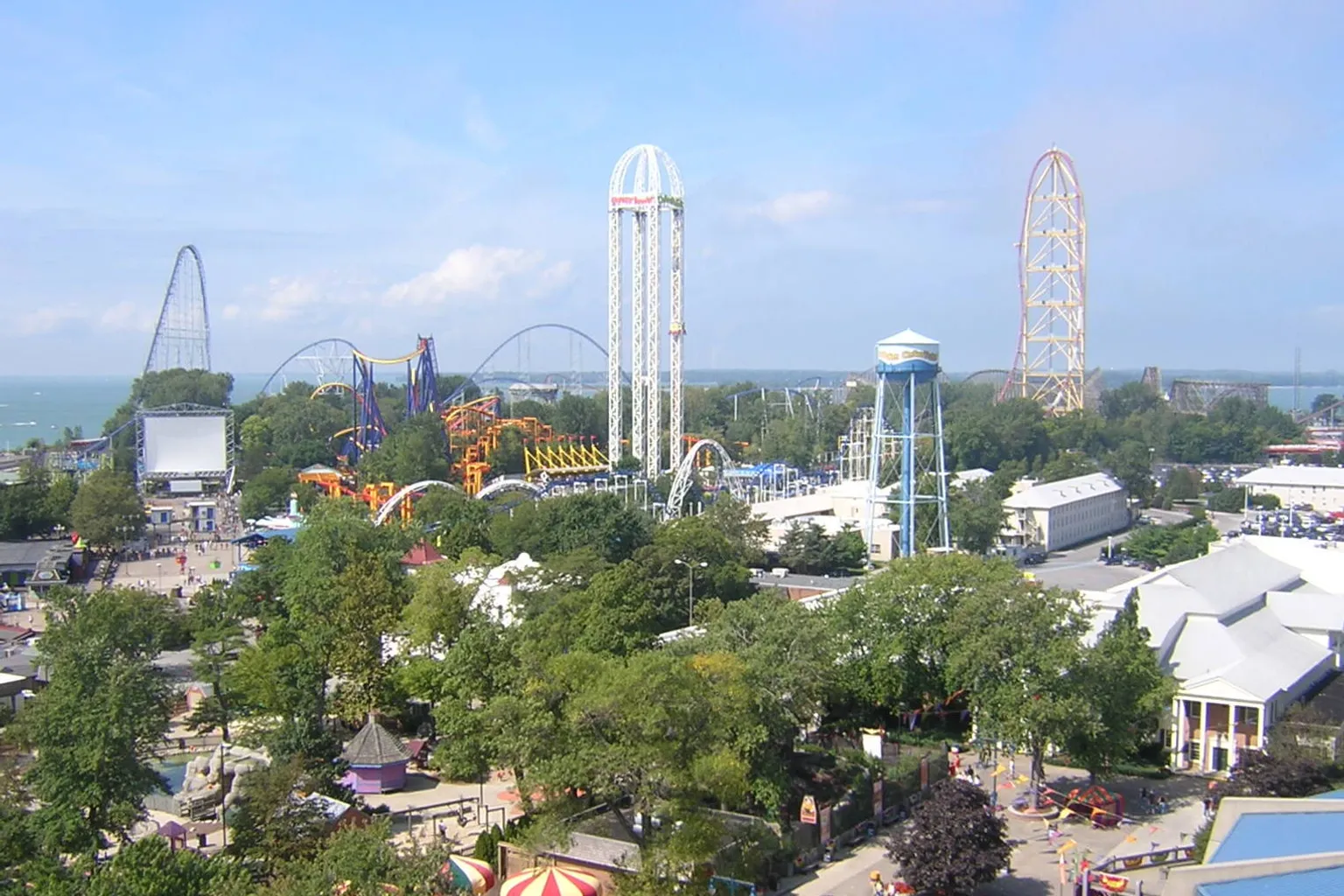
In 2026, Cedar Point’s single-day walk-up admission moved above the $100 threshold for the first time, while advance online tickets can begin at less than half that level before fees and taxes.

Cedar Point
- Official Ticket — Daily Admissionofficial ticketfromUSD49
Prices checked on August 18, 2026 · current price on the partner page.
Official website — sixflags.com
Prices are indicative and may change — confirm the price and availability on the partner page.
Partner link — GetYourGuide ticketsThat difference is not a minor checkout detail. It can change the cost-to-value ratio of the entire Sandusky trip, especially for families, groups, or anyone adding parking, meals, waterpark access, or Fast Lane. Treat Cedar Point tickets as a small project with four decisions: admission, booking channel, parking strategy, and queue-management add-ons.
The right choice is not automatically the cheapest ticket. It is the combination that matches your number of visits, the date you plan to attend, and the attractions you consider non-negotiable.
Stage One: Start with the Admission Decision, Not the Checkout Page
Cedar Point offers more than 60 rides, including major thrill attractions such as Millennium Force, Maverick, Steel Vengeance, Siren’s Curse, and Top Thrill 2. That inventory makes the park unusually sensitive to crowd levels. A basic admission ticket may be excellent value on a quiet weekday and frustratingly incomplete on a packed summer Saturday.
Before selecting Cedar Point Sandusky admission, establish three facts:
- How many days will you spend at the park?
- Will you visit Cedar Point Shores Waterpark as well?
- Is this a single trip, or could you return later in the season?
A single-day ticket is the cleanest option when your itinerary is built around one visit and you are not certain you will return. It keeps the commitment low and avoids paying for benefits you may not use.
The calculation changes when you expect multiple visits. The Cedar Point Gold Pass includes unlimited admission to Cedar Point and Cedar Point Shores Waterpark, along with free general parking. Promotional pass pricing can make that option competitive with a small number of individual visits, particularly when parking would otherwise be purchased separately each day.
There is also a practical difference between buying admission for convenience and buying admission for flexibility. A ticket tied to one date may be efficient when your travel schedule is fixed. A season pass may be more useful when weather, hotel availability, or family scheduling could turn one planned visit into two.
A simple first-pass comparison
| Decision | Best fit | What you are really buying |
|---|---|---|
| Advance single-day ticket | One planned park day | Lower entry cost with online fees and taxes added at checkout |
| Walk-up gate ticket | Last-minute or unplanned visit | Convenience, usually at a significant premium |
| Gold Pass | Multiple visits or waterpark use | Admission flexibility plus general parking savings |
| Daily Fast Lane | One high-crowd day | Time savings on eligible attractions |
| All-Season Fast Lane | Frequent visits with a strong queue-avoidance priority | A high upfront cost that only works for a very specific usage pattern |
The mistake is to compare only the admission line item. A ticket that appears inexpensive can become a less attractive purchase once you add parking and a separate waterpark day. Conversely, a season pass can look excessive until the parking benefit and repeat-visit value are included.
The ticket price is only the first line of the Cedar Point budget. The real decision is the total cost of getting the day you want.
Stage Two: Decode the Online Ticket Before You Buy
The Cedar Point online ticket options are generally more attractive than buying at the gate, but the displayed starting price is not necessarily the final checkout total. Online purchases may include processing fees of up to $9.99 per ticket order before applicable taxes. Dynamic pricing also means the starting rate will not be available for every date.
Think of the online booking page as a fixture allowance: it gives you a defined starting budget, but the final installation depends on the specifications. In this case, the specifications are date, ticket type, add-ons, and quantity.
The cost stack
Build the purchase in this order:
1. Base admission
Select the ticket that covers the park you actually intend to enter. Do not assume a standard Cedar Point ticket includes every waterpark benefit or premium add-on.
2. Date and demand level
Pricing may vary by the selected day. A peak summer weekend is not financially interchangeable with a lower-demand weekday, even when both are single-day visits.
3. Processing fees
These are attached during online checkout and can materially affect smaller orders. Review the per-order and per-ticket structure rather than looking only at the advertised starting rate.
4. Taxes and optional upgrades
Taxes and add-ons can move the final total away from the initial price shown in promotional messaging.
5. Parking
If you are driving, include general parking in the same calculation. A season pass that includes parking may shift the overall cost-to-value ratio more than a modest ticket promotion.
The most reliable comparison is not “online versus gate” in isolation. It is:
advance online admission + fees + taxes + parking
against:
season-pass cost + included benefits
That comparison tells you whether a single-day purchase is still the efficient route once the complete day is priced.
Why waiting can be expensive
The walk-up gate price carries a convenience premium. You are paying for the ability to arrive without committing to a date in advance. That may be rational if your plans are genuinely uncertain, but it is a poor substitute for flexibility when the trip is already booked.
If the hotel, transportation, and travel dates are fixed, delaying Cedar Point tickets does not create much useful optionality. It simply leaves the most expensive purchase until the last stage.
A disciplined booking sequence looks like this:
- Set the travel date before opening the ticket page.
- Compare that date with one or two nearby weekdays.
- Price the complete online checkout total.
- Add parking before judging the ticket.
- Compare the result with the current Gold Pass offer.
- Purchase only after deciding whether Fast Lane is part of the plan.
Do not treat an advertised starting price as a guaranteed price for your preferred day. The starting rate is a reference point, not a promise.
Stage Three: Decide Whether the Gold Pass Earns Its Keep
The Cedar Point Gold Pass is not simply a discount product. It is an access-and-parking package. It offers unlimited admission to Cedar Point and Cedar Point Shores Waterpark, and qualifying passes include free general parking.
That parking benefit deserves more attention than it usually receives. General parking is listed at $26.85 per day, so a visitor making several driving-based trips can recover a meaningful portion of the pass cost through parking alone. The benefit is less decisive for guests staying within walking distance, using a shuttle, or visiting only once without a vehicle.
The pass becomes more compelling under four conditions:
- You expect at least one return visit.
- Cedar Point Shores Waterpark is part of the itinerary.
- You are driving and would otherwise pay general parking on multiple days.
- You want the option to visit briefly rather than justify a full single-day ticket each time.
There is also a less visible form of value: reduced decision friction. With a season pass, a short evening visit or a weather-dependent return becomes easier to justify. That is not a reason to buy an expensive product blindly, but it is a legitimate part of the calculation for local visitors and longer Sandusky stays.
When the season pass is not the right move
A Gold Pass is not automatically the budget winner for every traveler. It may not make sense when:
- You are visiting from out of town for one fixed day.
- Your group will not use the waterpark.
- Parking is already included through your accommodation or transportation plan.
- The pass’s valid dates, restrictions, or promotional terms do not fit your itinerary.
- Several members of the group would purchase a pass but only one person is likely to return.
The pass should be evaluated per traveler, not as a vague family upgrade. One adult may have a legitimate reason to return; another may not. Group purchasing can magnify a small planning error.
For renewals and promotional periods, Gold Pass prices may be offered at lower levels than standard pass pricing. The lowest promotional pricing has a stated September 7 deadline for the upcoming season, so timing can affect the calculation. Because offers and terms change, confirm the current conditions before treating the promotion as part of your budget.
The parking break-even question
Instead of asking whether a season pass “feels worth it,” ask:
- How many park days are likely?
- How many of those days require paid general parking?
- Will Cedar Point Shores Waterpark replace a separate admission purchase?
- Does the pass cover the dates you need?
- Would you actually use the pass after the first visit?
This is the same logic used in a pre-sale renovation budget. A premium finish is justified when it solves a real constraint. A season pass is justified when its admission, parking, and waterpark benefits will be used—not because the package sounds comprehensive.
Stage Four: Treat Fast Lane as a Capacity Purchase
Fast Lane is not an admission ticket. It is a queue-management product purchased on top of park entry. That distinction matters because visitors often budget for the pass and only later discover that the selected tier does not cover the attractions they planned to ride.
Daily Fast Lane passes start at a premium level, and pricing can vary by demand. The value comes from reducing regular waits on select attractions. It is strongest when your time is more limited than your budget: a single crowded day, a tightly scheduled trip, or a group that would rather pay for capacity than spend much of the day in lines.
But the standard tier has a defined limitation. It does not include several of Cedar Point’s top-tier thrill coasters, including:
- Millennium Force
- Maverick
- Steel Vengeance
- Siren’s Curse
- Top Thrill 2
Those attractions require an upgrade to Fast Lane Plus. If one of them is the reason you are visiting Cedar Point, standard Fast Lane may produce the wrong kind of savings: you spend more but still wait for the headline ride.
Standard Fast Lane versus Fast Lane Plus
| Feature | Standard Fast Lane | Fast Lane Plus |
|---|---|---|
| Main benefit | Shorter waits on eligible attractions | Shorter waits with access to a broader premium attraction set |
| Best for | Visitors prioritizing general ride coverage | Thrill-focused visitors targeting Cedar Point’s signature coasters |
| Coverage of top listed coasters | Does not include the major exclusions listed above | Required tier for those attractions |
| Budget profile | Lower add-on cost, but narrower utility | Higher cost with better alignment for coaster-specific plans |
| Primary risk | Paying for a pass that misses your priority rides | Paying for premium capacity you will not use enough |
The correct question is not whether Fast Lane is expensive. The question is whether it buys access to the rides you would otherwise wait for.
A visitor who wants to experience a broad range of attractions may be satisfied with standard Fast Lane. A coaster-focused visitor should begin with the attraction list, not the product name. If Steel Vengeance, Maverick, or Top Thrill 2 is central to the day, price Fast Lane Plus from the start.
The all-season option
The All-Season Fast Lane pass is listed at $1,999 plus fees and taxes. That is a substantial commitment and should be treated as a utilization-based purchase, not an impulse upgrade.
It can only make financial sense for someone who expects frequent visits and consistently values queue reduction. A guest making one annual trip should not use the all-season product as a benchmark. Even a visitor planning several days should compare the cost of daily Fast Lane purchases against the number of visits, the expected crowd levels, and the attractions covered.
For most travelers, the decision is between no Fast Lane, one daily pass, or one daily Fast Lane Plus purchase. The all-season product belongs to a narrower category: repeat visitors with a predictable pattern of high-demand park days.
Peak Season Requires a Date Strategy
Cedar Point’s dynamic pricing creates a direct connection between calendar planning and ticket cost. The exact surge pattern for every late-season date is not fixed in a way that can be reduced to one universal rule, but the broad planning principle is straightforward: demand affects both admission and Fast Lane pricing.
If your schedule allows even modest flexibility, compare:
- A weekday against a Saturday.
- Early-season or late-season dates against the busiest summer period.
- A single-day visit against a longer stay with a possible return.
- A regular admission day against a day when waterpark access is also valuable.
Do not assume that moving the trip by one day will always produce a lower total. Compare the entire package, including hotel changes, parking, meals, and any Fast Lane requirement. A cheaper ticket can be offset by a more expensive hotel night or a second day of transportation.
Build the day around your priority rides
Cedar Point has enough major attractions that an unstructured visit can create poor sweat equity: a lot of time invested with little usable result. Decide in advance what the day must deliver.
A practical priority list might look like this:
1. Anchor rides
Select the two or three attractions that would make the visit worthwhile even if the day becomes crowded.
2. Secondary coaster group
Identify the rides you want if the queue conditions are reasonable.
3. Flexible attractions
Keep lower-priority rides, shows, food stops, or waterpark time available for gaps in the schedule.
4. Fast Lane coverage check
Match your anchor rides against the actual Fast Lane or Fast Lane Plus eligibility list.
5. Weather and operating risk
Avoid building the entire value calculation around one attraction if your schedule cannot absorb a temporary closure or weather interruption.
This planning step determines whether a queue product is useful. If your anchor rides are mostly outside standard Fast Lane coverage, the basic pass may have a weak cost-to-value ratio. If your plan includes many eligible attractions, the same pass can save enough time to justify its premium.
A Booking Workflow That Keeps the Budget Intact
Cedar Point tickets are easiest to manage when purchased in the right order. The sequence below prevents the common mistake of adding upgrades before the base plan is stable.
1. Lock the travel window
Choose the date range first, even if the exact park day remains flexible. A ticket cannot be evaluated without a demand context.
2. Price advance admission
Start with online admission rather than the gate. Record the final checkout total, including processing fees and taxes, not just the advertised starting rate.
3. Add parking
If you are driving, add general parking immediately. Do not leave it as a separate mental calculation. The parking line can materially change the comparison with a Gold Pass.
4. Run the season-pass comparison
Compare the complete single-day trip with the current Gold Pass terms. Include waterpark access, parking, likely return visits, and the dates on which the pass is valid.
5. Map Fast Lane to your ride list
Check whether your priority attractions are covered by standard Fast Lane. If the day centers on Millennium Force, Maverick, Steel Vengeance, Siren’s Curse, or Top Thrill 2, calculate Fast Lane Plus rather than assuming standard coverage.
6. Purchase the smallest package that solves the actual problem
If your problem is admission, buy admission. If your problem is a packed one-day itinerary, consider Fast Lane. If your problem is multiple visits and parking, evaluate Gold Pass. Avoid stacking every upgrade simply because it is available.
7. Recheck the final terms
Confirm operating dates, included parks, parking rules, processing fees, taxes, and any restrictions before payment. Promotional language is useful for identifying an opportunity, but the checkout terms control the purchase.
Spend vs. Save: The Definitive Verdict
Spend on advance online Cedar Point tickets when you are visiting once and your date is reasonably fixed. The gate premium is difficult to justify when the trip is already scheduled.
Save by comparing the Gold Pass when you expect multiple visits, want Cedar Point Shores Waterpark, or will pay for general parking on more than one day. The pass earns its place through actual usage, not through the size of its benefit list.
Spend on Fast Lane Plus only when the headline coasters excluded from standard Fast Lane are central to your itinerary. Otherwise, standard Fast Lane—or no queue add-on—may produce the better cost-to-value ratio.
Save by adjusting the date before cutting the attractions you care about. A lower-demand weekday can improve both the admission calculation and the value of any queue-management product.
The winning Cedar Point ticket strategy is not the one with the lowest starting price. It is the one that avoids paying for the wrong capacity, the wrong parking arrangement, or the wrong number of visits. Set the date, price the complete package, match Fast Lane to the actual ride list, and make the season-pass decision with a calculator—not optimism.
FAQ
Is it cheaper to buy Cedar Point tickets online or at the gate?
What does the Cedar Point Gold Pass include?
Does a standard Fast Lane pass include all rides?
Are processing fees included in the advertised ticket price?
How can I decide if a Gold Pass is worth the cost?
Photo: Larry Pieniazek, User:Lar , en:User:Lar (primary) / CC BY 2.5 — Wikimedia Commons