Seattle seller concessions: the shift in buyer negotiations
A home on a steep Seattle street can be beautifully renovated and still sit longer than expected if the driveway is awkward, the bus route is indirect, or the afternoon light disappears behind a neighboring canopy.
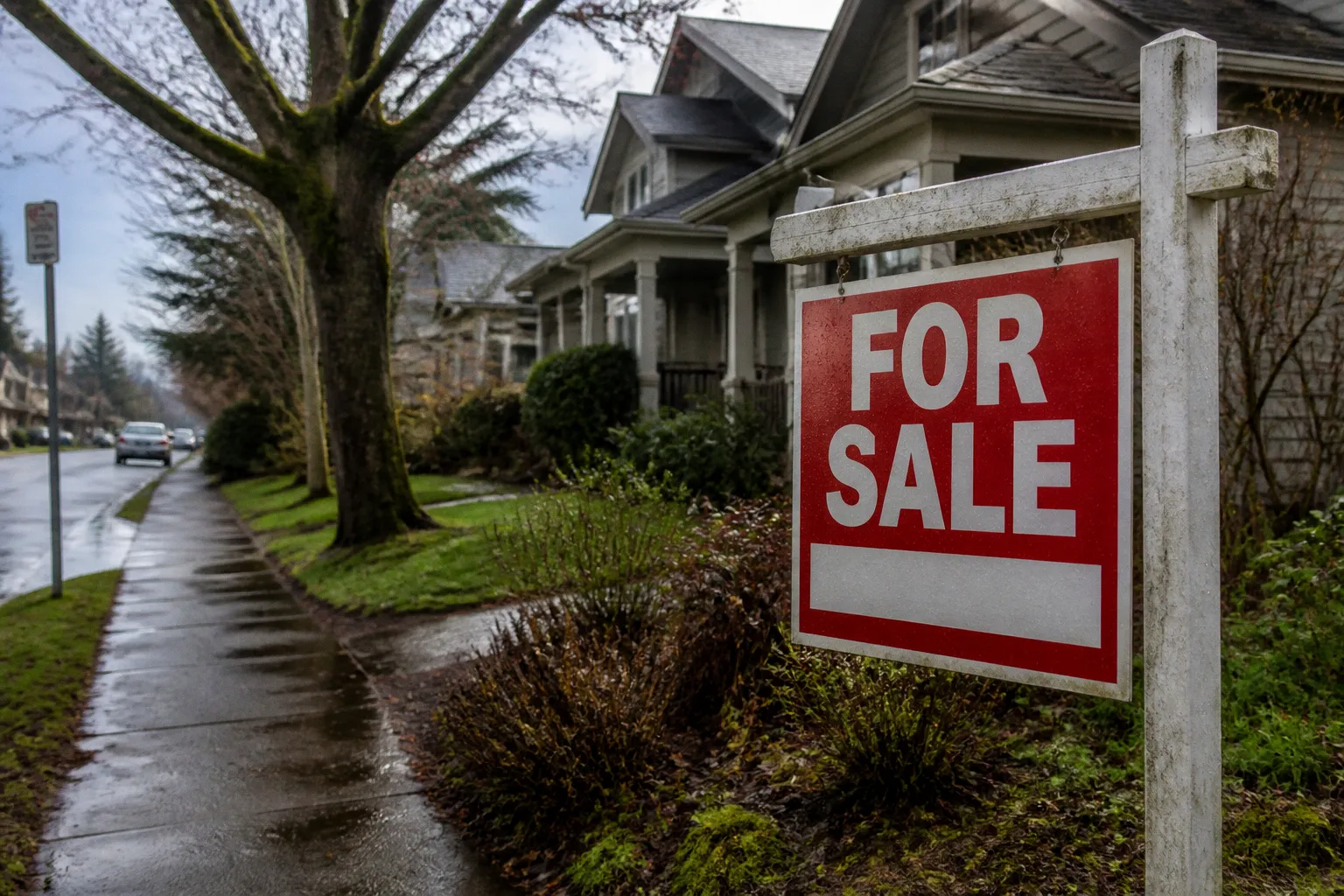
In today’s market, those small frictions matter because buyers have more room to negotiate—and sellers are increasingly using money, rather than just paint and staging, to smooth them over.
The clearest sign is the rise and adjustment of seller concessions. During the 2020–2022 frenzy, buyers often waived contingencies, covered appraisal gaps out of pocket, and competed simply to get their offer noticed. By the first quarter of 2025, Seattle had the highest seller concession rate among major U.S. metropolitan areas, at 71.3%. By May 2026, that figure had fallen to 48.8%, not because negotiation disappeared, but because more homes were selling directly below their original asking prices instead of pairing a smaller price reduction with a formal concession.
That is the important distinction in understanding Seattle seller concessions before and after the pandemic-era boom: the bargaining power has shifted, but it has not moved in a straight line.
From waived contingencies to negotiated breathing room
The Seattle market of 2020 through 2022 rewarded speed and financial strength. A well-located home in Ballard, West Seattle, or a leafy pocket of North Seattle could attract multiple offers within days, sometimes with buyers competing against terms that were nearly as important as price.
We saw offers with:
- waived inspection contingencies or very limited inspection periods;
- appraisal-gap coverage, sometimes for substantial sums;
- flexible closing dates designed around the seller’s next purchase;
- earnest-money deposits intended to signal certainty;
- escalation clauses that pushed the final price above the original list price.
Seller concessions were rare because the seller did not need to offer them. If the roof had a few years left, the basement showed moisture, or the aging electrical panel needed attention, the buyer usually absorbed the risk in order to win the house.
That market rewarded a particular kind of buyer: liquid, decisive, and prepared to tolerate uncertainty. It was difficult for first-time buyers and anyone relying on a conventional financing structure with limited cash reserves. A buyer might be approved for the monthly payment yet still struggle to fund closing costs, prepaid taxes, insurance, and an immediate repair after closing.
The change became visible in 2024 and accelerated into 2025. In the first quarter of 2025, 71.3% of Seattle home sales included a seller concession, nearly double the 36.4% recorded in the first quarter of 2024. That did not mean every seller suddenly became generous. It meant the transaction itself had become more negotiable.
A closing-cost credit could preserve the headline sale price while helping the buyer conserve cash. A repair credit could keep a deal together after inspection. A temporary rate buydown could make the first years of ownership more manageable without permanently reducing the seller’s asking price.
The negotiation moved from “How much more will you pay?” to “Which part of the purchase can the seller help carry?”
This is why a simple comparison of list price and final sale price can miss the texture of the Seattle market. Two homes may close at similar prices, while one includes a credit for closing costs and the other includes a rate buydown, repair allowance, or a price reduction negotiated after inspection.
Inventory changes the map of leverage
The geography of Seattle’s housing market has always shaped how quickly leverage changes. A compact craftsman near a dependable transit corridor does not behave exactly like a large suburban home with a long commute, and a Bellevue property does not negotiate in quite the same way as a condo in the central city.
In March 2026, active listings across the Northwest Multiple Listing Service rose 29.3% year over year. King County listings increased 34.9%, while the Eastside saw a much sharper 52% rise. That additional inventory gives buyers more opportunities to compare homes, revisit properties, and decide which inconveniences they are willing to accept.
It also changes the seller’s daily calculation. When there are only two suitable homes in a neighborhood, the buyer may stretch for the one with a manageable walk to light rail or a direct route downtown. When there are six, the buyer can compare the steepness of the lot, the condition of the retaining wall, the monthly HOA dues, the parking arrangement, and the cost of making the home comfortable in winter.
Inventory pressure is particularly visible in homes with a mismatch between price and lived experience. A listing may photograph well but lose momentum because:
- the second bedroom is too small for a real home office;
- the street is busy during school drop-off;
- the house has a daylight basement that feels more like storage than living space;
- the commute requires a transfer between transit corridors;
- the condo’s HOA fees have climbed enough to change its monthly affordability;
- the home needs a roof, sewer repair, drainage work, or an electrical upgrade soon after closing.
In a crowded listing environment, a seller concession can be a way to acknowledge that friction without immediately cutting the asking price. Buyers, meanwhile, gain time to decide whether the concession solves a real problem or merely makes a difficult property look cheaper for a moment.
The broader market numbers should therefore be read at neighborhood level. We do not have a reliable mid-2026 concession breakdown for every Seattle neighborhood, nor a complete current split by single-family homes, townhomes, and condos. Condo properties are often associated with higher concession rates as HOA fees rise, but the exact neighborhood and property-type pattern is not established by the available data. The practical answer is to examine comparable sales with the same care you would use to study a home’s walkability or slope.
What to look for in comparable sales
When reviewing recent transactions, we want to see more than the original list price and closing price. A useful comparison includes:
- the number of days the property spent on the market;
- whether the home had a price reduction before accepting an offer;
- whether the sale price was below the original asking price;
- the size and type of any seller credit;
- whether the credit appeared to address inspection findings;
- the property’s loan-friendly features, such as condition, appraisal support, and insurability;
- the monthly cost after HOA dues, taxes, insurance, and any mortgage-rate adjustment.
That last point matters especially on the Eastside, where luxury properties may still transact at or above asking without concessions. A 52% year-over-year increase in Eastside active listings does not make every Bellevue or Kirkland home a buyer’s-market bargain. Location, school assignment, lot quality, architectural finish, and privacy under the evergreen canopy continue to command attention—and, in some cases, competition.
What Seattle closing-cost credits actually do
The most common Seattle real estate closing cost credit is typically between 1% and 3% of the purchase price. On an $860,000 King County home, that represents approximately $8,600 to $25,800.
That money does not usually arrive as cash in the buyer’s pocket. It is applied to eligible closing expenses through the settlement statement, subject to the buyer’s loan program and the lender’s approval. Depending on the transaction, it may help cover lender fees, title and escrow charges, prepaid items, discount points, or other allowable costs.
For a buyer, the benefit is often liquidity. If the buyer has enough funds for the down payment but is stretched by closing costs, a credit can leave a reserve for the first repair, moving expenses, furniture, or the less glamorous costs of settling into a Seattle home—stormwater management, a basement dehumidifier, a new heat-pump service contract, or a driveway repair that becomes obvious only after the first heavy rain.
For a seller, the trade-off is more nuanced. A credit reduces net proceeds, but it may preserve the contract price and prevent a listing from accumulating days on market. It may also be more attractive than completing repairs before listing, particularly when the seller is preparing to move, coordinating a purchase in another part of the Puget Sound region, or selling an older property whose repair needs are difficult to price in advance.
The numbers should be compared in net terms:
| Negotiation structure | Benefit to buyer | Cost or risk for seller | When it can make sense |
|---|---|---|---|
| Closing-cost credit | Reduces cash needed at closing while preserving funds for early ownership expenses | Lowers net proceeds and must fit lender limits | Buyer has income for the payment but limited liquid cash |
| Price reduction | Lowers the purchase price and may reduce the monthly payment slightly | Reduces the contract price and may not solve immediate cash needs | Appraisal or long-term affordability is the central concern |
| Inspection credit | Helps address a documented repair without requiring work before closing | Seller pays for a known condition while retaining control over the repair process | The issue is real but the buyer does not need the seller to complete the work |
| 2-1 rate buydown | Reduces the mortgage rate by 2 percentage points in year one and 1 point in year two | Can cost roughly $18,000–$22,000 on an $800,000 loan | Buyer expects future refinancing or needs temporary payment relief |
| Permanent discount points | Lowers the interest rate for the life of the loan | Requires a larger upfront contribution and depends on lender pricing | Buyer plans to hold the loan for several years |
| Seller-completed repair | Gives the buyer a finished system or corrected defect at closing | Scope, workmanship, and timing can create disputes | The repair is straightforward and necessary for financing or safety |
A credit is not automatically better than a lower price. If the buyer is short on cash, the credit may be more valuable. If the buyer has ample reserves but is concerned about long-term payment, a price reduction or permanent rate adjustment may matter more. If the home needs a sewer replacement, drainage correction, or structural repair, neither a modest closing-cost credit nor a decorative allowance should distract from the underlying cost.
This is where financing and property condition meet. A credit must be useful, permitted, and large enough to address the problem it was intended to solve.
The 2-1 buydown: useful relief, not a magic trick
Mortgage rate buydowns have become a prominent form of concession in 2026, particularly the 2-1 structure. In a 2-1 buydown, the buyer’s interest rate is reduced by 2 percentage points in the first year and 1 percentage point in the second year, returning to the note rate in the third year.
On an $800,000 loan, the seller’s cost can be approximately $18,000 to $22,000, while the buyer may save around $900 to $1,100 per month during the first year. The exact figures depend on the note rate, loan structure, lender calculations, and the approved buydown terms.
That temporary relief can be meaningful for someone whose income is expected to rise, whose partner is returning to full-time work, or who believes refinancing may become attractive later. It can also help a buyer manage the transition from rent into ownership while preserving a cash reserve for the first year.
But the payment eventually resets. We should not treat a 2-1 buydown as proof that the home is affordable at the permanent rate. Before accepting one, calculate the payment beginning in year three and ask whether it still fits after property taxes, insurance, utilities, HOA dues, and ordinary maintenance.
A buydown also needs to be compared with a price reduction. A seller may prefer to spend $20,000 on a concession because it keeps the purchase price intact, while the buyer may benefit more from reducing the price if the loan will be held for a long time. The right choice depends on the buyer’s expected holding period and cash position, not on which option sounds more generous in the offer conversation.
For buyers comparing Seattle condos, the monthly housing cost deserves particular care. A temporary mortgage reduction can be quickly offset by high HOA dues, a pending special assessment, or an insurance increase affecting the building. The same caution applies to townhomes with shared roofs, private roads, or homeowner associations responsible for exterior maintenance. The concession should be evaluated alongside the community fabric of the property—not just the interior finishes.
Where the concession appears in the transaction
In Washington, seller concessions are commonly negotiated in the purchase and sale agreement using NWMLS Form 22A, or later through Form 35 during the inspection contingency period.
That timing changes the conversation.
A concession written into the offer is part of the buyer’s initial strategy. It may be paired with a strong price, clean terms, a preferred closing date, or a quick response timeline. The buyer is effectively saying: “We can give you certainty, but we need assistance with this specific cost.”
A concession negotiated after inspection has a different logic. The buyer has discovered a condition, or has gained a clearer understanding of a known issue, and is asking the seller to share the financial burden. The request is strongest when supported by a credible inspection finding and a realistic estimate rather than a broad demand to improve the property.
During the pandemic-era market, buyers often hesitated to ask for anything after inspection because they feared losing the home. With more inventory, the buyer can be more direct, but the tone still matters. A seller is more likely to engage with a focused request than an expansive list of every cosmetic imperfection in a 1940s house.
The form itself does not eliminate the need for careful lender coordination. A credit that looks reasonable in the contract may exceed the allowable amount for the buyer’s loan or may not be usable for the expense the buyer has in mind.
Lender caps shape the negotiation
Concession limits vary by loan type, down payment, occupancy, and lender guidelines. The figures commonly used in this market include:
- conventional financing with less than 10% down: a 3% cap;
- FHA and USDA financing: up to 6% under the applicable guidelines;
- conventional financing with 10% to 25% down: often up to 6%;
- VA financing: a 4% limit for seller concessions, with separate treatment for certain customary closing costs.
These are not interchangeable buckets, and the percentages are not permission to request a credit without calculation. The buyer’s lender should confirm the limit before the offer is written and identify which costs are eligible.
Suppose a buyer is purchasing an $800,000 home with less than 10% down on a conventional loan. A 3% cap would put the concession ceiling at $24,000, but that does not guarantee the buyer can use the full amount. If allowable closing costs total only $16,000, the remaining credit may not be available in the way the buyer expects.
The same care applies to repair credits. A seller-paid amount may need to be structured as an allowable closing-cost contribution rather than a general cash payment. The escrow and lending teams need the wording to match the intended use.
A concession is valuable only when the lender can approve it, the closing statement can absorb it, and the buyer still has a livable payment after the incentive ends.
This is why we prefer to discuss the concession before the offer is drafted, not after the parties have become emotionally attached to a particular number.
Reading the 2026 adjustment correctly
The drop from Seattle’s 71.3% concession rate in the first quarter of 2025 to 48.8% in May 2026 can look dramatic, but it should not be read as a return to the old seller-dominated market.
The May 2026 figure was down from roughly 66% in May 2025, and it represented the largest year-over-year decline among the 28 markets included in the cited analysis. Part of that change reflects a base effect: the comparison period was unusually high. Another part reflects a change in how sellers are negotiating. More homes were selling directly below their original asking price, which reduces the need to report a separate concession even when the buyer is still receiving an economic benefit.
Consider two simplified transactions:
- Home A lists at $900,000, sells for $900,000, and includes a $20,000 closing-cost credit.
- Home B lists at $900,000, sells for $880,000, and includes no formal credit.
The headline concession statistics treat these transactions differently, but the seller’s gross proceeds are not separated by the full $20,000 in the way a casual reading might suggest. The buyer’s benefits also differ: Home A preserves the purchase price and creates cash-flow assistance at closing, while Home B lowers the price and may slightly reduce the monthly payment.
This is one reason King County seller concessions trends need to be read with both price and terms. A market can show fewer formal concessions while still offering more buyer leverage through price reductions, inspection negotiations, longer marketing periods, or seller-paid points.
The same principle applies to NWMLS reports. Public-facing inventory and sales statistics help us understand direction, but they may not reveal every economic term negotiated in a transaction. When assessing NWMLS seller paid points data, we need to distinguish between a documented seller-paid financing cost, a general closing-cost credit, an inspection response, and a price adjustment. They serve different purposes even when the net effect feels similar.
How buyers and sellers should use the shift
For buyers, a balanced market is not a reason to become careless. The opportunity is better leverage, not a license to overreach.
Start with the home’s actual geography. Walk the route to the nearest transit stop at the time you would use it. Drive the hill in wet weather. Stand in the backyard during the hour when neighboring homes cast their longest shadows. Listen for traffic, aircraft, delivery activity, or the constant movement of a nearby arterial. In a condo, read the budget and meeting minutes with the same attention you give the kitchen renovation.
Then decide what kind of concession would improve your ownership experience:
1. Use a closing-cost credit when liquidity is the constraint. This can be the cleanest solution if your down payment is secure but closing costs would leave you without a responsible reserve.
2. Use a repair credit when the inspection identifies a defined financial obligation. Obtain a credible estimate and keep the request connected to the property’s condition.
3. Use a 2-1 buydown when the temporary payment reduction has a clear purpose. Run the numbers at the full future rate before treating it as affordable.
4. Ask for a price reduction when the appraisal, long-term payment, or resale value is the central concern. A lower price may be more useful than a credit that cannot be fully applied.
5. Keep some of the leverage for the right moment. A strong initial offer does not need to ask for every possible benefit, especially if inspection findings may create a more consequential negotiation later.
For sellers, the decision begins with net proceeds but should not end there. A concession can help a property move through a slower market, yet the amount must be weighed against pricing, condition, and buyer perception. If the roof is near the end of its life, a buyer may value a credit more than a fresh coat of paint. If the home is priced above its neighborhood competition, a concession may simply postpone the price correction.
The best offer is not always the one with the highest number. It is the one whose terms are most likely to survive appraisal, inspection, lending review, and the practical pressures of a move.
A neighborhood-level way to scout your next negotiation
Before making an offer, take one more walk through the property and its surroundings with the concession in mind. Bring the lender’s estimate, the inspection notes if available, and a realistic sense of what the first twelve months will cost.
Look for:
- the route from the front door to transit, groceries, schools, or childcare;
- drainage patterns, retaining walls, moss, and signs of water movement on sloped lots;
- roof age, sewer condition, electrical capacity, and heating-system type;
- HOA dues, reserve funding, insurance changes, and pending assessments in condos and townhomes;
- the difference between cosmetic wear and a repair that will disrupt your first year;
- whether the concession addresses a cost you can document rather than a general feeling that the home should be cheaper;
- the payment after any temporary buydown expires;
- the lender’s exact cap and the amount of eligible costs available at closing;
- comparable homes that sold below asking without a formal concession;
- whether the property’s location and community fabric justify competing more firmly than the broader inventory figures suggest.
Seattle’s market has not returned to the offer wars of 2021, but it has not become uniformly soft either. A desirable home near a strong transit corridor, with sound systems and an easy daily rhythm, can still command a confident buyer response. A home with steep access, deferred maintenance, high carrying costs, or an inconvenient commute may need a more generous structure to earn the same commitment.
The most useful way to understand Seattle seller concessions before and after the market shift is to see them as a map of bargaining power. In the earlier market, buyers paid for scarcity with risk. In the current one, sellers are more often asked to share the cost of financing, repairs, and the transition into ownership. The concession is not a side note to the sale. It is one of the clearest signs of how the property, the neighborhood, and the buyer’s financial reality meet at the negotiating table.